
16 Days of Activism Against Gender-Based Violence
December 22, 2025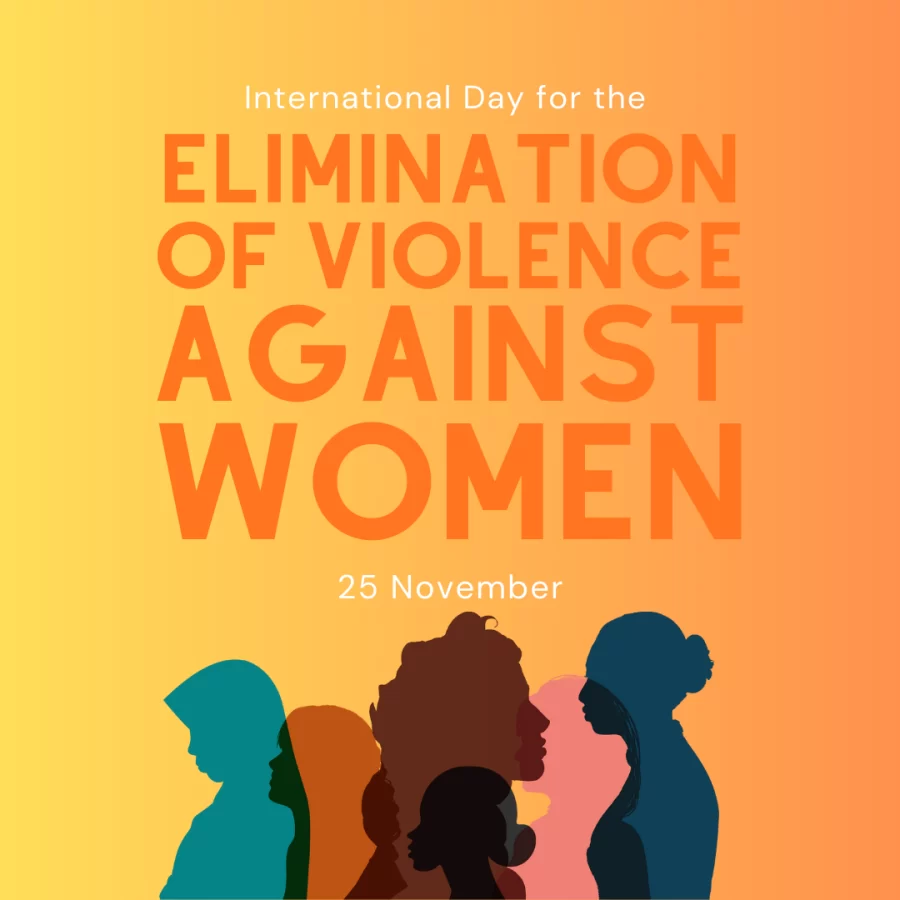 From 25 November to 10 December, Religions for Peace participated in the 16 Days of Activism Against Gender-Based Violence campaign, sharing posts on Instagram, Facebook, and X to show solidarity with the millions of women and girls around the world who have experienced gender-based violence. Religions for Peace joins the ranks of the numerous organizations and stakeholders that have taken part in this campaign since 1991. Civil society groups, individuals, and religious organizations have taken to social media to speak out against this prevalent issue facing our society.
What is gender-based violence and who does it affect?
Gender-based violence is violence targeting women because they are women, including physical, verbal, and sexual forms of harassment and abuse.
Nearly 1 in 3, or 736 million women, have been victims of gender-based violence at least once in their lifetime. This figure is central to the campaign, representing the devastating number of women and girls that are affected by violence, and backed by material showing the magnitude of this global crisis. By stressing the importance of looking beyond women as victims and a statistic, and considering the psychological and physical effects that victims of violence face, it becomes apparent how the suffering of women impacts the lives of all within their communities.
This campaign aimed to show that gender-based violence is not only an issue impacting women and girls, but all members of society, demonstrating the role that our combined effort plays in protecting women and girls. Religions for Peace brings a multireligious perspective to this campaign, highlighting the role of religious leaders in promoting practices that benefit all members of society, encouraging interpretations of scriptures that do not promote violence or gender inequality, but instead peace and harmony.
Religions for Peace joined the Multifaith Advisory Council (MFAC) in their campaign sharing resources and information each coinciding with this year’s theme: “UNite Against Digital Violence.”
What is digital violence and why is it an issue?
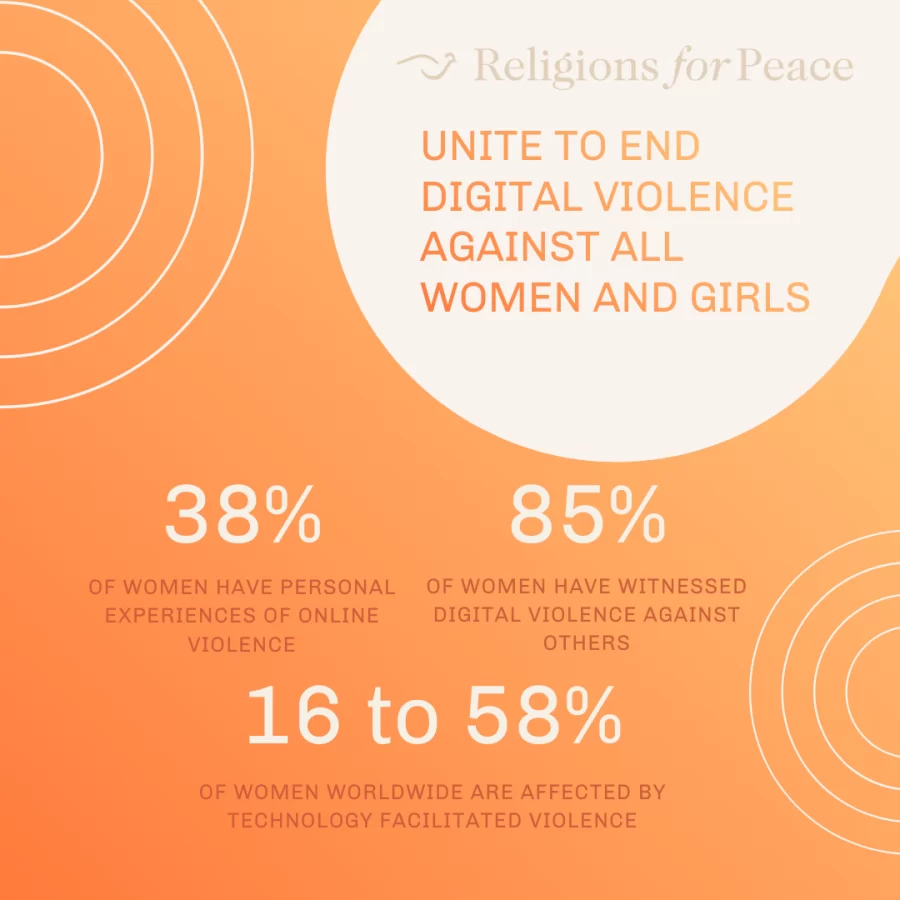 With the increasing use of generative AI in almost all areas of life, women are becoming targets to new forms of violence. Generative AI has become a tool to coerce, extort, and facilitate hate speech and trafficking which directly harms and violates the rights of women.
This year’s campaign draws special attention to the role of AI and other technology in furthering violence and exploiting women and girls. With 38% of women experiencing some form of digital violence, it is evident that technological advancements create challenges for the safety and wellbeing of women and girls, exacerbating online harassment and hate speech. Such violence doesn’t just occupy the digital space; it leads to the perpetuation of violence in real life.
The campaign
For 16 days, Religions for Peace’s social media pages were illuminated by the campaign’s signature color, orange: a color symbolizing hope, brightness, and a future free of violence against women and girls everywhere. 25 November, The International Day for Eliminating Violence Against Women, marked the beginning of the 16 Days and Human Rights Day on 10 December marked its end.
This year, Religions for Peace shared a total of 29 posts across platforms, including a statement below from Secretary General Dr. Francis Kuria urging for the mobilization of faith communities in promoting gender equality as well as stressing the role of faith leaders in condemning hate speech and violence against women and girls. In his statement, Dr. Kuria calls for “an immediate ceasing of sexual violence as a weapon of war” and stresses the importance of accountability from the international community in addressing issues of violence against women.
 Religions for Peace shared its Restoring Dignity toolkit and other digital resources from the Multifaith Advisory Council (MFAC), aspiring to empower leaders and members from diverse faith communities to take part in this movement. Sharing these resources along with grassroots stories portrayed how the commitment of actors in this movement and their calls to action transcend social media and create viable change in communities around the world. Other posts included statistics and quotes from Religions for Peace’s 2023 interreligious Council Fireside Chat.
The final post of the campaign served to highlight Religions for Peace’s new initiative “Lifting Voices, Leading Change: Women of Faith for Gender Equality,” a project supported by the Conrad N. Hilton Foundation working with Women of Faith in Kenya, Malawi, and Mexico to help address gender violence through community intervention and amplifying the voices of women in global forums.
By sharing resources for digital safety, toolkits for preventing gender-based violence, and other essential information, participants of the 16 Days campaign hope to spread awareness on this issue and create safe spaces for women and girls online.
Read Dr. Kuria’s full statement below:
27 November 2025
Yesterday’s International Day for the Elimination of Violence Against Women marked the beginning of 16 days of activism dedicated to solidarity with the staggering number of women and girls who have faced gender-based violence worldwide.
Violence targeting women and girls throughout history has left physical and psychological scars that call for continued support and healing.
We are faced with urgency in addressing femicide due to climate disasters and humanitarian conflicts acting as catalysts for gender-based violence. The heightening of geopolitical tensions and emergence of new technological challenges are leaving women vulnerable to violence, and we continue to witness widespread cases of child marriage and female genital mutilation.
We must call for an immediate ceasing of sexual violence as a weapon of war. Further, we must call on each other as members of the international community to make greater efforts in holding perpetrators of this atrocity accountable. As faith communities, we must mobilise to provide compassionate support in the form of survivor-centred interventions to women and girls across the globe.
It is our responsibility as religious leaders to discourage the spread of hate and misinformation, using our positions of trust and respect to foster peaceful and inclusive dialogue. In recognizing the unique role that faith leaders play in promoting gender equality, we can establish communities of understanding, compassion, and peace in which gender-based violence has no place.
Religions for Peace continues to work with Women of Faith to amplify the voices of women around the world, standing against gender-based violence and advancing gender equality at both the local and global level. By highlighting voices of diverse faith communities, youth, and women, we seek to ensure a just and harmonious society for all.
Over the course of this initiative, we will share resources and impact stories in solidarity with survivors of gender-based violence, including awareness of this year’s theme of digital violence. I urge you to join us in advocating for this crucial cause. Members of faith communities at all levels have a role in maintaining the momentum we build during these 16 days of advocacy.
Together, we can invoke action towards ending violence against women and healing for the future.