
Sacred Stewardship: Faith on the Frontlines of Climate Change
December 22, 2025Thanks largely to geography, the cyclones that develop in the Bay of Bengal rarely directly hit Sri Lanka. They tend to skirt the edges of the island, the remnants of the storms bringing steady but manageable rainfall.
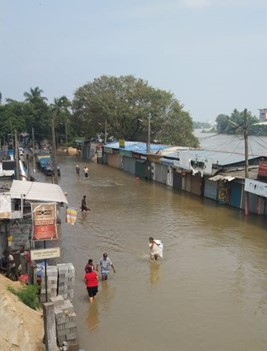
But in November, Cyclone Ditwah caused catastrophic flooding and landslides across the island, leaving virtually no community untouched. An estimated 1,500 people were killed, and more than 2 million people have been forced to leave their homes, the government has estimated.
“The devastation is unimaginable,” said Christobel Saverimuttu, Treasurer of the Sri Lanka Council of Religions for Peace and a longtime resident of Colombo, the capital city. “This is the first time in the history of Sri Lanka that the whole country was affected.
“This was from north to south, east to west. And it was in areas where the most vulnerable people are living in small huts and small houses – where the trees have come crashing down. It’s as though someone pricked a balloon and the whole thing burst.”
Cyclone Ditwah took a meandering path, steadily strengthening as the storm, initially a depression, hugged Sri Lanka’s southern coast. By Nov. 26, however, it had intensified into a cyclone – unleashing torrential rain across the country as it made landfall.
Global climate change is making cyclones – and hurricanes, typhoons and monsoons – worse, according to weather scientists. Put simply, warmer sea surface temperatures provide more fuel for the storms. There is also increasing evidence of storms intensifying much faster than in the past – giving coastal communities less time to prepare and evacuate.
Cyclone Ditwah was not unique — three cyclones caused death and destruction across Southeast Asia in November, particularly in Indonesia, Viet Nam, the Philippines, and Thailand.
In 2019, the Religions for Peace 10th World Assembly declaration committed to urgent action against the climate crisis. Religious leaders recognized that interfaith collaboration is critical in effectively addressing climate challenges while fostering peace and understanding.
Towards that commitment, Religions for Peace is supporting interreligious councils around the world in raising awareness and advocating for actions to protect the environment and change behaviour.
Raising Indigenous Voices

At COP30, a side event co-sponsored by Religions for Peace amplified the voices of Indigenous people in promoting the protection of forests. COP – or Conference of Parties – is the annual world summit where leaders and diplomats from almost every country gather to figure out how to stop climate change.
Forests – particularly rainforests – play a critical role in regulating the earth’s climate, among many other benefits. In particular, they remove and store carbon from the atmosphere, the primary driver of climate change. Although tropical deforestation has slowed in recent years, deforestation rates are still very high, according to the UN Food and Agriculture Organization’s 2025 Global Forest Resources Assessment.
The side event, “Ancestral Wisdom and Youth Leadership: Pathways to Sustainable Climate Action,” provided a platform for Ms. Jhajayra Idalia Machoa Mendúa from the A’I Kofan First Nation of Ecuador and a youth leader in the A’I Kofan Millennium Community of Dureno, located in the Ecuadorian Amazon.
“We need to be heard in this space, in the United Nations space especially,” Jhajayra said. “We need a direct voice because we are actually coming from (the affected) territories.
“Our generation is responsible to share the knowledge that we have received from our elders for the future and for a habitable planet. We need to listen to the voice of the planet.”
Leading up to COP30, Religions for Peace Japan, Religions for Peace Australia, and the Australian Religious Response to Climate Change released a Joint Statement calling for environmental justice and imploring governments and faith communities to take urgent, collective action to reduce reliance on fossil fuels, safeguard natural ecosystems, and advance ethical, sustainable practices.
Innovating Approaches for Environmental Protection
Religious leaders are playing critical roles in advancing awareness and action on environmental issues – leveraging a shared sacred worldview that prioritises our inter-relational nature. This worldview emphasizes that all beings and cultures are interconnected. Further, in order to achieve collective peace and flourishing, each group and community within humanity’s whole must be supported in their efforts towards flourishing.
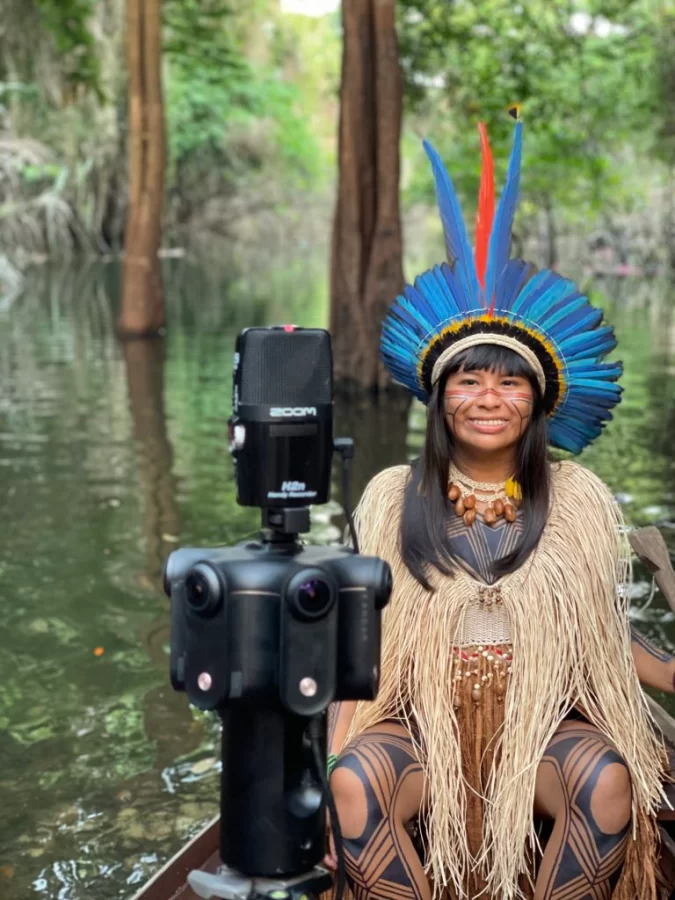
The Interfaith Rainforest Initiative (IRI) is a concerted effort to bring religious leaders and the sacred worldview into climate change efforts. The initiative – a broad global partnership including Religions for Peace – brings the commitment, influence, and moral authority of religions to efforts to protect the world’s rainforests and the indigenous peoples that serve as their guardians.
Specifically, Religions for Peace Interreligious Councils in Brazil, Colombia, and Peru as well as partner organisations in the Democratic Republic of Congo and Indonesia, have supported efforts to develop innovative approaches to raise awareness of and advocate for rainforest protection.
In Brazil, Carlos Vicente, the initiative’s National Facilitator, said Religions for Peace’s support had been instrumental in developing innovative efforts in Brazil.
“Religions for Peace was fundamental in making IRI Brazil,” he said. “Religions for Peace supported the IRI implementation in the initiative’s second phase, 2022 to 2024, when we developed all these approaches.”
The first impactful approach was scientific immersion, where religious leaders intensively discuss the science of climate change directly with researchers. The immersion has motivated religious leaders to develop environmental protection and promotion activities in their communities.
“We developed this methodology to bring religious leaders to scientific institutions to have a deep dialogue with scientists, to have an open and well-protected place to discuss the science and to ask questions, to test their own beliefs,” he explained. “Before this immersion, many were not engaged in climate actions, but after they became aware and started developing activities.”
Since 2022, IRI Brazil has completed 24 of these scientific immersions, reaching 650 religious leaders from seven different religions; all of them have become engaged, Vicente said.
“This type of dialogue helps to reduce climate or environmental misinformation, to reduce religious intolerance and to reduce political polarization,” he said. “And it helps to improve democracy because you promote a better quality of respect among different religious leaders – they can share the same understanding of climate change and the roles of different indigenous communities living in the forest.”
Perhaps even more impactful has been the production of a virtual reality experience that allows people to “visit” the tropical rainforests Indigenous people call home.
“We are working to protect the Amazon rainforest, which is very far from most of the Brazilian population – most have heard about it but have never gone there,” he said. “So we have used virtual reality technology” that allows them to visit the rainforest virtually.
“Amazon Alive” is a 10-minute film people experience via VR headsets.
“We showed (the forest) not as a strange, dangerous place, but as a home to Indigenous people,” he said. “This film produced strong feelings – most people are very, very touched.”
More than 200,000 people have experienced the VR film in Brazil and other countries in several languages – and it has inspired a follow-up film, “Amazonia Forever.”
There is a global consensus among religious creation stories that Earth evolved from once being lifeless to becoming a thriving, biodiverse planet, he explained. By showing an area that has become a lifeless desert due to gold mining, “Amazonia Forever” warns that humanity is currently reversing this progress, pushing humanity back toward a barren state.
“We must immediately change course,” he said. The solutions already exist: Indigenous Peoples and local communities demonstrate effective, sustainable ways to manage nature, a wisdom that is fully supported and enhanced by scientific understanding.
The successful impacts the program has achieved have reinforced interreligious collaboration, he added.
“We need miracles for our work,” Vicente said. “Our faith creates miracles. Of course, we work hard and we are very dedicated – but there is a high-level power supporting us.”
Building Local Chapters to Identify Problems, Share Information, and Advocate
IRI Peru has taken a different approach to raise awareness and advocate for protecting the Amazon region: organizing local IRI chapters in communities. The chapters, comprised of religious leaders and other stakeholders, identify local problems, share information and push for the protection of the rainforest.
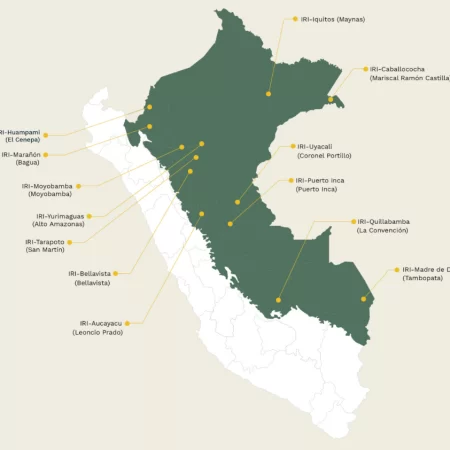
There are now 21 local chapters – the latest was formed in Chulucanas, in northern Peru, on Friday, Dec. 12. It is the first representing an area of dry forest, outside the Amazon rainforest region.
“The local chapters work like a small IRI,” explained Laura Vargas, the IRI Peru National Facilitator. “The first thing they do is to look at the situation of the tropical forest and what problems the people living there have to face.”
At a national meeting of the chapters in December, illegal gold mining, which has increased rapidly across Peru in recent years, was the focus of discussion.
“Now it’s in almost every part of the country – any place you go,” Vargas said. The use of mercury and cyanide is contaminating waterways “in a terrible way.”
At the national meeting, leaders discussed the impacts of the mining and set criteria regarding candidates’ positions to guide voters in upcoming local and national elections.
Recognizing Environmental Stress as a Root of Conflict
The conflict in the Sahel—a semi-arid belt spanning several countries in West Africa—is one of the world’s most complex and acute security crises. It has evolved from a localized rebellion in northern Mali in 2012 into a massive regional and transnational insurgency causing the deaths of thousands of civilians, the displacement of millions of people, and contributing to a series of military coups that have further destabilized the region and weakened regional cooperation and governance frameworks.
Environmental degradation and climate change act as powerful threat multipliers in this context, exacerbating pre-existing governance challenges, socio-economic marginalization, and competition over scarce resources. Scientists estimate the Sahel is warming 1.5 times faster than the global average, intensifying pressure on land, water, and livelihoods that are central to community resilience.
“When we look at the environment, we look at natural resources, access to water, shelter and food, our sources of energy,” explained Lydia Ndinda, Program Manager for the Environment at the African Council of Religious Leaders-Religions for Peace. “The environment is our home – and when resources are not enough, that leads to conflict.”
In 2021, the African Council of Religious Leaders-Religions for Peace began working with religious leaders and other stakeholders in Burkina Faso, Mali, and Senegal, adopting a multifaceted approach to address the environmental dimensions of conflict.
The project, supported by the Bread for the World, combines community engagement, advocacy, and institutional strengthening, to link environmental stewardship with peacebuilding outcomes. By situating environmental actions within interreligious peacebuilding frameworks, the initiative demonstrates how locally led, faith-sensitive approaches can complement national stabilization efforts and regional climate adaptation strategies.
“We are addressing the root causes of conflict by tackling land degradation and water scarcity across the Sahel – and empowering women and youth as primary agents of change,” Ndinda said.
While Ndinda facilitates high-level meetings between religious leaders and government officials, women and youth in targeted communities participate in capacity-building workshops focused on mediation, dialogue, and nonviolent conflict resolution. The project has led to the establishment of an Interreligious Council in Senegal, alongside the installation of solar-powered water boreholes and the introduction of “Farming God’s Way,” – a set of sustainable agriculture techniques designed to restore soil health and improve food security.
The project showcases that early engagement where environmental interventions are combined with dialogue and mediation efforts can help reduce community tensions around resources and strengthen social cohesion and trust.
“We’re tapping into the tapestry of religions, including Muslims, Christians and traditional African religions,” Ndinda said. “Religious leaders have a big role to play – they have moral authority. They speak the language of shared responsibility.”
Interreligious Collaboration for Action on Climate Change
As sea levels rise, storms increase in intensity, and weather patterns shift, the impacts on all life are being felt across the planet – and creating new challenges or exacerbating old ones. Interreligious collaboration has an essential role to play in addressing climate change – and helping communities deal with its consequences.
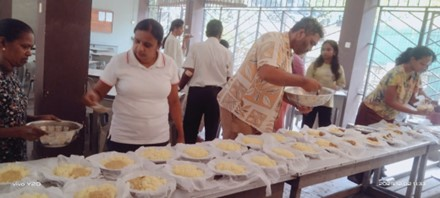
In Sri Lanka, Cyclone Ditwah had inspired a new shared commitment to collaboration and national prayer services, said Dr. Vaiteeshvara Kurukkal, President of the Hindu Priests Association and Executive Committee member of the Sri Lanka Council of Religions for Peace.
“All religions are giving to all people, it does not matter — everyone is helping each other,” Dr. Kurukkal said.
The calamity has also brought young people to embrace their faith, said Venerable Dr. Rev. Wadinagala Pannaloka, Secretary General of the Sri Lanka Council of Religions for Peace.
“Some time young people keep a distance from religion,” he said. “But one young man wrote (on social media) that at one time he was going away from religion but now, ‘I see Temple is a refuge for us.’
“At this moment of disaster, religious communities are bringing people closer together. That’s a good thing. It will take a very long time and work to get back to normalcy, but the whole country is active now.”