
Interfaith 101: Equipping the Next Generation with the Tools for Understanding
January 27, 2026For thousands of years, many religious leaders have recognized and esteemed the profound value of interreligious collaboration. Examples abound:
- The imperative to honour other religions is one of the ‘rock edicts’ in the Edicts of Ashoka, a collection of more than 30 inscriptions on pillars, boulders, and cave walls, made by Emperor Ashoka of the Mauryan Empire during his reign from 268 BCE to 232 BCE.
- In 622 CE, Prophet Muhammad established the Constitution of Medina (Charter of Medina). The aim was to create a social contract and governance framework that could regulate the relationships between the different tribes and religious groups in Medina. It also provided a basis for peaceful coexistence and conflict resolution.
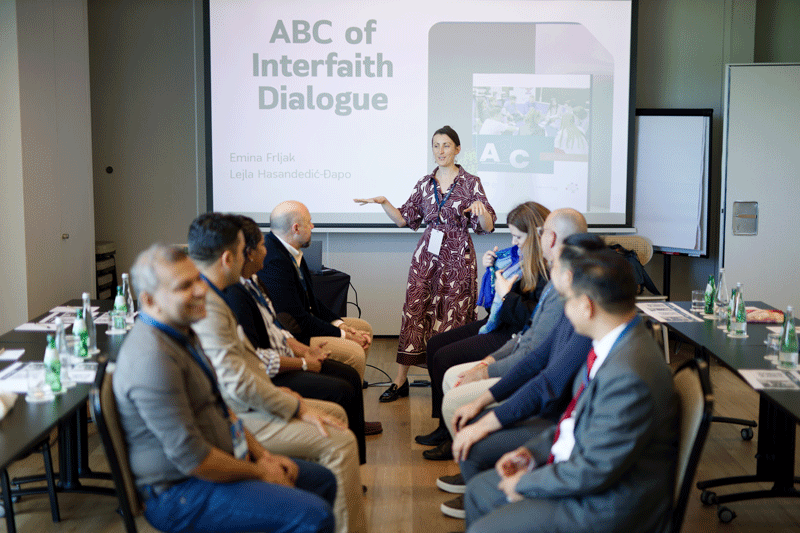
“Interfaith collaboration is not something new,” said Emina Frljak, Project Coordinator with Youth for Peace (Bosnia and Herzegovina) and Deputy Coordinator of the International Youth Committee of Religions for Peace. “It has deep roots to the middle ages and well before.”
But interfaith dialogue is difficult – even if imperative in today’s world.
“When we do interfaith dialogue workshops, young people have to understand first what dialogue is,” Frljak said. “We’re not dialogical beings – we’re raised to debate and argue.”
To support interfaith dialogue, Frljak and Dr. Lejla Hasandedić-Đapo, Individual Membership Coordinator of the United Religions Initiative and a researcher in psychology at Ankara Yildirim Beyazit University, devised the “ABCs of Interfaith Dialogue.”
READ the “ABCs of Interfaith Dialogue” in English, French, Bosnian/Croatian/Serbian
The guide is a joint publication by Youth for Peace (BiH), URI Europe, and Religions for Peace Europe, supported by the KAICIID Fellows Programme Microgrants. Its publication was used at a workshop in December during the 10th Anniversary Celebration of the KAICIID International Fellows Programme in Lisbon.
“The goal of interfaith dialogue isn’t to ‘win,’” she explained. “It’s about learning about someone else’s faith from their own perspective, and about seeing the world through their eyes. It’s about truly understanding each other, not trying to persuade.
“This kind of understanding isn’t easy, and it doesn’t always happen. But it’s exactly what makes dialogue so important, especially in a world where misunderstanding is so common.”