
Quiet and Often Unseen, Religious Leaders Promote Peaceful and Transparent Elections – and Ethical Governance Around the World
January 29, 2026Late last week, Joshua Kitakule, Secretary General of the Interreligious Council of Uganda, went to the home of Robert Kyagulanyi just outside Kampala. Kyagulanyi is a Ugandan musician and politician, popularly known as Bobi Wine. He was a leading opposition candidate in the country’s Jan. 15 presidential election.
But Kyagulanyi was not there. There were rumors he had been arrested but it soon became apparent he had fled (as of date of publication he remained in hiding). Kitakule met with Kyagulanyi’s wife and family during his visit.
“She had run out of food because she had not been allowed to leave the house for the past six days,” he said on a phone call late last week. “So, we were able to contact the Inspector General of the police to get provisions for the family. That’s being addressed as I speak.”
Kitakule’s welfare check on Bobi Wine’s family is just a small example of how religious leaders play a part in elections. The work is considerably more involved than a welfare check on one candidate – it extends to all candidates and, indeed, the entire nation. And it often begins long before a single vote is cast and long after.
“The dust is settling now – and we’re starting to arrange engagements to do our work, reaching out to the winners and losers,” Kitakule said last week. “But we started last year.”
READ the Interreligious Council of Uganda’s PRESS STATEMENT ON THE CONDUCT AND INTEGRITY OF THE 2026 GENERAL ELECTIONS
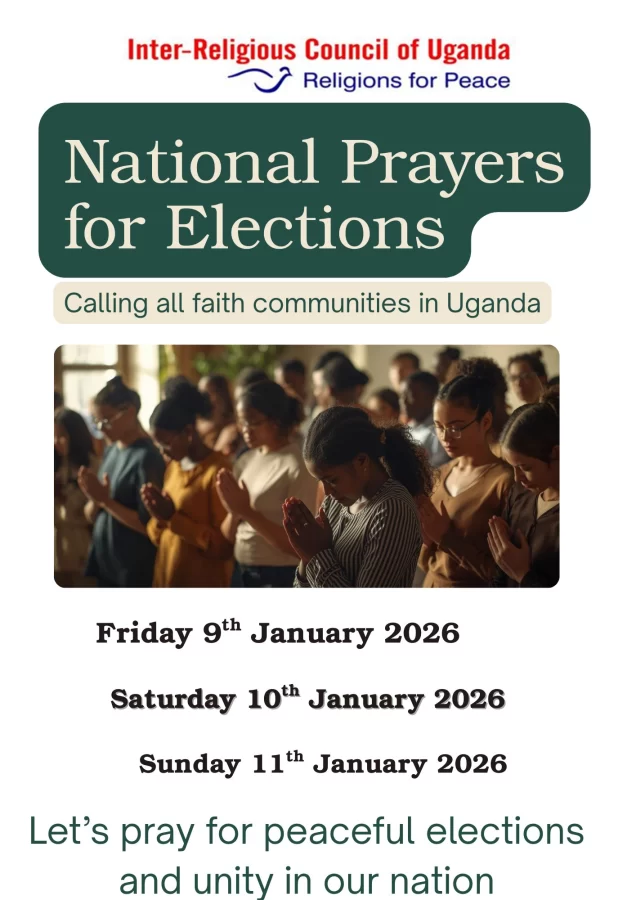
Uganda’s religious leaders set a clear theme for their work on good governance when it kicked off: “Working together for a peaceful, free and transparent election.” Through a variety of workshops and meetings, they brought together key stakeholders, Kitakule explained.
“This included the electoral commission, the Uganda police force, the media, civil society, parliament and the judiciary – because when issues fail they run to the judiciary – and the executive, His Excellency the president,” he said.
It further involved sending election awareness messages across the country through the extensive network of mosques and churches.
“In this country, in every village you find a church or a mosque,” he said. “Every week there is a pastoral letter – including key things citizens need to know about the election. And as we get closer to the election, we get more engaged with stakeholders.”
Religious leaders in Uganda developed this CIVIC EDUCATION AND VOTER MOBILIZATION HANDBOOK FOR RELIGIOUS LEADERS with support from UNDP
Around the world, religious leaders take a similar approach to that of the Interreligious Council of Uganda. They are involved in a variety of ways – most powerfully, they said, when, as representatives of multiple religions, they speak as one.
This unified front is most often made possible through the more than 90 interreligious councils affiliated with Religions for Peace – it extends the reach of their messages and multiplies the extent of their influence.
“The role of religious leaders varies considerably but their involvement is often critical in not only ensuring peaceful elections but in helping to ensure government ultimately promotes the shared sacred flourishing of all in society,” said Dr. Francis Kuria, Secretary General of Religions for Peace. “At a time when many politicians often simply seek to enrich themselves or preserve their grip on power, the moral guidance from religious leaders is critical for all.”
The work of religious leaders not only helps make for electoral processes and deepening democracy – it saves lives. Elections often act as a high-pressure stress test for a nation’s social fabric, exposing deep-seated fissures that remain hidden during quieter times. Elections do not themselves create conflict – but they can incite conflict by intensifying existing societal tensions and testing the resilience of a country’s peace.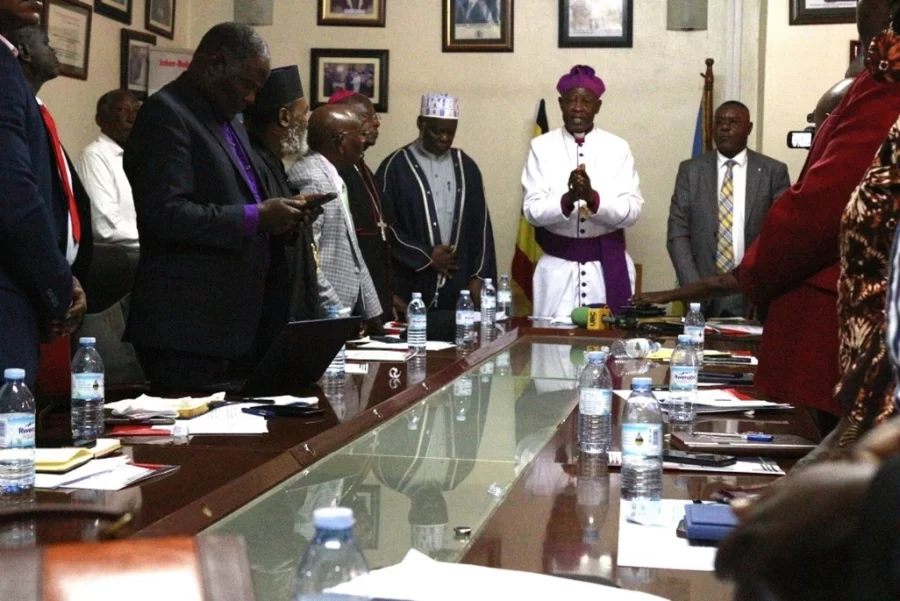
One of numerous public meetings of religious leaders helped to deliver messages of peace and responsible conduct in the run-up to Uganda’s elections.
Civil unrest, arrests by security services, injuries and even death occur when elections spin out of control. What ultimately causes a breakdown of order and incidents of violence and death is difficult to pin down. While a single incident, such as a video of an arrest or alleged ballot stuffing can trigger broader unrest, the real cause is an accumulation of missed opportunities and grievances.
Consequently, ensuring elections are transparent, fair and peaceful requires the intimate knowledge religious leaders possess of diverse stakeholders and institutions – from the candidates themselves to party members, from security personnel to lawyers and judges and everyday citizens.
Religious leaders occupy a rare space: they are rooted in the daily lives of the community yet organized through national bodies that reach the highest levels of the state, making them indispensable partners at both levels.
“Overall, the role of religious leaders in elections is not uniform” in African countries, said Hulluf Weldesilassie Kahsay, Special Envoy to the African Union of the African Council of Religious Leaders-Religions for Peace (ACRL-RfP) and a former Deputy Secretary General of the Interreligious Council of Ethiopia.
“They try to play their role to be the conscience of the society, to ensure accountability, peacefulness and fairness,” he said. “But there are challenges where the regimes are very, very strict, where the democratic space is very narrow. In those cases, their direct role tends to diminish to some extent.” Instead they are more engaged in creating a more informed citizenry and pushing the democratic boundaries.
Not all religious leaders, to be clear, get involved in elections, whether that involves election monitoring, voter education, signing of peace pledges or shuttle diplomacy. In some Southeast Asian nations, such involvement is uncommon, said Prof. Pablito A. Baybado, Jr, Associate Secretary General, Religions for Peace Asia.
In Pakistan, while various religious leaders are often deeply involved in politics, Religions for Peace Pakistan steers clear, said Secretary General Huma Ikramullah, a lawyer and an expert on parliamentary strengthening.
“Our focus is on addressing societal challenges and delivering humanitarian assistance – politics is a separate arena,” Ikramullah said. “While we engage with policymakers and implementers, our work is grounded in soft diplomacy and issue-based collaboration, without any direct involvement in elections or electoral campaigns.”
How Religious Leaders Support Free, Fair and Transparent Elections
Although a country’s context is key in determining how religious leaders can support elections, in recent interviews with religious leaders around the world, they said they generally use four types of tactical activities to promote free, fair and above all peaceful elections.
“Religious leaders are typically involved in creating and influencing the institutional frameworks of elections including electoral laws and electoral management bodies, voter education and awareness; efforts to bring candidates and parties to sign public pledges to peaceful elections; and shuttle diplomacy to engage stakeholders in private, high-level mediation before, during and after elections and post-election mediation processes,” noted Dr. Kuria who has been engaged in the processes for more than two decades. “Rejection of electoral outcomes is a major trigger for violence and religious leaders are always called upon to intervene in those situations.”
“Increasingly, religious leaders are trying to assert themselves and their roles are increasing,” Kahsay said. “They are increasingly coming into the democratic space.”
Beyond the immediate moral imperative to protect human life, there are many reasons religious leaders are involved in elections.
For one, ultimately, policies that elected leaders adopt can support the shared sacred flourishing of human beings and the planet. Religious leaders want to see government programs improve the conditions of society – particularly for the poor and vulnerable. For another, religious leaders provide a “moral compass” for their communities, helping to promote justice and fairness.
This focus on justice and fairness extends to the very structure of the electorate. While political scientists often discuss the “Democratic Peace”—the theory that democracies are inherently more peaceful—many argue that this peace is not achieved simply by holding elections. Instead, it is specifically tied to the enfranchisement and active participation of women. Without the full involvement of women in politics, democracies are statistically more likely to be aggressive and prone to conflict; their participation acts as a necessary counterbalance that steers nations toward social cohesion rather than militarism.
Religions for Peace operationalizes this theory through its global Women of Faith Network (WoFN). Recognizing that women’s leadership is a prerequisite for a non-aggressive state, the WoFN works within Interreligious Councils to ensure women are not just voters, but mediators and monitors.
By training women of faith to lead voter education and sit on peace committees, the network ensures that the “Democratic Peace” is a lived reality, moving beyond the ballot box to the stabilization of the community itself.
Finally, religious leaders understand and accept they have influence that can effectively ensure peaceful behavior.
“Religious leaders bring credibility and trust,” said Linus Nthigai, Executive Director of the Interreligious Council of Kenya. “In Kenya, we run a trust deficit – the population does not trust the government and neither does it trust the government institutions.
“The religious leaders are like a watchdog, to make sure institutions do what they need to do and to give credibility to the process.”
This watchdog role is more than purely moral; in Kenya, the Interreligious Council names two members to the Electoral and Boundaries Commission Selection Committee– one of whom serves as its chair – ensuring that faith-based oversight is baked into the official processes that determine who manages the vote, and with it the trust of the final outcome.
But they face myriad challenges in exerting that influence. For example, in some instances, politicians from one party will demand religious leaders admonish politicians from another party for various transgressions. Whether an admonishment is warranted or not, religious leaders have to avoid being pulled into the fray, they said.
“There is a great risk to religious leaders, particularly of losing credibility,” Nthigai said. “Politics is a mucky business – there are a lot of lies. Religious leaders must stand and be above the muck. They must stand their ground and do what is right.”
In Europe, this tension often takes a more subtle, seasonal form. Prof. Genti Kruja, President of Religions for Peace Europe, noted that politicians frequently use religious festivals as strategic backdrops. This performative engagement creates a morally complex environment where religious leaders must work twice as hard to maintain their neutrality while still providing moral guidance.
However, the Interreligious Council of Albania shows how this influence can be used for deep, structural peace, he said.
The Council has been active and consistent as a moral, social, and dialogical actor in the country’s public life; its five member religious communities “act as a coordinated voice intervening in issues of national and international importance, guided by religious, ethical, and universal principles, but also by concerns for social cohesion, peace, and the future of younger generations.”
The Council’s statements and positions focus on several key areas. First, it calls for political dialogue, self-restraint, and institutional stability – especially during political or electoral crises. In the broader field of peace and human dignity, “we condemn violence, terrorism and war, while also expressing concern over moral and ethical crises at the global level,” Kruja said.
It does not limit itself to election campaigns, engaging on legislation. The Council “acts as an interest group seeking institutional involvement and expresses reservations about draft laws that contradict theological principles, the traditional concept of the family, and legal clarity,” including issues such as gender equality, sexual and reproductive health, and the Family Code, Kruja said. He added that in collaboration with state institutions and international organizations, “We support initiatives against domestic violence, for human rights, equality, peace education, and the strengthening of the roles of youth and women.”
These positions show that the Council “does not see itself as a political actor but as a moral authority and social mediator, aiming to preserve the independence and dignity of religious communities while providing ethical guidance, public counsel, and contributing to building a just, peaceful, and inclusive society.”
This stance “places the Council in a complex moral space, constantly balancing institutional neutrality, public engagement, and the preservation of religious identity.”
Religious leaders agreed that to remain effective, maintaining strict neutrality is imperative. In Kenya, religious leaders seek to maintain neutrality through “peer counseling,” providing frequent feedback to each other aimed at ensuring no leader is seen as favoring a specific community or candidate.
The influence religious leaders possess comes not only from their moral stature in society, but also from their extensive knowledge of and relationships with various key stakeholders, too – from the political candidates themselves to the police and military officers, civil society leaders, lawyers and judges who play key roles in the conducting of elections.
Religious leaders tap these relationships well before elections take place, Nthigai said.
“We map out the key political leaders, who they are affiliated to, which religious leaders they respect – for example, if they are a Muslim, the mosque where they worship, so who is their Imam and who knows him,” he said. “During the general election, we mapped out the religious leaders who are close to the president – these people become part of our team; chaplains to the leaders.
“The chaplains walk with these political leaders and guide them on how best to handle the power, the authority they have. You can be sure, if the politician does something silly, they will hear from their pastor.”
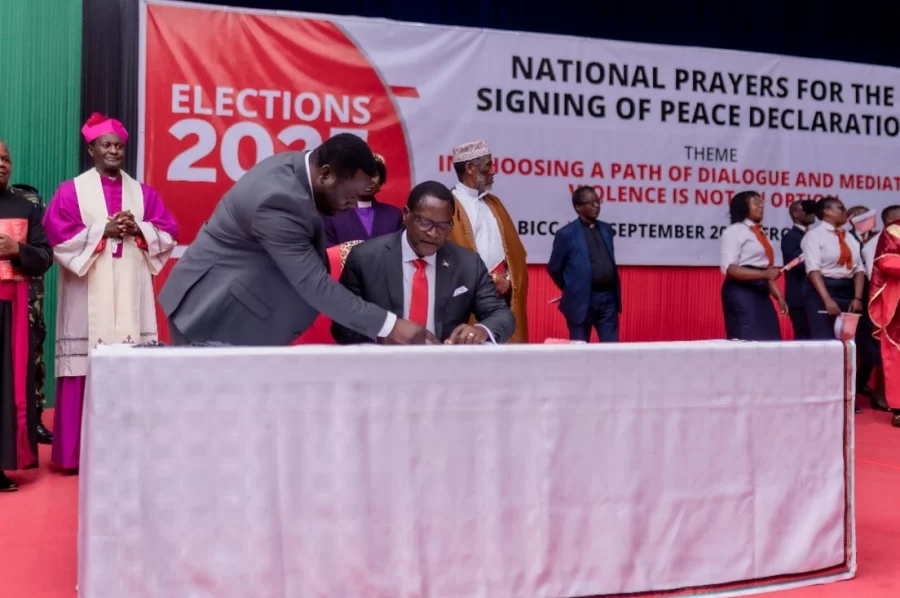
In many cases, too, the work of religious leaders occurs largely out of public view – but it has significant positive impacts at critical moments. A clear example involved religious leaders’ shuttle diplomacy in the tense aftermath of Malawi’s presidential election last year, said Stella Chikombole, Programme Officer of the Interreligious Council of Malawi.
“We saw the (government) party had a press conference declaring themselves the winner, then the opposition in the afternoon declared themselves the winner,” she said. “We recognized that if not handled correctly, this could lead to problems. So we spoke to both and said: ‘You have to wait.'”
Providing Moral Guidance to a Nation
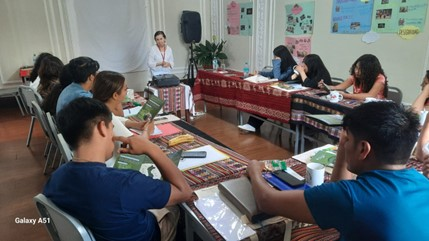
On a recent Saturday in a Methodist church on the outskirts of Lima, a group of about a dozen youth leaders from regions across the country were discussing Peru’s upcoming elections.
The elections – to be held in April – are shaping up to be the most unpredictable and complex in the country’s history. The sheer number of political parties is unprecedented: There are dozens of registered political parties eligible to run – and 36 candidates for president alone.
The country’ s religious leaders – like many Peruvians – are deeply concerned. Peru has faced extreme political volatility over the last decade – having had six presidents since 2018. Sensing the need for moral guidance, religious leaders representing the country’s diverse faiths have firmly amplified their voices – a reflection of the disquiet among them.
“People are very concerned with the reality of the country – and religious people are very concerned,” said Laura Vargas, executive secretary of the Interreligious Council of Peru. Religious leaders “know they have a responsibility – but they want to have some kind of criteria” to guide citizens.
Youth are particularly critical to peaceful elections. In Uganda, Kitakule said violence had partly occurred due to delays in the transmission of results.
“Some of the results were changed, altered – they did not match the results announced at the polling stations,” he said. “So the young people were incensed, they were so annoyed. They started becoming violent.”
Engaging youth must be prioritized, religious leaders said.
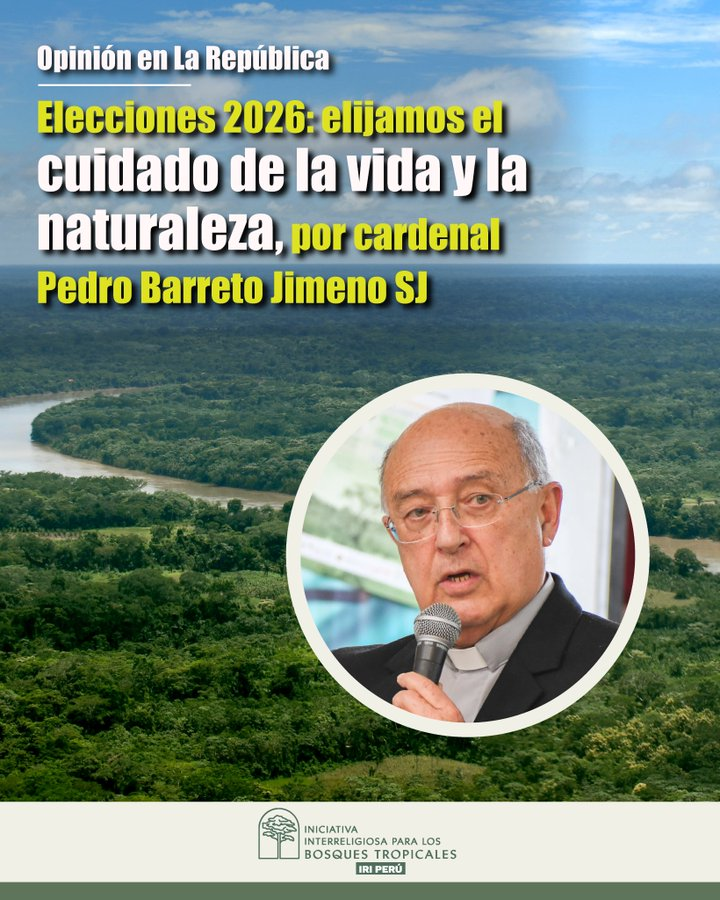
On this particular Saturday in Lima, the Methodist church youth leaders had such guidance to consider: Just two days before, an opinion article by one of the country’s leading religious leaders – Cardinal Pedro Barreto – pronounced on the urgency of electing authorities committed to the protection of nature.
Specifically, the article set forth five ethical criteria for the selection of candidates – and it reflected the consensus view of religious leaders across Peru, Vargas said.
The article has been widely published across Peru; numerous TV and radio stations have also made it a point of discussion.
“What we have done is created a powerful instrument because the article is very clear and direct,” Vargas said.
The Cardinal’s article outlines a moral framework for voters centered on integrity, service, and social cohesion. He demands a rejection of “dirty campaigns” and the weaponization of falsehoods, insisting that the presidency must be a sacrifice of service rather than a shield for legal immunity or private gain.
Ethical leadership, he asserts, requires a commitment to “radical dialogue” to bridge regional divides, a non-negotiable dedication to environmental stewardship of the “Common Home,” and the presentation of concrete, honest solutions to restore the faith of a disillusioned youth.
Since its publication, Vargas has sat for numerous interviews with media – further amplifying the message.
“We had many meetings that led to this idea of writing something – not to advise people to vote for someone but to vote according to these criteria,” she said. The need for clear criteria is significant, she said.
“In the Congress, you have at least 60 of members who have serious legal problems – accusations of domestic violence, corruption, being part of some mafia. So one of the criteria is the person has to be clean – no accusations.”
Similar efforts – under the umbrella of “voter education campaigns” – are undertaken by religious leaders in many countries. In The Philippines in 2022, religious leaders developed “a kind of training to conduct in religious communities, parishes or churches,” said Prof. Baybado of Religions for Peace Asia.
“It’s not intended to select a candidate but to provide criteria or principles that serve as a guideline for people to select or identify their candidate,” he said. “Here lies the issue, because in most cases it becomes an issue of moral ascendancy and credibility of the interfaith community.”
But religious leaders’ efforts can be stymied by other forces, he said.
“We have to ask, after the voter education is done, are we satisfied with the result based on the criteria we’ve provided? The answer is no – the people elected are not consistent with the criteria.”
Moral guidance carries weight – but that weight is eclipsed by the power of money, he said.
“We accompany communities through so many programs but at the end money, at times, speaks more than anything else – because in a country where the percentage of the poor outweighs the professionals, in reality it’s money,” he said. “All politicians will hand money out and people vote for the highest.
“That is also why post-election is bloody – because people (politicians) who feel their money has been squandered will be upset and use their goons to run after people.”
The Urgency for Moral Leadership
As polarization increases in societies around the world, avoiding such outcomes faces significant challenges; increased militarization – with nations spending trillions of US dollars annually on arms and munitions – making the risk to human life and development even more perilous.
The use of social media is also problematic, said Prof. Baybado.
“More and more, religious communities are in a quandary of how to address this fake news and how social media shapes the political process,” he said.
These trends may reflect – and may increase the perception – that people are growing disenchanted with democracy, despite numerous studies correlating democratic governance with positive changes in human development. And according to Our World in Data, while the world has become much more democratic over the last two centuries, in recent years it has become less democratic.
Religious leaders are mobilizing and redoubling efforts in light of these ominous signs.
“There is now an idea that instead of beginning voters education programs six months before the election we should start it right now – so we can reach more people,” said Prof. Baybado of efforts in the Philippines, which next elects the president and vice president in May 2028.
Interreligious collaboration is more critical than ever to address the various challenges, said Bertha Malla, of the Interreligious Council in Cameroon. Elections in Cameroon last year increased tensions across the country, she said, and led to violence in some areas.
“Bringing all the religious togethers is the key,” she said. “Resources are needed to do so, and institutional strengthening is critical and particularly focusing on how to handle elections. Ultimately, doing so will help ensure peace.”
Correction: A photo caption in a previous version of this story misidentified His Excellency Peter Mutharika; the photo shows Dr Lazarus Mac Carthy Chakwera, former president of the Interreligious Council of Malawi signing the peace pledge.