
This Year’s Nominees
This year’s nominees for the Women of Excellence in Multi-Religious Action Award represent a diverse tapestry of leadership, spanning from grassroots activism to high-level theological and political mediation. Each has demonstrated a profound commitment to using their religious identity as a tool for peace, inclusion, and social justice.
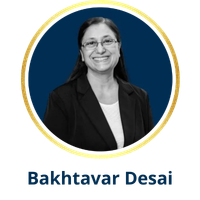
Bakhtavar Desai (USA)
Bakhtavar Desai is a pillar of the Zoroastrian community and a dedicated interfaith advocate in the United States. As a member of the Executive Council of Religions for Peace-USA, she embodies the Zoroastrian tenets of Humata, Hukhata, Hvarshta (Good Thoughts, Good Words, Good Deeds). She is the President of the Zoroastrian Association of Kentucky, Ohio, and Indiana (ZAKOI), where she led the effort to establish a permanent community center.
Bakhtavar devotes her time to Faith Communities Go Green, Cincinnati, in which she leads the Education/Lifestyles Working Group, inspiring community members to change their lifestyle, one step at a time, and live in harmony with nature. She volunteers with EquaSion and The Interfaith Center, both in Ohio, through which she works with youth and other community members from various faith traditions to build a Beloved Community. Her passion for Ending Hunger in the world and lifting the poorest communities out of poverty drives her to devote her time to Shared Harvest Foodbank in her community in Cincinnati, Ohio, and to Restore Hope Liberia, an international NGO.
Desai’s work is characterized by her commitment to human rights and youth mentorship. She was awarded a replica of the Cyrus Cylinder—the world’s oldest human rights declaration—for her efforts in promoting religious freedom. She consistently represents the Zoroastrian faith at the Parliament of the World’s Religions, focusing on inclusive societies and interreligious education. Her leadership is defined by the belief that peace is only achievable when differences are respected as reflections of the divine.
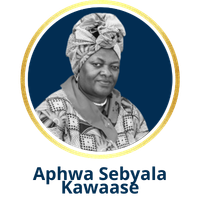
Aphwa Sebyala Kawaase (Uganda)
Aphwa Sebyala Kawaase is a prominent “International Climate Champion” and the President of Women in Insurance Uganda. She has pioneered a unique intersection between environmentalism and faith through her “Greening Fridays” initiative. This program, conducted in partnership with the Uganda Muslim Supreme Council, involves donating trees to congregants after Juma prayers during Ramadan and delivering “Green Khutbas” (sermons focused on ecology).
Her work extends beyond the environment to social dignity; she introduced the “Dignity for Girls” project at the national level and founded the Gomba Women Environment Group. Kawaase’s leadership is defined by her ability to mobilize religious institutions for climate action, ensuring that tree-planting efforts transcend religious boundaries to foster inter-religious collaboration. By integrating environmental stewardship into the core practices of faith communities, she addresses both ecological crisis and social cohesion.
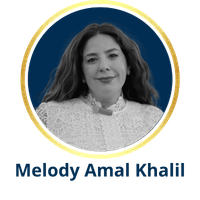
Ms. Melody Amal Khalil (Argentina)
Representing the next generation of interfaith leaders, Ms. Melody Amal Khalil is a KAICIID Fellow and an active member of the Religions for Peace Latin America and the Caribbean Youth Network. She is widely recognized as the co-creator of the podcast “In Your Shoes / En Tus Zapatos,” developed together with her Jewish colleague and friend, Barbara Zeifer; the platform fosters deep listening, narrative-sharing, and trust-building between Jewish and Muslim communities in Argentina.
Khalil has played a key role in promoting legislative initiatives aimed at protecting the religious freedom of Muslim women in Argentina. She has contributed to international interfaith efforts, including initiatives in Zimbabwe, as well as national projects engaging the three Abrahamic communities, with a strong focus on youth leadership. She has also developed reflection spaces and empowerment tools for women of diverse faiths living in Argentina.
Her approach is marked by moral courage and authenticity. Through digital storytelling and public engagement, she challenges stereotypes and builds empathy across religious divides. By centering youth participation and gender equality, she offers a hopeful and practical alternative to religious misunderstanding.
Among her most notable achievements, she became the first Argentine woman to preside over an Islamic institution, the Islam for Peace Institute, where she inaugurated both the Gender Secretariat and the Interreligious Dialogue Secretariat during her tenure. In addition, she serves as Co-Director of The Halal Catering Argentina, the oldest Halal certification body in Latin America, where she is responsible for international recognitions and for strengthening Argentina’s bridge to the global Halal industry.
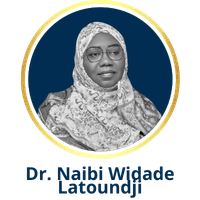
Dr. Naibi Widade Latoundji (Benin)
Dr. Naibi Widade Latoundji is a distinguished academic and a pillar of the Souffi Alawiyya Association in Benin. Since 2015, she has been the primary logistical and financial benefactor for Religions for Peace in Benin, even providing office space for the organization within her own institution, the Institut Africain Ibn Batouta.
Beyond her administrative support, Dr. Latoundji is deeply committed to the socio-economic empowerment of youth. She established sewing and audio-visual workshops specifically designed for school dropouts, ensuring that young men and women have the vocational skills necessary to thrive. Her work is a blend of academic excellence and grassroots charity, often organizing interreligious activities in collaboration with her husband and Religions for Peace Benin. Her recognition by the Ministry of Higher Education of Benin underscores her status as a leader who uses education as a tool for peace and gender equity.
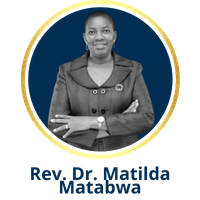
Rev. Dr. Matilda Matabwa (Malawi)
Rev. Dr. Matilda Matabwa is a trailblazing leader who serves as the first female Secretary General of the Malawi Assemblies of God. With over 24 years of experience in ecumenical and interfaith advocacy, she has become a pivotal figure in Malawi’s religious, civic, and political landscape. She is widely recognized for her courageous mediation during the highly contested 2014 and 2019 national elections, where she engaged directly with political party presidents to maintain peace.
Her work aligns closely with Religions for Peace through her leadership in peacebuilding dialogues and national women’s empowerment programs. Beyond the pulpit, she has created safe spaces for women and girls who are survivors of gender-based violence (GBV). These spaces have enabled victims to speak openly about their pain, reclaim their dignity, and begin meaningful healing and recovery from trauma through psychosocial, spiritual, and community-based support.
Dr Matabwa is a fierce advocate for climate justice and the protection and inclusion of persons with albinism, consistently amplifying the voices of those who are often marginalized. As a scholar, mentor, and ordained minister, she effectively bridges theological education with practical reconciliation and social transformation. Her visionary leadership is marked by compassion, courage, and a deep commitment to justice, particularly for women, children, and vulnerable communities, making her a compelling and deserving candidate for this honour.
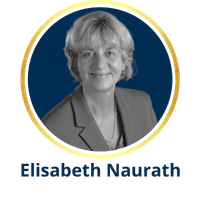
Prof. Dr. Elisabeth Naurath (Germany)
Professor Elisabeth Naurath is a leading academic and theologian who bridges the gap between high-level research and interreligious peacebuilding. She serves as the Chair of Religions for Peace Germany and a board member of Religions for Peace Europe. As the Chair of Protestant Practical Theology at the University of Augsburg, she focuses on “peace education” as a tool to prevent absolute convictions, polarization and radicalization.
Naurath is a pioneer in “Interreligious Environmental Ethics.” She manages the Erasmus Plus project “Facing Global Challenges,” which explores protecting water resources and climate justice through a multi-faith lens. Her work is deeply corrective; 80 years after the liberation from National Socialism, she remains dedicated to preventive work against anti-Semitism and Islamophobia. By organizing study trips like “Convivencia” (exploring Jewish, Christian, and Muslim history in Spain), she demonstrates that understanding one’s own roots is the first step toward respecting others.
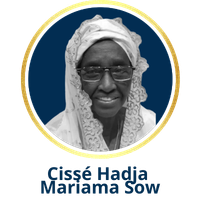
Cissé Hadja Mariama Sow (Guinea)
Cissé Hadja Mariama Sow transitioned from a prominent political career as a member of Guinea’s National Assembly to become a monumental figure in religious peacebuilding. As an Honorary C0-President of the World Council of Religions for Peace, she has dedicated decades to mobilizing Muslim and Christian women. She was instrumental in forming a national network of women of faith—Muslim and Christian—dedicated to strengthening religious faith, intergenerational dialogue, and community development.
Her leadership extends to national reconciliation; she chaired the Commission on National Reconciliation, Solidarity, and Human Rights following the country’s 2008 political transition. Her work focuses on intergenerational dialogue, family planning through a religious lens, and conflict resolution. A recipient of the “Grand Prix Émérite,” she is a seasoned “Ambassador for Peace” whose lifetime of service has institutionalized interfaith cooperation in Guinea and beyond.
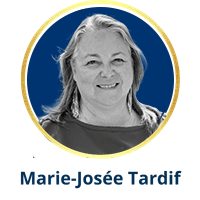
Marie-Josée Tardif (Canada)
Marie-Josée Rankin-Tardif is an author, teacher, and former Canadian news anchor whose work bridges Indigenous wisdom, interfaith dialogue, and conscious living. Her path shifted profoundly in 2007 when Anicinape (Algonquin) Nation elders offered her a Sacred Pipe. Now a knowledge keeper trained in the Anicinape spiritual tradition, she devotes her life to this path alongside Hereditary Chief Dominique (T8aminik) Rankin.
Together for over 20 years, they have championed well-being, reconciliation, and environmental renewal. They co-founded the organization Kina8at–Together, the Dominique Rankin Foundation, and Kisis Teachings. Marie-Josée also authored the bestseller They Called Us Savages, which details Chief Rankin’s experiences with residential schools, forgiveness, and healing.
Through nature-reconnection programs, conferences, and teachings, they reach thousands of people globally each year. On the international stage, Marie-Josée serves on the World Council of Religions for Peace, participates in United Nations peace initiatives, and contributes to the Vatican’s Ethics in Action Committee. Together, she and Dominique bring vital Indigenous wisdom to global conversations, building bridges between the world’s spiritual traditions to foster a deep, universal vision of reconciliation.
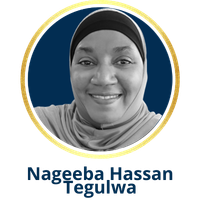
Nageeba Hassan Tegulwa (Uganda)
Nageeba is a veteran of the interfaith movement with over 17 years of service. She is a member of the Religions for Peace International Women’s Coordinating Committee and has held significant positions as the Co-Chairperson of the African Women of Faith Network (2025) and Chairperson for the Interfaith Women of Uganda (2020). She established and coordinated the first Muslim women’s desk at the Uganda Muslim Supreme Council (2014). She also mobilized grassroots women for meaningful leadership participation and advocated for the constitutionalization of women in the interfaith governance structures (UMSC 2022, IRCU 2013).
Tegulwa is particularly noted for her work with the UNHCR on refugees and statelessness. She also trains “women in uniform” on UNSCR 1325. She mentors children in planting fruit trees and smart farming to combat hunger and poverty contributing to climate and gender justice. She operates a “safe walk-in space” for survivors of SGBV and trafficked persons, offering psycho-social support and referral. Her career is a testament to the power of “service above self” in a male-dominated religious landscape.
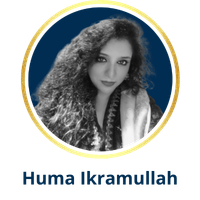
Huma Ikramullah
Huma Ikramullah carries forward a prestigious family legacy of interfaith leadership as the Secretary General of the Religions for Peace Interreligious Council of Pakistan. A lawyer by profession with over 20 years of experience, she has successfully navigated a male-dominated society to advocate for rule of law, gender justice, and environmental protection. She has trained judges and parliamentarians on gender sensitization and authored a foundational “Citizens Guide” to environmental law.
She is widely recognized for her rapid climate response efforts, spearheading community-centered resilience initiatives for flood-affected populations in partnership with Rotary International and civil society organizations.
Her work bridges the gap between high-level policy—such as drafting legislative manuals for provincial assemblies—and grassroots interfaith harmony. By utilizing her expertise in “Mind Heart Dialogue,” she fosters inclusive societies where faith is a driver for sustainable development and human rights.