
Reimagining Multilateralism: Finding the Space for Engagement Amid Significant Changes
June 1, 2026If there is one thing people agree on regarding changes to the international system and respect for international law over the past 15 months it is this: Very few people thought these changes would happen so quickly, so deeply. That is one reason religious leaders from across the Religions for Peace movement will discuss multilateralism at the upcoming International Council meeting.
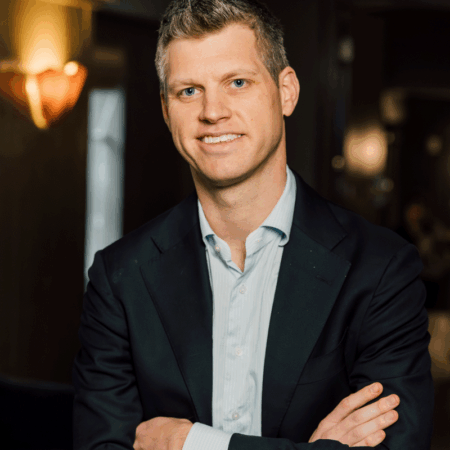
Michael Sheldrick of Global Citizen, an international advocacy organization and movement working to end extreme poverty, has been following the developments closely. He will share his perspectives on multilateralism with religious leaders during the International Council meeting in June.
Sheldrick, the Chief Policy, Impact and Government Relations Officer at Global Citizen, is also the author of a groundbreaking book – From Ideas to Impact: A Playbook for Influencing and Implementing Change in a Divided World. First published in 2024, the book distills Sheldrick’s experience into a practical guide for turning ideas into real‑world social impact.
Religions for Peace met up with Sheldrick online recently to ask him about the current state of multilateralism and how religious leaders can promote the multilateral dialogue and action that are at the heart of peacebuilding.
Religions for Peace: What’s your sense of the situation right now in terms of multilateralism?
Michael Sheldrick: I’m naturally a glass-half-full kind of guy — I look for the positive developments beneath the radar. Multilateralism is about cooperation, bringing people together and finding consensus on shared challenges. When people think of the UN, they tend to think of gridlock, and often that’s where the conversation ends. After all, you’ve got two of the P5 — the five permanent members of the UN Security Council — involved in major conflicts right now. So people understandably say, “Clearly, multilateralism has hit a brick wall.
But the flip side of that is: where does multilateralism exist? Because it can exist in other areas. The UN doesn’t have a monopoly on multilateralism. And I’ve been fortunate over the last 18 months to be part of several initiatives and efforts where degrees of multilateralism and cooperation have persisted despite the fragmentation we see in the world.
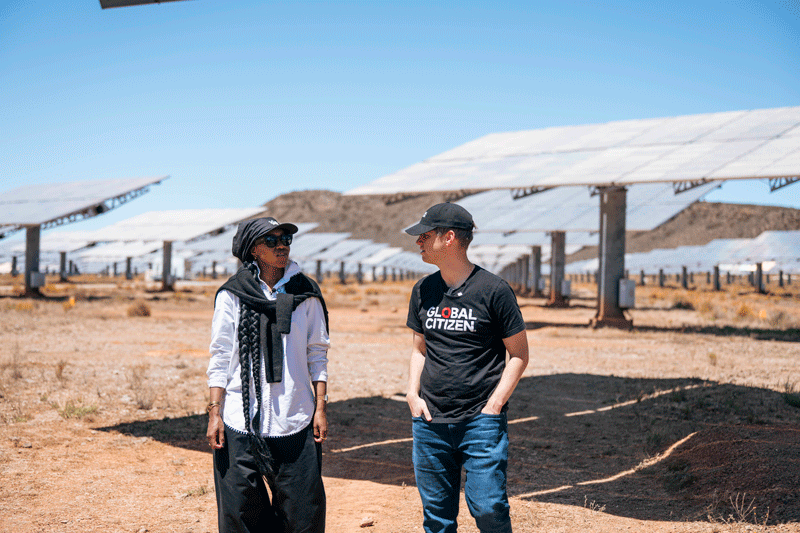
An example of that was last year. I was involved in an effort co-led by the European Commission and the South African G20 presidency to scale up renewables in Africa. It coincided with the G20 Summit in Johannesburg, where businesses, major financial institutions, governments, prime ministers, and presidents came together from north, south, east, and west. Collectively, they pledged to increase energy access for 17.5 million households across Africa, helping address the fact that millions of people still lack reliable electricity.
What really struck me was how countries and businesses leaned in around something as fundamental as energy access. It showed that countries — maybe not all, but many — are still willing to come together, find common ground, and cooperate on issues where the benefits are clear. Energy access is one of those issues because it’s a win-win.
Similarly, consider what happened recently in Santa Marta, Colombia. When people think about climate change, they often think about COP and the challenges of international cooperation. And there is some truth to that. COP processes have been criticized for failing to adequately address fossil fuel production. Yet at the same time, more than 50 nations came together in Colombia around a shared agenda to address this very issue.
So there are, if you like, coalitions of the willing emerging. And we’re increasingly seeing that we live in an era in which no one country, individual, or institution can dictate humanity’s future alone. That’s what gives me hope. These coalitions may well provide the foundation for rebuilding and strengthening whatever international order emerges from this period of uncertainty.
Religions for Peace: So, there’s still plenty of opportunity for people to engage on issues of common concern.
Michael Sheldrick: You can look at multiple polls from recent years — and I cite some of them in the book — whether it’s the Open Society Barometer, the Rockefeller Foundation, or the Children’s Investment Fund Foundation. One report I particularly like comes from an institute called Global Nation. They publish an annual Global Solidarity Report that measures the state of global solidarity worldwide.
What all of these reports show is that publics, generally speaking, are not as nativist or anti-cooperation as you might think. Actually, the report from the Rockefeller Foundation showed across 20 countries, including the United States, on average, more than three-quarters of people believed in international cooperation — not just believed in it, but believed in the necessity of it, especially when they could see how it impacted them.
Similarly, the number of people who identify as global citizens has remained remarkably resilient and, according to Global Nation, has even increased in recent months, particularly among younger people.
Religions for Peace: A lot of people now are asking, okay, what happens now – now that the United States and other countries seem to be going out on their own and doing their own thing without great concern for international law, for the international system. What do you think happens next?
Michael Sheldrick: As much as I’m an optimist, we do people, especially young people, no favors if we’re not honest with what’s going on. The threat of climate change remains profound. Thanks to international cooperation and progress made through the COP process, we are no longer heading toward the worst-case warming scenarios once projected. However, without further ambitious action, the world is still projected to exceed 2°C of warming, with potentially catastrophic consequences. It is not hyperbole to say that this is one of the closest moments we’ve been to, quote unquote, great power conflict in 80 years. All these things are true.
I think one of the things we must prepare people for is a deep sense of resilience—and how to thrive amid uncertainty. How to navigate uncertainty, how to be comfortable with uncertainty, how to be resilient, and how to maintain a sense of agency. Because in periods of flux and uncertainty, it is easy to wake up and think, ‘There’s nothing I can do. The odds are stacked against us, so why even bother?
It’s important to remind people that two things can be true at the same time. “Firstly, we can be in this period of great instability. But secondly, I don’t believe we are bystanders, because we arguably have a greater ability to make a difference than any previous generation that has ever lived. And that’s true on both the technological and scalability fronts.
If you come up with a great idea today, it’s far easier to share it, connect with others, and raise support across borders. There’s one way to look at challenges like climate change and think, ‘Wow, that could be pretty catastrophic.’ The other is to say, ‘Wow, if I ever wanted to live a profoundly meaningful life, here’s an opportunity to do something about it.’
A friend of mine who works on climate change was one of the architects of the Paris Agreement. After years of hearing him talk about climate change, his daughter eventually asked him, ‘Dad, are we actually going to be OK? Are we going to get through this?’
He turned to her and said, ‘No one knows the answer to that. I don’t know. But one thing I do know is that if you ever wanted to live a profoundly meaningful life, now is the time to do it.’
Because of the actions we take today, people born 5, 10, 15, or 20 years from now will be impacted as a result. And so, you could actually say it is a gift and an opportunity to be alive at this moment, because of the impact we can have as individuals.
Religions for Peace: And that’s a good segue into religious leaders and what they can do.
Michael Sheldrick: In the last 20 to 30 years, you saw this wave of religious leaders’ efforts lead to, in the early part of this century, massive levels of debt reduction and cancellations, and also the launch of ambitious efforts to address AIDS, tuberculosis, and malaria. (U.S. President) George W. Bush, who oversaw the largest expansion of US aid, has credited the Jubilee movement and religious-based advocacy with helping shape that agenda. And that was all driven by communities motivated by their faith and beliefs. It was people working across different religious boundaries, recognizing that sometimes you must cooperate with those you do not agree with on everything.
So there’s a powerful legacy to build upon. The challenge is making our values practical, right? I discuss this in the book, and my eight points can easily be used by a local religious leader or someone at a much higher level to motivate a community.
The moral authority of religious leaders was powerful during the pandemic, and there is no question that faith communities have been an important part of the global effort to reduce preventable deaths and improve child survival over the last few decades.
Religions for Peace: Given the trends in military conflict, in polarization, which are disturbing, what makes you hopeful?
Michael Sheldrick: The book I wrote wasn’t designed to be an answer to everything. It aims to give people a place to start — because if you can give people a place to begin, then maybe, just maybe, you can help them break free from the paralysis of apathy, fear, and despair that holds people back from taking action on the causes they care about. And that’s why one of the quotes I begin the book with is from Eleanor Roosevelt, who co-wrote the Universal Declaration of Human Rights. She said, ‘The way to begin is to begin.’ And sometimes that’s all people need to do. They just need to know how.
One thing I tell my team at Global Citizen — and something I’ve always believed as an advocate — is this: even when we think we’re going to win a campaign, whether it’s passing a piece of legislation, persuading a country to donate vaccines, increasing aid, or getting a business to invest in greater access to energy, don’t rest on your laurels. Wake up every day, stay focused, and ask yourself: ‘Is there something more I can do?’
Right now, in the lead-up to the World Cup here in America, I’m trying to help raise $100 million to support more than 100 communities through literacy and education initiatives around the world. I tell my team: Yes, we’re just about half the way there. That’s great, but if someone tells you they’ll have an answer or commitment maybe in a week, don’t spend that week waiting. Ask yourself: Is there someone in our network who should be writing a letter to the decision-maker in question? Should we be encouraging Global Citizens to email them? Should we be asking people to share positive messages about the education fund on their social channels? What more can we be doing? Don’t wait. There is always something to be done.