
The Climate Crisis is a Moral Crisis – and Faith Communities Hold the Key
June 1, 2026Climate is one of the key issues religious leaders from around the world will discuss at the Religions for Peace 2026 International Council meeting, June 23-25.
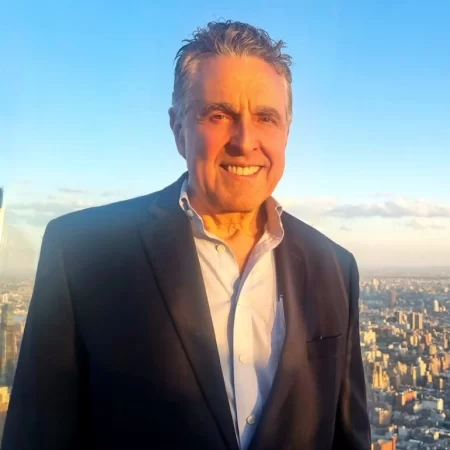
We turned to Dr. Charles McNeill, a globally recognized expert on climate and forests who has worked on the issues for more than 30 years at the highest levels, to frame the conversation. McNeill is also a member of the Religions for Peace Standing Commission on the Environment. McNeill is one of the featured speakers at the meeting.
READ the Climate, Conflict, and Debt Thematic Dialogue Summary
Religions for Peace: What is your assessment of the status of efforts to combat climate change?
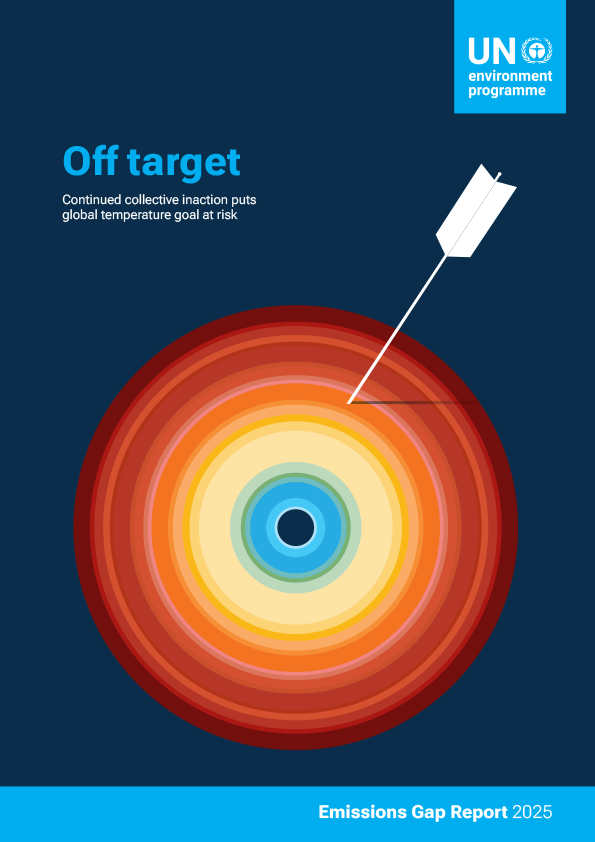
Charles McNeill: We are falling seriously behind. Natural disasters caused $224 billion in economic damage globally just in 2025 and climate change directly caused 16,500 additional deaths in European cities that summer. Since 1980 climate disasters have cost the US more than $3.1 trillion in direct damages. The past ten years have been the hottest on record.
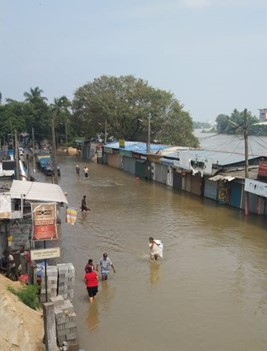
UNEP’s 2025 Emissions Gap Report is blunt: global emissions grew 2.3% in 2024 – so we are going in the wrong direction. Full implementation of all pledges would cut 2035 emissions by only 15% — we need 55% to stay at 1.5°C. Since the Paris Conference projections have fallen from 4°C in 2015 to under 3°C today — so progress is real but insufficient. Average temperatures will surpass 1.5°C or more within the next decade, within the term of leaders now in power and within the lifetimes of our children. Five Earth system tipping points are already at risk: ice sheet collapse, permafrost thaw, ocean circulation shutdown, and coral reef die-off. The window is closing faster than the political system is moving.
And yet there is some good news. China’s emissions will peak in 2025 — for the first time. COP30 in Belém produced significant advances despite the US absence: $1.3 trillion annually in climate finance by 2035, tripled adaptation finance, a Just Transition Mechanism, and the Belém Pact linking forest conservation with climate finance. Some 90 countries signed the Belém Declaration on the Just Transition Away from Fossil Fuels outside the formal process. And renewables surpassed coal as a global electricity source for the first time, with countries representing 46% of global GDP now growing their economies while cutting emissions. The argument that fighting climate change means sacrificing growth is collapsing under the weight of evidence.
Religions for Peace: How serious is the damage of the US retreat to efforts to combat climate change?
Charles McNeill: The US retreat is, in my view, the single largest setback to global climate cooperation in a generation. What the Trump administration has done:
- Withdrew from the Paris Agreement, then went further and withdrew from the UNFCCC itself — the foundational 1992 treaty underpinning all international climate cooperation.
- Gutted US engagement across the climate governance architecture: withdrew from the IPCC and Green Climate Fund; cancelled Just Energy Transition Partnerships with South Africa, Indonesia, and Vietnam; withdrew from the UN Loss and Damage Fund board.
- Froze IRA clean energy disbursements, then passed the “One Big Beautiful Bill” — phasing out renewable energy tax credits and reversing hundreds of billions in clean investment.
- Fired tens of thousands from the EPA, NOAA, the National Science Foundation, and USAID; erased scientific datasets; and eliminated NOAA’s Billion-Dollar Disaster dataset.
- Exited more than 60 international organizations, including many related to climate, biodiversity, and clean energy.
The consequences are measurable and tragic. The Paris withdrawal alone adds 0.1°C to a trajectory already heading toward 2.3–2.8°C; domestic reversals have increased projected US 2030 emissions by 1 GtCO2e. The retreat signals permission to other governments to weaken their own commitments and emboldens petrostate obstruction at the UNFCCC.
And yet the world is moving on. China, the EU, the UK, Japan, Canada, Australia, Brazil, South Korea, India and over 130 other countries remain committed — together representing more than three-quarters of global emissions. A clean energy future is being built — with or without Washington.
Religions for Peace: Is the transition to renewables reason to be hopeful?
Charles McNeill: Yes — the renewable transition is the most important development in the climate story right now, and it is happening in spite of the Trump administration.
In 2025, global renewable capacity additions reached a record 800 GW — the 23rd consecutive year of new records. Solar alone added 600 terawatt-hours — the largest single-year increase ever recorded for any electricity technology — and renewables surpassed coal globally for the first time. Solar costs have fallen 90% in a decade, wind 80%; utility-scale solar now runs 4–8 cents per kWh — cheaper than coal or gas in virtually every market.
Even inside the US, economics override politics: 73% of new solar in 2025 was installed in states that voted for Trump.. That makes Washington’s systematic dismantling of US climate leadership all the more tragic — a self-inflicted wound to America’s economy, its credibility, and the world’s chances of averting catastrophe.
Religions for Peace: What do you think of the fossil fuel transition effort that emerged from COP30 — particularly the Santa Marta conference in April 2026?
Charles McNeill: I consider it one of the most important developments in international climate diplomacy in recent years.
At Belém, more than 80 countries pushed for a fossil fuel phase-out roadmap in the COP30 outcome text. A handful of petrostates blocked it. The final “Global Mutirarão” decision contained no mention of fossil fuels — the primary driver of the climate crisis.
Colombia and the Netherlands refused to accept defeat, co-hosting the world’s first International Conference on Transitioning Away from Fossil Fuels. Twenty-four countries immediately signed the Belém Declaration outside the UNFCCC framework, and the COP30 Presidency committed to a fossil fuel transition roadmap for COP31.
The Santa Marta Conference (April 24–29, 2026) brought together 57 countries representing one-third of the world’s economy. It moved beyond the “whether” of the fossil fuel transition to the “how” — national roadmaps, fossil fuel subsidy phase-outs, and new financing mechanisms. Its report feeds into the COP30 Presidency’s fossil fuel transition roadmap for COP31 in Antalya in November 2026. Tuvalu and Ireland will co-host a follow-up in 2027.
What gives this initiative its power is that it operates outside the UNFCCC’s consensus constraints — the same constraints that let a handful of petrostates block progress at Belém — while feeding its outputs back into the formal process. This is how transformative international action sometimes happens.
“The climate crisis is, at its core, a moral crisis — a failure by those who caused it toward those who suffer most from it, and toward every generation that follows.”
Religions for Peace: How can religious leaders be most impactful in addressing the climate crisis?
Charles McNeill: Faith communities bring something no government or NGO can replicate: moral authority rooted in ancient traditions, reach into communities no climate organization has accessed, and the ability to speak to the human heart. Religious leaders — among the most trusted voices in many societies — are an invaluable asset in an era of deliberate climate disinformation.
The most impactful areas for religious leadership include:
- Framing climate and fossil fuel phase-out as a moral and spiritual emergency. Drawing on the powerful ethical frameworks and respect for nature and human rights that each tradition already offers.
- Actively refuting fossil fuel industry disinformation. The fossil fuel industry has spent decades and billions deliberately misleading the public — a documented campaign of deception. Religious leaders have both the credibility and the obligation to name this publicly.
- Amplifying Indigenous voices and rights — especially in the Amazon, where Indigenous communities are the world’s most effective forest guardians and the most threatened by illegal extractive industries. The Interfaith Rainforest Initiative, co-founded by Religions for Peace with GreenFaith, the World Council of Churches, Yale Forum on Religion & Ecology, Parliament of the World’s Religions, the Rainforest Foundation Norway, the government of Norway, and the UN, is a proven model of this engagement.
- Advocating for food system transformation. Every major faith tradition has a deep relationship with food — through fasting, dietary laws, and communal meals. The EAT-Lancet Commission 2.0 identifies plant-rich diets as one of the most powerful actions available for both climate and human health. A moral case for dietary change, taught from within each tradition and modelled at the communal table, reaches people in ways no campaign can.
- Combating illegal gold mining (ASGM) in the Amazon — a fast-growing driver of deforestation, Indigenous destruction, and mercury poisoning. Faith networks rooted in affected communities – and globally – can document and mobilize pressure in ways no outside organization can.
- Demanding the redirection of environmentally harmful subsidies. The IMF estimates that governments provided $7.4 trillion in fossil fuel subsidies in 2024 — representing nearly 6.5% of global GDP, more than governments spend on education worldwide and approaching what they spend on healthcare. Governments are simultaneously subsidizing the destruction of forests, fisheries, freshwater systems and agriculture at a scale that dwarfs their investments in protecting them. Redirecting even a fraction of this to clean energy, forest protection, and sustainable food systems would be transformative. Religious leaders can and must make this a moral imperative, not only a technical policy debate.
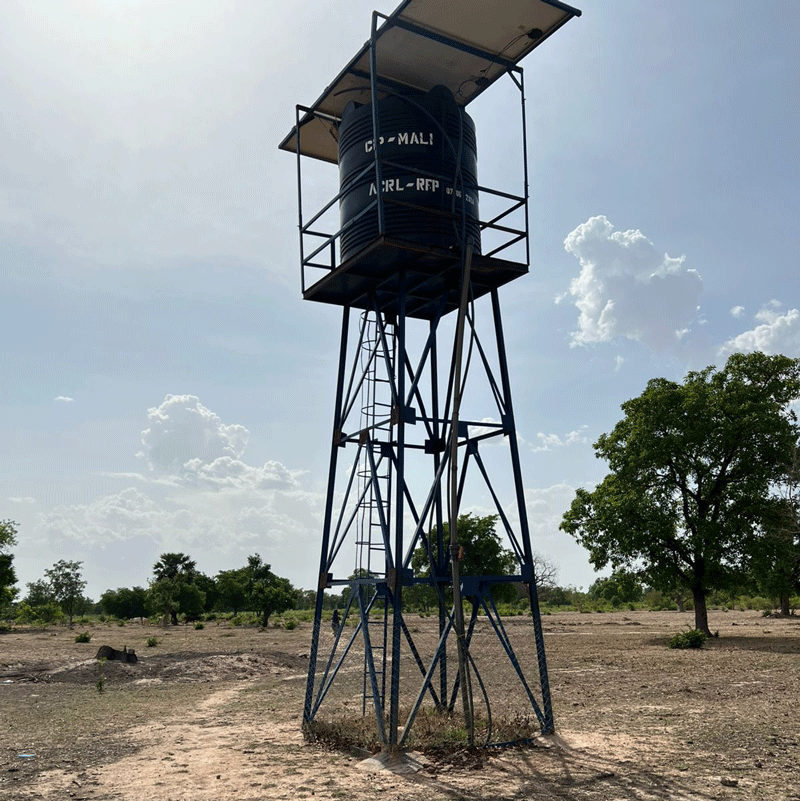
The climate crisis is, at its core, a moral crisis — a failure by those who caused it toward those who suffer most from it, and toward every generation that follows. Every major religious tradition has something profound to say about that failure, and the moral authority to act on it. That voice is now essential in the climate response.
Religions for Peace: So, what happens next?
Charles McNeill: In the short term – the next two to three years – we can expect more of the same from Washington — policy rollbacks, fossil fuel subsidies, and US absence from every climate forum. Disasters will intensify. But resistance is growing: US states are holding the line, the economics of renewables are unstoppable even in Republican states, and the 2026 midterms could shift the congressional landscape. Internationally, the Santa Marta process feeds into COP31 in Antalya in November 2026.
Over the medium term – five to 10 years – the best case would be a new US administration rejoining Paris, restoring funding, and bringing American commitment back to the table. With the renewable transition already underway, there is a credible path to bending the emissions curve.
The worst case would be that the US remains outside the multilateral system for another decade, the UNFCCC framework collapses under the combined weight of US, Gulf-state, and Russian obstruction and intransigence, global temperatures track toward 3°C, and the window for orderly transition begins to close.
Over the long term – 10 years and beyond – the worst case is self-amplifying warming beyond control — mass displacement, conflict, coastal civilization destroyed, and tipping points locking in irreversible change. The best case would be a civilizational “Moon Shot” — rapid decarbonization, halted deforestation, transformed food systems, carbon sequestration at scale. One conversation we can no longer avoid concerns Solar Radiation Management (SRM) — deliberately intervening in the Earth’s energy balance to slow warming while emissions are reduced. The science is untested, the risks poorly understood, and the potential for unintended consequences is real and possibly irreversible. But set against a trajectory heading toward hundreds of millions of deaths, the collapse of food and water systems, and the triggering of tipping points beyond human control, the question of whether carefully governed SRM research should proceed should no longer be dismissed. At the very least, we need urgent international conversation about governance: who decides, under what authority, by what process, and with what safeguards — before a climate emergency forces improvised, ungoverned and possibly tragic action.
Religions for Peace: What gives you hope as you look to the future?
Charles McNeill: There is genuine reason for hope and I say that as someone who has spent 30 years with the UN working with committed people and institutions who refuse to give up. Here is what gives me hope:
- Religions for Peace and the multi-faith movement are stepping up in historically significant ways. The Interfaith Rainforest Initiative (IRI) shows the kind of global impact this cooperation can have.
- Renewable energy is winning on cost, reliability, and investment flows — and no single government can stop it.
- The movement to phase out fossil fuels is institutionalizing fast: the Belém Declaration, Santa Marta process, and the emerging Fossil Fuel Non-Proliferation Treaty framework.
- Indigenous peoples’ voices and legal recognition are expanding — in international forums, national courts, and the UNFCCC. This matters: Indigenous-managed territories are among the most effective carbon sinks on earth.
- Civil society and young people are active, connected, and refusing to be silent. The generation that will live with today’s decisions is not waiting for permission to demand better ones.
- The UN system, despite US funding cuts and absent American leadership, remains active — convening, facilitating, and holding the line. The multilateral system is stressed. It is not broken.
We have the science, the technology, and increasingly the economics. What is required is a moral reckoning with what we are doing to the most vulnerable people on earth, to nature and to every generation that follows. That reckoning is the work of religious communities. This is their moment.