
10 Years Later, Marrakesh Declaration Continues to Inspire Action for Religious Freedom
August 4, 2026The Marrakesh Declaration, a milestone document affirming the equal citizenship and the protection of religious minorities in Muslim majority countries continues to inspire action and religious freedom, a meeting to celebrate its 10th Anniversary in Casablanca, Morocco earlier this month noted.
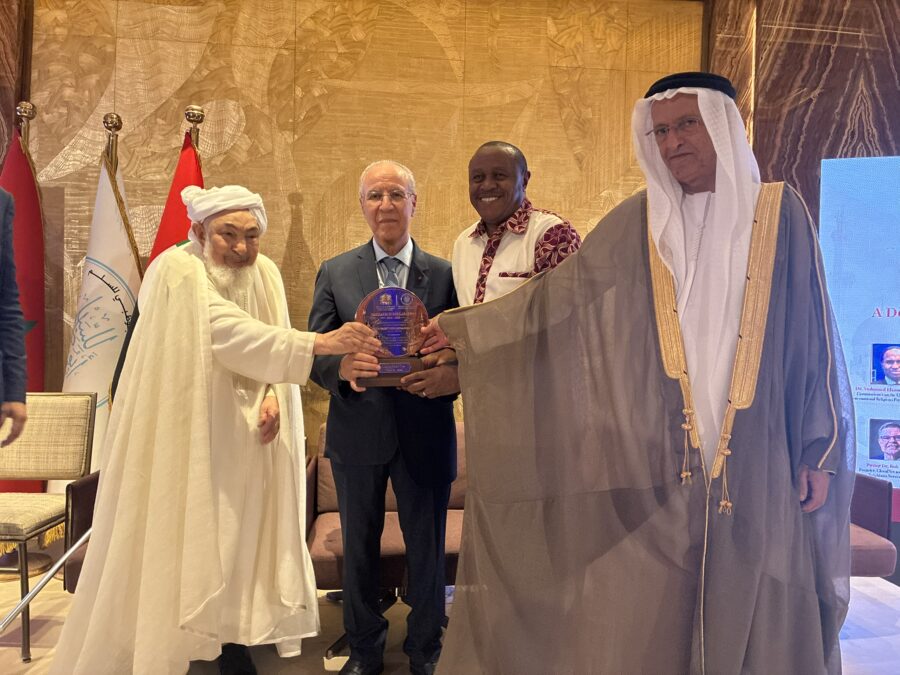
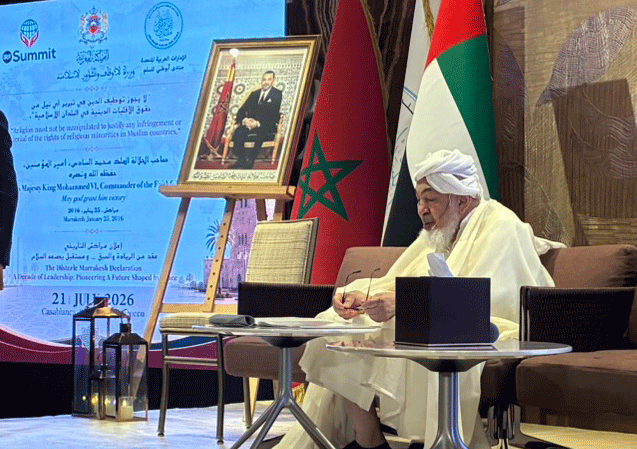
“Our meeting tonight is a celebration but also a contemplation,” Shaykh Abdallah bin Bayyah, President of the Abu Dhabi Forum for Peace and Co-Moderator of Religions for Peace, told the assembly of distinguished religious leaders. “More than 250 scholars gathered 10 years ago at a delicate time…. (The Declaration) was an opening to a series of initiatives and opened broader horizons of coexistence and collaboration.”
Shaykh bin Bayyah was the primary leader and author behind the development of the Declaration in response to the Daesh’s horrific campaign of extermination against the Yazidi people in northern Iraq.
The Marrakesh Declaration reflected a consensus among Muslim scholars that they had a deep moral obligation to mount a doctrinal counter-offensive from within traditional Islamic orthodoxy.
Former U.S. Ambassador-at-Large for International Religious Freedom Sam Brownback commended Shaykh bin Bayyah for his leadership in advancing religious freedom.
“I want this man to live a long time,” Brownback said. “We need him to live a long time to carry this message… thinking away from a very militant view to a very peaceful view.”
By using Islamic jurisprudence to unequivocally refute religious persecution and demand equal citizenship for all, the Declaration served as a direct, necessary theological counter-offensive to the atrocities committed in Sinjar.
The issuing of the Marrakesh Declaration reverberated across the world. The anniversary’s list of illustrious attendees reflected its importance: the event included the Kingdom of Morocco’s Minister of Endowments and Islamic Affairs, His Excellency Ahmed Toufiq, as well as the U.A.E. Ambassador to Morocco, H.E. Al Asri Saeed Ahmed Aldhaheri.
In 2016, Dr. William Vendley, Secretary General Emeritus of Religions for Peace, helped unify religious leaders in supporting the Declaration. More than 50 non-Muslim religious leaders participated as observers in Marrakesh, he recalled at the anniversary event. The Declaration reflected n the profoundly important scholarship of Sheikh bin Bayyah, he said.
“The Marrakesh Declaration is a historic document of great importance,” Dr. Kuria said. “Its brilliance was not just in clarifying that persecution of religious minorities was unacceptable – but in anchoring the argument in the Medina Charter, a 7th-century pact established by the Prophet Muhammad for the inhabitants of Medina.”
The Charter of Medina treated all signatories as equal members of a single civic body (Ummah). The Marrakesh Declaration used this precedent to argue that modern Muslim-majority states should move away from medieval notions of “tolerated minorities” and instead guarantee equal, contractual citizenship under the law for everyone, regardless of faith.
By using 7th-century Islamic precedent to arrive at conclusions that align with the UN Universal Declaration of Human Rights, the Marrakesh Declaration bridged traditional jurisprudence with modern international legal standards.
Shaykh bin Bayyah and his fellow Muslim leaders had used their scholarship brilliantly, Rashad Hussain, Former Ambassador-at-Large for International Religious Freedom told the audience, but now others must step up to ensure the urgent implementation of the Declaration’s core ideas, he added
Shaykh bin Bayyah was warmly received at the anniversary celebration. Now 91, his animated presence at the anniversary celebration brought obvious joy to the attendees, particularly his former students.