
‘We Must Protect Human Dignity’: How Interreligious Collaboration is Seeking to End Human Trafficking
August 7, 2026In 2019, a delegation from Religions for Peace Asia visited a shelter in the Philippines and praised its efforts to rescue exploited workers – women and children – who had been trafficked and endured some of the most horrific circumstances.
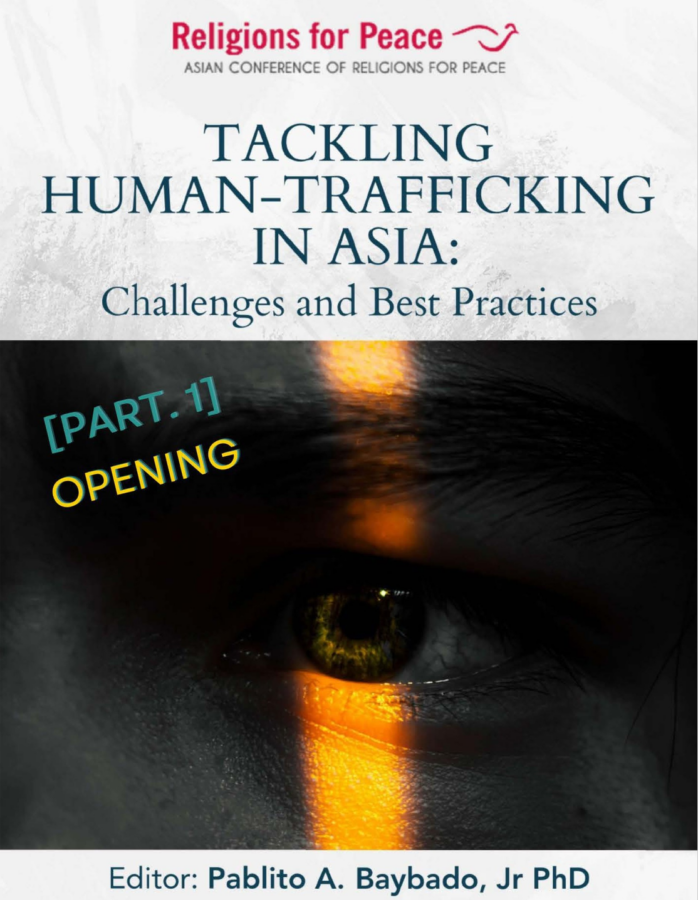 The visiting delegation included Japanese religious leaders. While their praise for the shelter’s efforts was appreciated, it sparked an eye-opening response, recalled Rev. Dr. Yoshinori Shinohara, Secretary General of Religions for Peace Asia, the regional body that supports and implements myriad activities across Asia.
“One of the activists said to the Japanese leader, ‘No, no, no, this is an offense by Japan – the Philippines is one of the victimized countries.’” Rev. Dr. Shinohara said. “They said, ‘These issues are happening because of you!’”
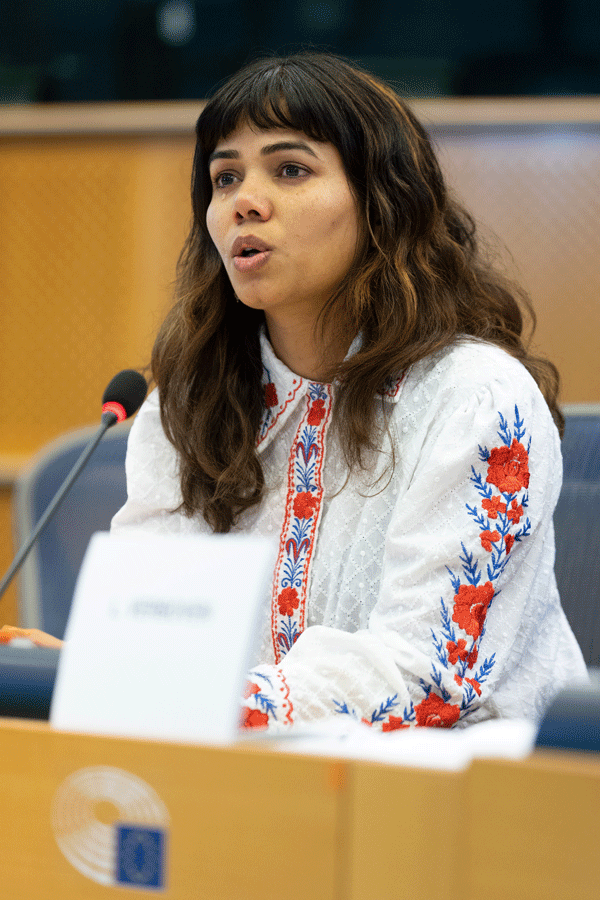
The activist was highlighting that, in Asia, people are trafficked to meet the demand for labour; some countries see significant numbers of their citizens exploited in other countries. They are often tricked – told there is a good job available and then severely exploited, as sex workers perhaps or in scam centres, an emerging industry.
The exchange was transformational, Rev. Dr. Shinohara said. Recognizing that human trafficking represents a grave violation of human dignity, Religions for Peace Japan established an Anti-Human Trafficking Task Force in 2020 to hold Japanese institutions and society accountable, he said.
Human trafficking and modern slavery affect everyone
Religions for Peace Asia and Religions for Peace Japan are not alone in receiving such a wake-up call – nor is Asia unique in confronting the problem.
In 2003, more than 180 nations ratified or acceded to the UN Protocol to Prevent, Suppress and Punish Trafficking in Persons (the UN TIP Protocol), which defines trafficking in persons and contains obligations to prevent and combat the crime. But efforts on the issue seemed to stall in the mid-2000s, experts said.
In 2022, amid mounting evidence that the COVID-19 pandemic, conflict, and displacement had increased vulnerability to exploitation, a scoping study undertaken by the Modern Slavery and Human Rights Policy and Evidence Centre emphasized the scale of the challenge, particularly the risks associated with forced displacement.
More than 100 million people have been forcibly displaced around the world; of these, at least 50 million are trapped in slavery. The scoping study led to the creation of the Global Commission on Modern Slavery and Human Trafficking.
In its most recent report, “No Country is Immune,” released last year, human trafficking and modern slavery remain a critical and prevalent problem, said Amy Younger, deputy executive director.
Modern slavery “affects every single person in the world… everything we do, the clothes you are wearing, the coffee you’re drinking, everything is impacted by modern slavery,” Younger said.
The Global Commission’s efforts support achieving Sustainable Development Goal 8.7 – “to eradicate forced labour, end modern slavery and human trafficking, and eliminate the worst forms of child labour by 2030.” Its efforts target government, business and civil society, Younger said.
The Global Commission is chaired by former UK Prime Minister Theresa May and includes Nasreen Sheikh, a survivor of human trafficking. Sheikh is the founder of the Empowerment Collective, a survivor-led organization dedicated to ending modern slavery through advocacy, education, and survivor empowerment.
Sheikh said faith helped her endure the long days she spent working in a sweatshop in Nepal as a child.
“When I was working in the sweatshop 15 to 18 hours a day, my only bed was the pile of clothes I slept on,” she said. “The conditions were incredibly harsh, and I found myself talking to the universe in silent prayer.
“I would say, ‘Whoever is going to wear this shirt, this is my blood, my tears. Please feel my suffering.’”
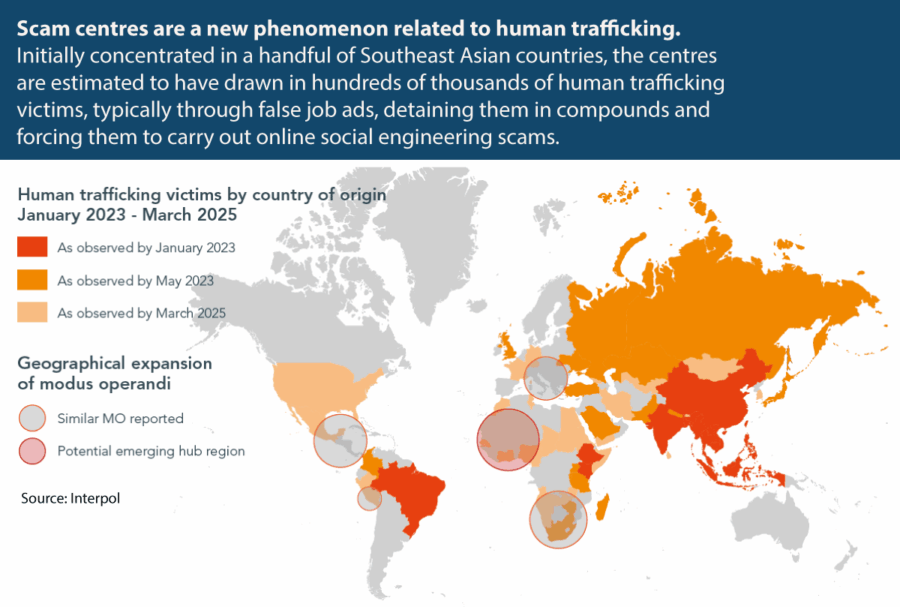 Religion and religious leaders have an important role to play in preventing and eliminating human trafficking and modern slavery, she said.
“For me, religion is a spiritual expression of love, service, and oneness. It is a deeply Indigenous form of sacred, generational art and knowledge,” she said. “If the faith leaders of the world cannot collectively find one another through their service to this oneness and love, then how are they truly living in a state of faith?”
That belief has inspired Sheikh to organize an annual Global Open Faith Prayer to End Modern Slavery each Black Friday (the fourth Friday of November – and the busiest shopping day in the U.S.).
“Every Black Friday, I invite people of every faith and those of no faith to come together in prayer, meditation, and intention,” she said. “My hope is that we stop consuming the suffering of others and instead use our compassion and our everyday choices to build a world rooted in human dignity.”
People know, intrinsically, that human trafficking and the exploitation of people are wrong, but many remain unaware of the true scale of the problem, and translating awareness into action remains a challenge, she said.
Assessing human trafficking and modern slavery
The U.S. State Department’s annual Trafficking in Persons (TIP) report is considered an authoritative assessment of government anti-trafficking efforts in 188 countries and territories, including the United States, covering efforts across the “3Ps” of prosecution, protection, and prevention.
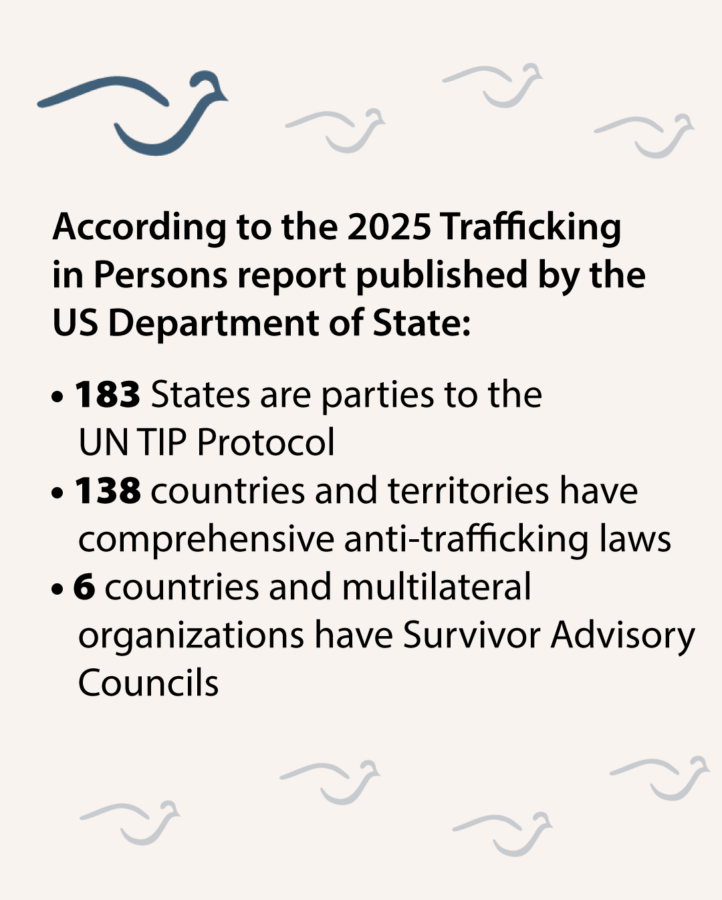 The most recent report, published in part in April 2026, indicates that:
- 183 States are parties to the UN TIP Protocol
- 138 countries and territories have comprehensive anti-trafficking laws
- 155 countries and territories have national anti-trafficking coordinating bodies
- Six countries and multilateral organizations have survivor advisory councils
- 2024: TIP Report records highest ever reported numbers of total victims identified and labor trafficking victims identified by countries around the world
- 2025: TIP Report records highest ever convictions for labor trafficking by countries around the world
- 2024: First use of Global Magnitsky sanctions for forced labor in online scams (Global Magnitsky sanctions are targeted legal penalties—primarily asset freezes and travel bans—used by governments to punish foreign individuals, corporations, and entities involved in serious human rights abuses or grand corruption anywhere in the world)
Women and girls account for a significant majority of the victims detected—particularly in cases of sexual exploitation—while men and boys represent a high proportion of forced labor victims. Children make up approximately one-third of all detected trafficking victims globally.
The complexity of human trafficking and modern slavery – and the critical role of religious leaders in addressing the issues
While human trafficking is a global issue, its patterns vary across regions, with a variety of drivers.
“Modern slavery doesn’t exist on its own,” Younger noted. “It’s formed by many different things such as climate change, war, economic crises. And so, when international organisations are going into crises contexts, they need to make sure they are prioritising modern slavery as one of the main protection clusters.”
In Asia, deceptive recruitment can expose workers seeking legitimate employment across borders to debt bondage, forced labour and sexual exploitation.
In Africa, a high prevalence of intra-regional trafficking occurs – particularly involving forced child labour in agriculture, mining and domestic work, as well as forced recruitment into armed conflict groups.
North America acts primarily as a destination hub for forced labour and commercial sexual exploitation, with victims originating both domestically and from Latin America and Asia.
In Latin America & the Caribbean, research has concluded that high rates of internal and cross-border trafficking are driven by organized crime networks, irregular migration routes, and economic instability.
The recent devastating earthquakes in Venezuela – and similar disasters elsewhere in the world – exacerbate human trafficking.
Support the recovery in Venezuela. Please give to the Religions for Peace Multi-Religious Humanitarian Fund
“The humanitarian response to the Venezuela earthquakes must also address the conditions that make displaced communities vulnerable to modern slavery and human trafficking,” asserted a report by Walk Free, an international human rights group focussed on the eradication of modern slavery in all its forms.
The group urged the humanitarian response to include measures addressing human trafficking.
“Disasters create opportunities for traffickers to target people facing uncertainty with deceptive transport and job offers,” the Walk Free report said. “Displacement can leave people without a stable income and cut them off from the support they rely on.”
Economic and political crisis or instability have made Venezuelans particularly vulnerable to exploitation – more than 6.5 million Venezuelans are refugees, according to the UN High Commission on Refugees. Migration itself should not be treated as the cause of trafficking; the focus must remain on the people and systems that exploit vulnerability.
Laura Vargas, executive secretary of the Interreligious Council of Peru, said religious leaders are well aware of the issue across South America. More than one million Venezuelans have fled to Peru in recent years, she said.
“It is a real problem – we have a big migration from Venezuela,” she said. “Many people have nothing – so they look for some kind of job.”
Religious organizations operate shelters to reach the vulnerable who may be being exploited, she said.
Europe and Central Asia include countries of origin, transit and destination for human trafficking. People displaced by conflict or moving along refugee and asylum routes may face heightened risks when traffickers exploit insecure status, limited access to livelihoods, separation from support networks and deceptive offers of transport or employment.
Genti Kruja of Religions for Peace Europe said the situation is not only a criminal matter but also a profound moral and humanitarian challenge. Religious leaders, he noted, are among the most trusted voices in many communities and can raise awareness, help identify people at risk, provide safe spaces and spiritual and psychosocial support for survivors, and cooperate with public authorities and civil society to prevent exploitation.
Faith communities also have a responsibility to challenge narratives that stigmatize migrants, Kruja said, while promoting human dignity, solidarity and shared responsibility. From the experience of Religions for Peace Europe, interreligious cooperation has proven particularly valuable in building trust across communities and mobilizing collective action.
Because human trafficking transcends borders, religions and cultures, the response must be collaborative and rooted in the shared conviction that every human being possesses inherent dignity that must be protected, he said.
Religious leaders must act – and can play a critical role in addressing the problem, Rev. Dr. Shinohara said.
Religions for Peace Japan and Religions for Peace Asia organize their work around three main strategic pillars:
- Learning / Field Exposure: Visiting shelters, interviewing migrant workers, and witnessing the actual conditions of victims firsthand.
- Networking & Public Awareness: Holding regular online workshops and regional webinars connecting leaders across Asia. Awareness videos posted on YouTube have garnered over 200,000 views, demonstrating high public interest.
- Advocacy & Dialogue: Directly engaging with Japanese parliamentarians, government officials, and business leaders to push for policy reform and faster legislative action.
Their work has also entailed producing a resource guide to fight human trafficking, which will be translated in coming months for broad dissemination, and an e-book on challenges and best practices with diverse religious perspectives.
Dr. Renz Argao, chair of the Religions for Peace International Youth Committee, and a professional psychologist, said additional efforts should include capacity building programs that can help identify at-risk individuals, capacitate and empower religious communities for action, and mobilize youth for support.
“Many, perhaps most, of the victims of human trafficking are young people,” Dr. Argao said. “The myriad crises in the world today create the systems and situations for trafficking to thrive. Traffickers exploit these.
“We can help prevent trafficking by expanding access to safe and lawful employment, ensuring that people’s basic needs are met, and strengthening humanitarian assistance for communities affected by crisis.”
Confronted with the pervasiveness of human trafficking and modern slavery – as well as its profound impacts on the lives of millions – interreligious collaboration is of paramount importance, said Rev. Dr. Shinohara of Religions for Peace Asia.
“Human trafficking is one of the most serious problems,” Rev. Dr. Shinohara said. “Religious leaders are always advocating for the protection of human dignity. Each life, each person must be equally respected.
“Religious leaders have a responsibility. We must protect human dignity.”