
Across the Movement: April 2026
April 29, 2026Hundreds of rabbis and other religious leaders condemn desecration of Jesus statue in southern Lebanon
In a signed statement, hundreds of rabbis and other religious leaders condemned the desecration of a statue of Jesus by an Israeli Defense Forces (IDF) soldier in southern Lebanon.
“The reaction was quite widespread shock,” said Rabbi David Rosen, Special Interfaith Advisor to the Abrahamic Family House in Abu Dhabi and International Co‑President of Religions for Peace. “This kind of imagery going around the world is not only imagery of barbaric act of religious violence but generates a perception of Judaism and Jews identifying with this image.
“It was very important that there was a statement that highlighted condemnation of this act.”
A widely circulated photograph showed the act, which was condemned by political and religious leaders alike. After confirming the authenticity of the image, the IDF arrested several of the soldiers involved.
“This act is a chillul Hashem — a desecration of God’s name,” the statement said. “It is an affront to the ancient Christian communities of the Middle East and to Christians all over the world. It is a vile betrayal of the Jewish values upon which the State of Israel was founded. And it is a wound inflicted upon the fragile Jewish-Christian friendship that is more important than ever.”
Religions for Peace Asia launches “Pathways to Peace” podcast
Religions for Peace Asia has launched a new podcast series, “Pathways to Peace,” as it prepares for its 10th Governance Assembly planned for November in Singapore.
The first episode features an interview with Dr. Kathy Matsui, a distinguished scholar and leader of the Religions for Peace Japan Women’s Committee. In a world facing complex challenges, Dr. Matsui reminds us that peacebuilding requires both the wisdom of education and the bold leadership of women.
In the interview, she offers her vision for a more inclusive and peaceful Asia.
Check out the full episode here: https://youtu.be/KUiRjiaglps?si=3jnZro9P5cPy-sB0
Religions for Peace Japan releases statement ahead of 11th Nuclear Non-Proliferation Treaty (NPT) Review Conference
With heated rhetoric having raised the risk of nuclear war to its highest level in decades, the 2026 NPT Review Conference must seek to finally achieve a meaningful agreement on banning nuclear weapons, according to a statement issued by Religions for Peace Japan. The NPT Review Conference began in New York on April 27th and continues through May 22nd.
WATCH Rev. Masamichi Kamiya, a leading voice in the movement for nuclear disarmament and a special advisor to the Secretary General of Religions for Peace Asia, make a statement at the NPT meeting on May 1st. The livestream begins at 10 a.m. EST.
The statement called for the following four actions: 1) Reaffirmation and sincere adherence to past NPT agreements; 2) Concrete implementation of nuclear disarmament obligations under Article VI of the NPT; 3) Placing complementarity with the Treaty on the Prohibition of Nuclear Weapons at the core and making abolition the “absolute goal” shared by all humanity; and 4) Moving beyond self-centered nationalism and rebuilding international cooperation.
Read the full statement here: https://rfpasia.org/wp-content/uploads/2026/04/Statement-of-Religions-for-Peace-Japan.pdf
New efforts launched to combat sexual abuse in Kenya with Religions for Peace support
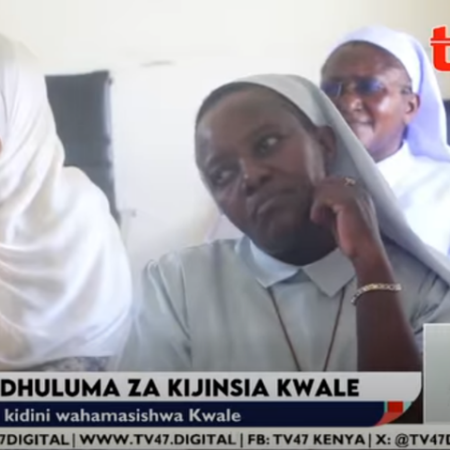
Religious leaders in Kenya launched additional efforts to combat sexual abuse and harmful practices under the Religions for Peace “Lifting Voices, Leading Change” program supported by the Conrad T. Hilton Foundation. The program empowers and capacitates women of faith – who are on the frontlines in many communities in confronting sexual abuse and harmful practices.
The program was launched in Kwale , a coastal area where tourism culture often leads to school dropouts and domestic violence. Read more about the Lifting Voices, Leading Change initiative here.
Local faith actors in South Sudan drive peacebuilding efforts
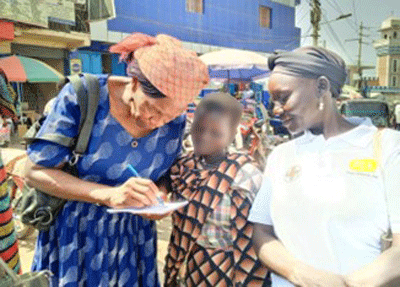
Empowering and supporting local faith actors in South Sudan is demonstrating the effectiveness of community-led approaches — and highlighting the importance of sustained investment in grassroots peacebuilding.
A new series of “most significant” change stories illustrate the impacts of the Trust and Peace: Peacebuilding from the Ground project, implemented by Religions for Peace Africa in partnership with the Interreligious Council of South Sudan.
The initiative placed local actors at the center of peacebuilding efforts, recognizing that sustainable peace must be rooted in community ownership. Insider Reconcilers, religious leaders, Women of Faith, interfaith youth, and selected state actors were trained in trauma healing, dialogue facilitation, and reconciliation processes.
Subsequently, they did not merely participate in peacebuilding, they led it, navigating complex social dynamics and working within fragile environments to rebuild trust and restore dignity.
The stories provide rich, evidence-based insights into how transformation occurs in practice, capturing not only outcomes, but also the processes, struggles, and breakthroughs that define community-led peacebuilding in contexts affected by conflict.
Religions for Peace Europe participates in Conference of INGOs in the Council of Europe
The Council of Europe moved closer to establishing a permanent platform for interreligious and interconvictional dialogue during its recent 2026 Spring Session of the Conference of International Non-Governmental Organisations (CINGO).
The progress toward the permanent forum has occurred incrementally over the past few years – and is the key goal of CINGO’s Committee for Interreligious and Interconvictional Dialogue. Establishing a permanent platform would be a landmark achievement because it shifts the relationship between faith, philosophy, and governance from ad hoc crisis management to proactive structural cooperation.
Dr. Genti Kruja, President of Religions for Peace Europe and Prof. Elisabeth Naurath, Vice President of European National Interreligious Bodies within Religions for Peace Europe participated in the session.
CINGO represents the institutional voice of civil society within the Council of Europe and brings together organizations from across the continent to contribute to the strengthening of dialogue, democracy, human rights, and the rule of law.
The permanent platform, once established, would regularly gather representatives of religions, public institutions, and civil society to promote – in a proactive fashion – dialogue, democracy, human rights, solidarity, and social peace. It would formalize unique cooperation between Member States; Parliaments; Local Authorities; and Civil Society (including faith-based organizations).
“Faith communities have an irreplaceable role in protecting human dignity, promoting tolerance, ethical education, combating extremism, and building inclusive societies,” said Dr. Kruja.
Its active participation in this session further confirms the position of Religions for Peace Europe as an important actor in European civic and interfaith diplomacy, building bridges of cooperation among institutions, religious communities, and civil society for a more peaceful and united Europe.
Religions for Peace Europe highlights Interfaith Dialogue at Boao Forum for Asia 2026
Religion and interfaith dialogue must play a constructive role in addressing the multiple crises engulfing the world, including armed conflicts, forced migration, violent extremism, and cultural polarization, Dr. Genti Kruja, President of Religions for Peace Europe told participants at the 2026 annual conference of the Boao Forum for Asia.
The Boao Forum was held March 23-27 in Boao, China, bringing together political, economic, academic, and religious leaders from around the world to discuss global challenges and opportunities under the theme “Shaping a Shared Future: New Dynamics, New Opportunities, New Cooperation.” As one of the most important international platforms for dialogue in Asia and beyond, the Forum continues to promote multilateralism and global cooperation.
Dr. Kruja made his remarks as part of a subforum on “Religious Harmony and Mutual Learning Among Civilizations.”
Referring to faith-based diplomacy, Dr. Kruja noted, “The goal is not only to stop conflict but also to rebuild relationships and foster reconciliation, contributing to sustainable peace.”
Dr. Kruja further stressed that interfaith dialogue is not merely a theological discussion, but a practical platform for cooperation: “When religious communities work together, they can reduce tensions, prevent radicalization, and strengthen social cohesion.”
“Religion and diplomacy should not be viewed as opposing forces,” he said. “When guided by ethical values, mutual respect, and inclusive institutions, they can become complementary partners in building a more just, peaceful, and sustainable world.”
The sub-forum was organized by the China Religious Culture Communication Association, China Committee on Religion and Peace (CCRP), and the Buddhist Association of China, in collaboration with the relevant institutions of Hainan Province.