
Diverse Initiatives are Leveraging the Influence and Reach of Religious Leaders in Addressing the Global Crisis of Violence Against Women and Girls
March 3, 2026In mid-February, the governor of Pakistan’s Punjab Province signed into law an ordinance raising the minimum legal age of marriage to 18 – and making child marriage an offense punishable by up to seven years in prison.
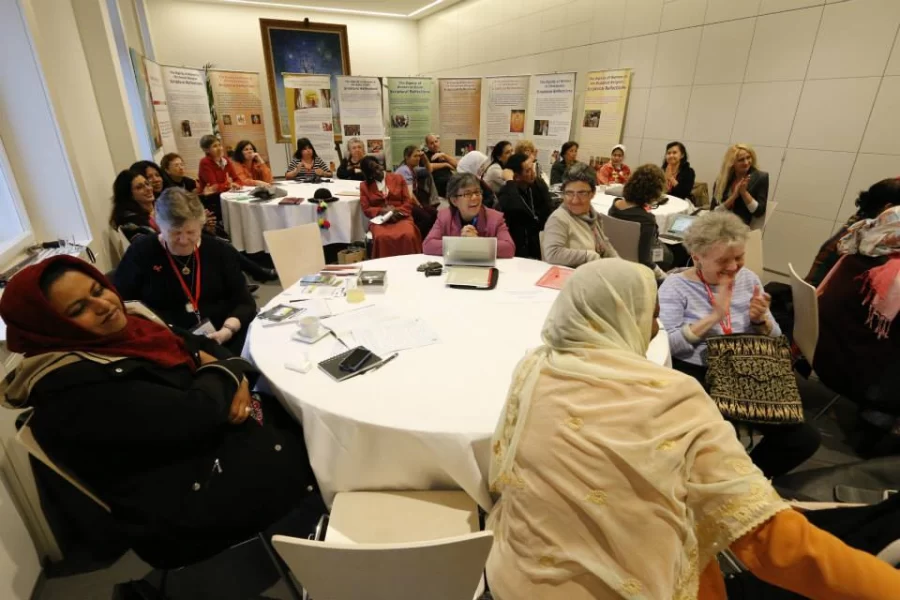
The law’s enactment in the province – the country’s most populous with more than 120 million people – is just one sign of progress in efforts to combat violence against women and girls (VAWG), said Huma Ikramullah, Secretary General of the Interreligious Council of Pakistan.
“Laws on domestic violence have been strengthened in the past 10 years, too,” she said recently. “A lot of steps have been taken – in conjunction with religious leaders.
“The role that religious leaders can play in combating violence against women and girls is very, very crucial – and has long been ignored,” she continued. “If a religious leader tells followers that women and girls are to be treated with respect and guidance, in any religious gathering, it will have a very, very impactful force.”
A great deal more work is needed around the world to combat VAWG, religious leaders said in recent interviews. But, promisingly, governments, civil society, multilateral organizations, donors and others are increasingly recognizing that religious leaders have a critical role to play in addressing the problem effectively.
No religion tolerates VAWG
Violence against women and girls persists because its causes are complex and deep. But religions are clear on any such violence. Those who would justify violence against women and girls are, simply put, wrong, said Dr. Francis Kuria, Secretary General of Religions for Peace.
Further, religious leaders are increasingly engaging in diverse ways to combat such violence – from raising awareness to supporting recovery of victims, from implementing programs to prevent such violence to promoting laws to curb it.
“Religion does not tolerate the degradation of any person’s dignity,” said Dr. Kuria. “People of faith must act in solidarity with all survivors and families affected by violence against women and girls. Only through confident understanding of such violence and its related linkages can such work be done.”
Elias Szczytnicki, Secretary General of the Religions for Peace Latin America and Caribbean Region, said more religious leaders can and must act to address the problem.
“All religions raise the message about the sacredness of the woman – that it is not acceptable in any religion to accept violence at large, and especially against women and girls,” he said. “I think we have a long, long way to go to bring this issue to more religious leaders, to speak about this as a permanent challenge in society that we need to address.”
Although religions call for respect of all human life, many people have used religion to excuse and even justify violence against women, said Karen Castillo Mayagoitia, a Christian theologian, director of the Mexican Institute of Catholic Social Teaching and professor of theology and interreligious dialogue at different institutions.
She is also the coordinator of “Lifting Voices, Leading Change,” a Religions for Peace programme funded by the Conrad N. Hilton Foundation that is supporting women of faith leaders in Kenya, Malawi and Mexico to transform the perceptions and practices that perpetuate violence.
To combat violence against women and girls, religious leaders must deepen women’s engagement within their respective institutions, she said.
“While concepts of dignity, equality, and respect exist in theory, they aren’t applied to women in practice,” Castillo Mayagoitia said recently. “Women often lack recognition of leadership, decision-making power, and voice within their traditions. There’s a disconnect between the stated values and the actual treatment of women.”
Thes deeper institutional efforts should be complemented with diverse efforts within communities, said Dr. Genti Kruja, President of Religions for Peace Europe.
“We still face situations where, in the name of religion, violence against women has been justified or tolerated,” Dr. Kruja said. “Religious leaders therefore have a responsibility to clearly state that this is not part of any religion and is not acceptable in any faith tradition.
“At the same time, religious identity can and must become a transformative force for positive change. Through interfaith cooperation, religious communities can promote peace, protect human dignity, and actively contribute to preventing violence against women and girls.”
Alleviating poverty would go a long way toward addressing VAWG, said Sister Agatha Ogochukwu Chikelue, a Catholic Nun from the Congregation of Daughters of Mary Mother of Mercy and Chair of the Religions for Peace International Women’s Coordinating Committee.
“Poverty wears the face of a woman,” Sister Agatha said. “When women don’t have means of survival, they depend on others, especially on men. Men even make decisions for them
“They have to run to the men for everything. Where there is that great dependency, the tendency to abuse is greater – it makes them vulnerable to gender-based violence.”
A persistent and devastating problem around the world
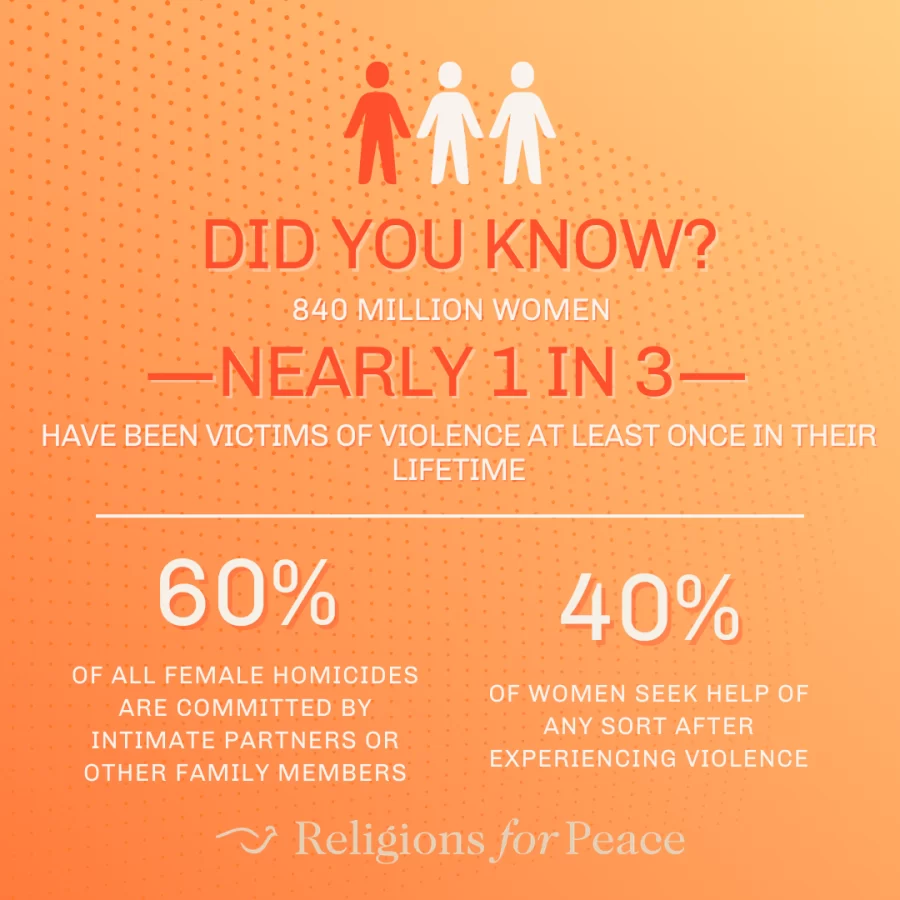 Violence against women and girls remains one of the most widespread and persistent human rights violations in the world. Religious leaders increasingly are playing a critical role in addressing it, with support from Religions for Peace interreligious councils around the world.
While data from countries shows that awareness of VAWG is rising, its actual prevalence remains stubbornly consistent.
“It’s like a pandemic if you look at the statistics,” said Dr. Susan Kerr, Head of the Human Rights Department at the Organization for Security and Cooperation in Europe’s (OSCE) Office for Democratic Institutions and Human Rights.
An estimated 840 million women – almost one in three – have been subjected to physical and/or sexual intimate partner violence, non-partner sexual violence, or both at least once in their life (30 per cent of women aged 15 and older). This figure, which does not include sexual harassment, has remained largely unchanged in the last two decades, according to the United Nations.
The consequences are severe. Women who have experienced violence are more likely to suffer from depression, anxiety disorders, unplanned pregnancies, sexually transmitted infections and HIV, with long-lasting consequences – not only for themselves but all of society.
Troublingly, because of social stigma and fear of retaliation, less than 40% of women who experience violence ever seek help of any kind. Of those who do, less than 10% ever go to the police.
There are meaningful indications that that understanding is evolving – in a positive direction. In December, more than 50 diverse stakeholders gathered in Warsaw, Poland, to explore how religious leaders and communities can help prevent and respond to violence against women and girls.
The international event showcased and shared ongoing initiatives and effective approaches – and identified next steps for joint action across the 57 countries comprising the Organization for Security and Cooperation in Europe (OSCE) region. Participants came from Mongolia, India, Uzbekistan, Pakistan, North Macedonia, Greece, Moldova, Norway, Sweden, Italy, Spain, France, Belgium, England and Poland, among other countries.
It involved religious leaders from a wide variety of different faiths – as well as representatives of national and international agencies who teach and advocate on VAWG.
The event also served as the formal launch of “Belief in Change: Engaging Religious Actors to End Violence against Women and Girls.” The new document provides guidelines and recommendations to states on engaging with religious leaders to combat VAWG. Dr. Kruja of Religions for Peace Europe is one of 17 experts advising the OSCE on freedom of religion and belief.
“There are different challenges,” said Dr. Kerr of the OSCE’s Office for Democratic Institutions and Human Rights. “Sometimes religion can be seen as part of the problem – but many women are part of a religious community that they turn to for support in times of need.
“Viewing religious actors as part of the problem and then refusing to engage with them is a mistake. Some are already doing valuable work to end violence against women, but even those who aren’t need to be included in the discussion. Dialogue is the only way to find long-term solutions, particularly to such complex challenges.”
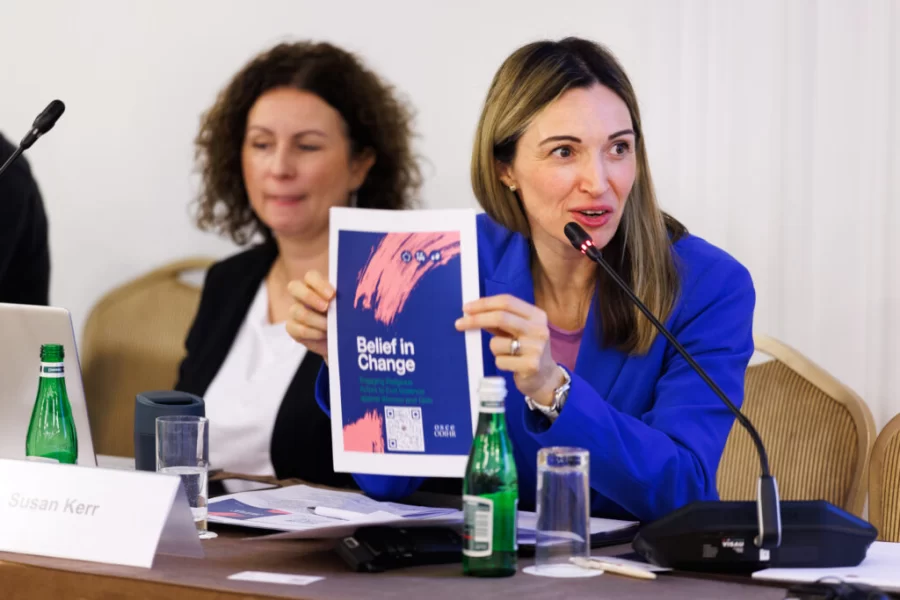
Emina Frljak, deputy coordinator of the Religions for Peace International Youth Committee, said the event was particularly effective because it included a broad array of religious actors.
“Besides religious leaders there are many others involved and at the end of the day, they shape norms, values, moral values,” Frljak said. “With religious teaching, they can challenge interpretations that are normalizing violence. They can also promote values that exist.
VAWG “is not just legally prohibited, it’s morally unacceptable, and we need to break the silence and the stigma,” she added. “If you have a religious leader speaking out, survivors are more likely to feel they are believed and supported.”
To effectively leverage religious actors, however, particularly in supporting prevention and early intervention, they need to receive proper training, she stressed. Importantly, that does not mean they should intervene as counselors or arbiters, she said – states must remain responsible for prevention, protection, prosecution, and reparation.
Religious leaders “can recognize warning signs – and then refer survivors to services,” Frljak said. “Religious leaders can be allies and support victims. They can encourage survivors to seek legal, psychosocial support – as well as challenge harmful practices and the misuse of religion in excusing or justifying violence.”
Efforts to effectively address VAWG with religious leaders should adopt a survivor-centred and human-rights-based approach, she noted.
“Survivors’ safety, dignity, autonomy, and consent must come first,” Frljak said. “Religious engagement should complement, not replace, state obligations under human rights law. Without this principle, interreligious engagement can unintentionally legitimize harmful norms.”
Increasing engagement between states and religious leaders is imperative to address VAWG effectively, said Sister Agatha.
“Religious leaders have a lot to do” on addressing VAWG, she said. “In parts of the world, if you really want to get to the community level you must work with religious leaders. They have a lot of influence in society and can talk in language people understand and respect.”
Working at the grassroots to fight VAWG
In addition to supporting legislation to combat VAWG, like Pakistan’s new law outlawing child marriage, religious leaders work intensively to address the violence directly in their communities.
The country’s interreligious council is proposing a project to tackle gender-based violence through building capacity in justice sector actors, strengthening inter-agency coordination, enhancing service provision for victims, and raising awareness in marginalized communities.
Every country’s unique context requires the type of grassroots efforts that religious leaders are particularly well-positioned to support. Their efforts address the broad variety of VAWG that occurs – from female genital mutilation (FGM) to domestic violence, from recovering from the trauma of war which disproportionately harms women and girls to sexual assault and rape.
Two representative efforts include a program in Chicago, Illinois, USA, aimed at preventing domestic violence by teaching children about relationships, and a program in South Sudan that develops religious leaders, women of faith, and youth interfaith networks as “insider reconcilers” capable of mediating conflicts, facilitating dialogue, and providing psychosocial support in communities affected by prolonged conflict.
Chicago, USA
In a sixth-grade classroom in metro Chicago, a young girl named Nikki recently sat through a lesson on “healthy relationships,” listening to descriptions of behaviors that, until that moment, she had simply called “life.”
She had a boyfriend who was popular —the kind of guy other girls noticed. She also had a boyfriend who demanded to see her phone, who monitored her every text, and who eventually knocked her off a sofa in a fit of rage before begging for a tearful, manipulative forgiveness.
When he later tried to strangle her, Nikki didn’t call the police or tell a teacher. She stayed.
“She didn’t recognize any of this as abuse; she thought, ‘Oh, this is normal,’” said Father Charles Dahm, director of Domestic Violence Outreach (DVO), a program launched in 2021 that runs the school program Nikki was participating in. The program reaches about 2,000 middle school kids.
It was only after Nikki finally told her mother and began using a new “vocabulary of respect” introduced by the DVO program that the scales fell from her eyes.
Addressing the problem in middle school is critical, Father Dahm said.
“Teenage abuse is quite prominent, he said. “The studies that exist indicate in the U.S. that 1 out of 5 girls aged 11 to 17 has already been hit on a date, and the statistic for boys is 1 out of 10. There is a lot of violence going on in dating and that gets carried on into adulthood.”
He said DVO uses a program about healthy relationships developed by the U.S. Centers for Disease Control. He described it at the OSCE event in Poland, providing participants a clear and compelling example of how governments can engage religious leaders in fighting VAWG.
Father Dahm has not limited his efforts to the program on healthy relationships. He also delivers a popular homily on the issue to congregants across his diocese.
“He is actually speaking about the problem, inviting women to approach him,” said Frljak of the Religions for Peace International Youth Committee. “If (religious leaders) don’t speak up about it, women will not come forward. It’s very important that religious leaders really address the question.”
South Sudan
Conflict has traumatized the vast majority of South Sudan’s population of 10 million – particularly women and girls – for more than 10 years. As of early 2026, the situation has worsened due to a combination of renewed domestic fighting, climate disasters and the massive spillover from the war in neighboring Sudan.
For years, religious actors and local peacebuilders in South Sudan have been called to intervene in crises without the skills, support, or mentorship needed. They carry the emotional burden of their communities, often without psychosocial support themselves.
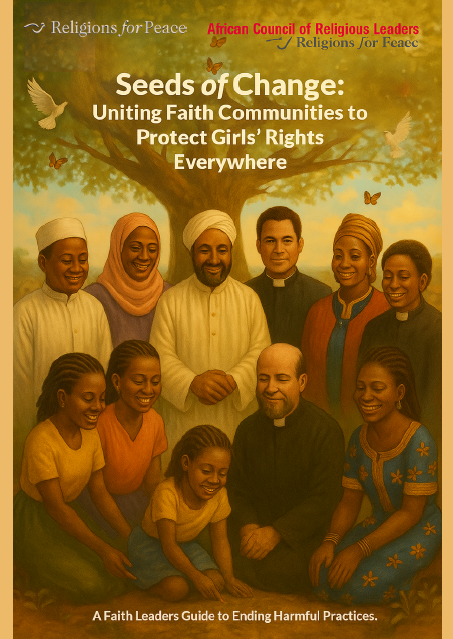
The “Trust and Peace: Peace Building from the Ground” project is leveraging the reach and influence of religious leaders, particularly women of faith, giving them to skills to address the trauma conflict has caused. Implemented by the African Council of Religious Leaders-Religions for Peace with support from the Helsinki Deaconess Institute Foundation, the program has trained more than 600 peace actors.
“The war has affected all of us,” said Noella Henry, a resident of Juba and a woman of faith who was trained as an insider reconciler under the program. “The skills I learned have really helped me a lot. Anyone can be traumatized, it can cause great damage, physically and emotionally, you feel hopeless.
“I learned that if you are traumatized, do not distance yourself from people. The closer you are to people, the more you come to realize they can encourage you.”
The key to the success of these efforts is sustaining them – progress can be undone. For example, efforts to end FGM, which have been successful with the determined efforts of religious leaders, are facing significant pushback, part of a broader global trend where protections for women and girls are being challenged.
“Changing the underlying attitudes and social norms that lie at the root of violence against women and girls is not a single event – it is a marathon,” said Religions for Peace Deputy Secretary General Deepika Singh. “The internal shift in the human heart and the collective mind doesn’t happen from a single project or activity. A shared sacred worldview is fundamentally what we need to achieve shared sacred flourishing.”