
When Faiths Meet: The Potential of Coexistence and Collaboration in Shared Sacred Spaces
December 8, 2025By: Alessia Martucci, Master’s Student, ReD Global, Secretary General and Programmes Intern, Religions for Peace
Migration processes and movements of communities have often influenced world history, but now more than ever, due to new migration routes and globalization dynamics, cultural and religious identities confront each other, engage in dialogue, break boundaries, and find original ways of understanding their diversity. While the current political landscape casts a dark shadow on possibilities of dialogue, a light of hope comes from shared religious spaces.
Although these spaces might seem unusual, throughout history different religious communities have shared churches and places of worship—indeed, several examples still exist today. This raises the questions: is interfaith co-living possible? And, what forms can it take?
This article highlights how the relationships between different religious communities and their relationships with their geographical place can lead to unusual, yet enriching experiences of shared sacred spaces.
The relation between religious groups and the land they inhabit (especially when multiple faiths populate the same area) is extremely complex: on the one hand, religious groups modify the space in which they live through their own cultural categories and daily practices; on the other hand, urban and non-urban spaces impose certain spatial arrangements and, in turn, produce changes in practices and identities.
Furthermore, when settling in a territory inhabited by other religious groups, space—and with it, the possibility of building one’s own place of worship and gaining institutional visibility—becomes an essential, albeit limited, resource. For this reason, multi-religious spaces are traversed by dynamics of competition, exclusion, and conflict, but also by forms of collaboration, support, and coexistence. In this context, shared religious sites are places where religious diversity becomes central, opening up new possibilities for integration and coexistence.
Indeed, in many contexts where communities belonging to different religious faiths live in the same geographical space, their coexistence can produce peaceful relations instead of hostility, which in some cases, can even result in the sharing of the same space to celebrate services or carry out other activities outside of liturgy.
The existence of shared sacred spaces is not a phenomenon exclusive to today; further, they are linked to the upheavals wrought by globalization. For centuries, different religious communities in various contexts have shared shrines, temples, or even caves. In the Mediterranean area, this phenomenon flourished and continues to flourish. Notable examples include shrines shared by Christians and Muslims in Macedonia and those shared by Muslims and Jews in Morocco.[1]
Current studies tend to highlight three main dynamics underlying the formation and development of a shared sacred place. Each dynamic represents the different interaction between the actors who collaborate in the construction of such shared experiences.
The first dynamic is defined as “top-down” and occurs when the decision-making process behind the construction of the interfaith site takes place at the top, or at the institutional level, usually with an institution mediating the process of constructing the multi-faith site.
The second dynamic is defined as “middle-middle,” occurring when a religious group already residing in a place autonomously decides to host a community that needs a place of worship.
The third dynamic, “bottom-up,” occurs when two or more religious groups frequent the same place which then becomes a shared place without the mediation of state bodies. Bottom-up experiences are not necessarily recognized at an institutional level.
These are not the only possible modes, but they can be considered guidelines for the paths of forming these spaces. Boundary crossing often occurs between these modes, making it difficult to classify them into just one of these categories. Such cases, involving the participation of multiple actors simultaneously, are referred to as “multilevel dynamics.”[2]
Given this broader landscape of shared religious spaces and their possible construction dynamics, let us now turn to concrete examples to see how spatial religious coexistence plays out in the real world. The following examples showcase how “top-down”, “bottom-up”, and “middle-middle” frameworks of religious sharing unfold from theory to practice, revealing how these dynamics influence the everyday negotiations, tensions, and relations among different religious communities.
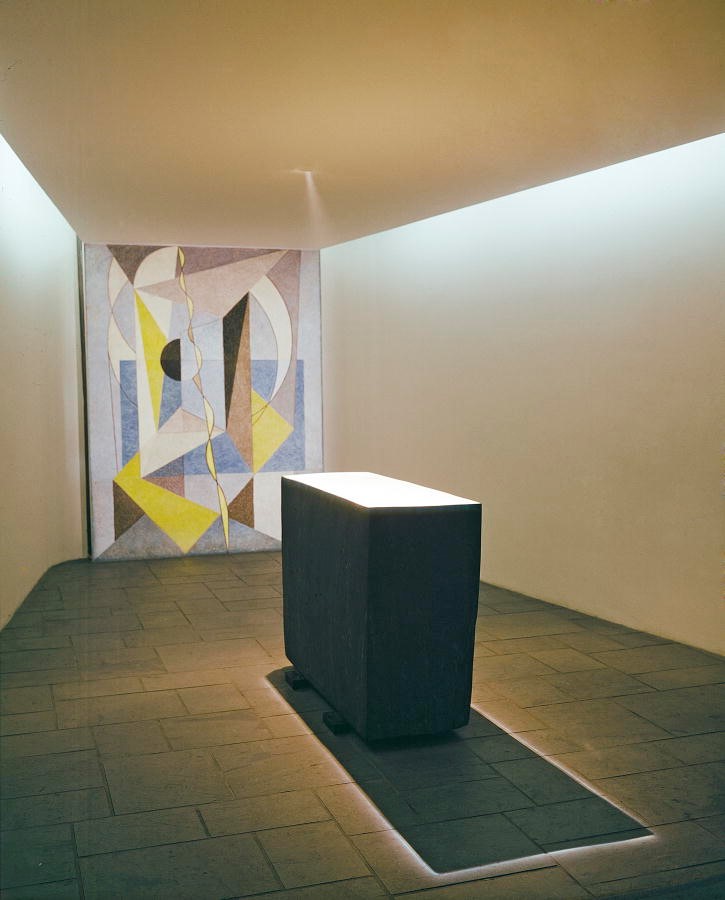
A Room of Quiet at the United Nations
A clear example and the first known case of inauguration of a multi-religious top-down space is the “Meditation Room” (also called “A Room of Quiet”) at the United Nations in New York. The space opened in 1957 at the United Nations headquarters, promoted by the ex-secretary general of the UN, Dag Hammarskjöld. The UN website describes it as a “room devoted to peace and those who are giving their lives for peace. It is a room of quiet where only thoughts should speak.”[3]
“People of many faiths will meet here, and for that reason none of the symbols to which we are accustomed in our meditation could be used,” Hammarskjöld said in 1957 on the occasion of the room’s reopening and dedication, an effort he personally oversaw.[4] For this reason, the room is bare of any religious connotation with the aim of providing a space that can be filled by any possible representation and sentiment of spirituality.
Photo: “Meditation Room at United Nations Headquarters”, United Nations Photo, CC BY-NC-ND 2.0
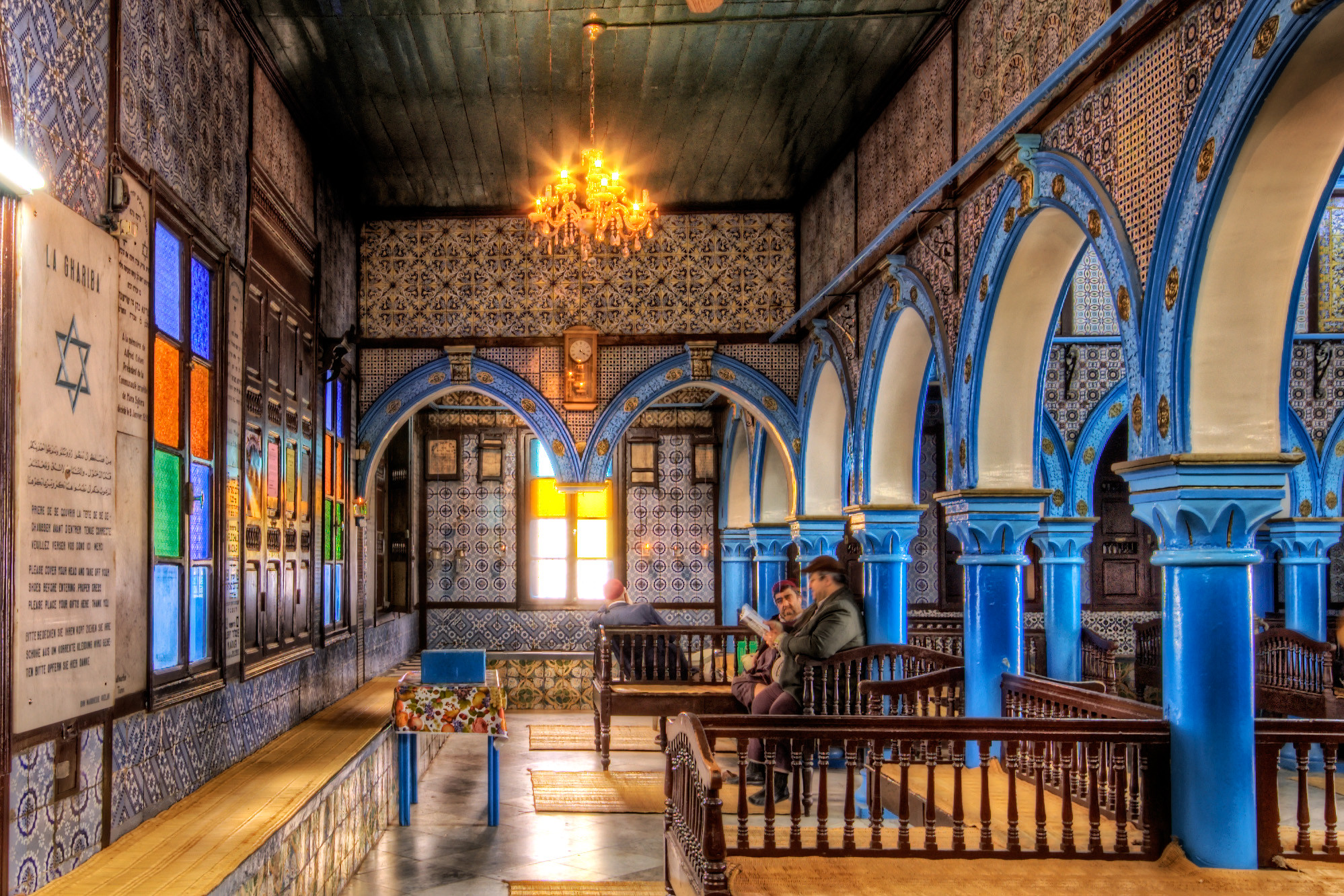
The Ghriba Synagogue in South Tunisia
Moving the focus to noninstitutional spaces, we can find insightful experiences in the Ghriba Synagogue in South Tunisia and the House of Mary in Turkey. Neither of these sites has recognition from official bodies; they were developed as people-led experiences.
The Ghriba Synagogue is located in the Jewish village of er-Riadh on the island of Djerba. The Ghriba is one of the last living cases of North Africa’s long history of cohabitation between Jews and Muslims. Historically, it was common for followers of both religions to visit each other’s shrines in search of baraka (“divine grace” or “blessing” in Arabic). During the first half of the 20th century, the Ghriba was an important regional pilgrimage center not only for Jews, but also for Muslims and Christians.
As a place of worship, the Ghriba is mostly a Jewish site, but during the pilgrimage it becomes a shared space where Jewish and Muslim pilgrims (especially women) mix to perform the same rituals. Additionally, the material objects that populate the shrine are sometimes shared and sometimes particular to one or more of the religious groups engaged.[5]
Photo: Bartek Kuzia
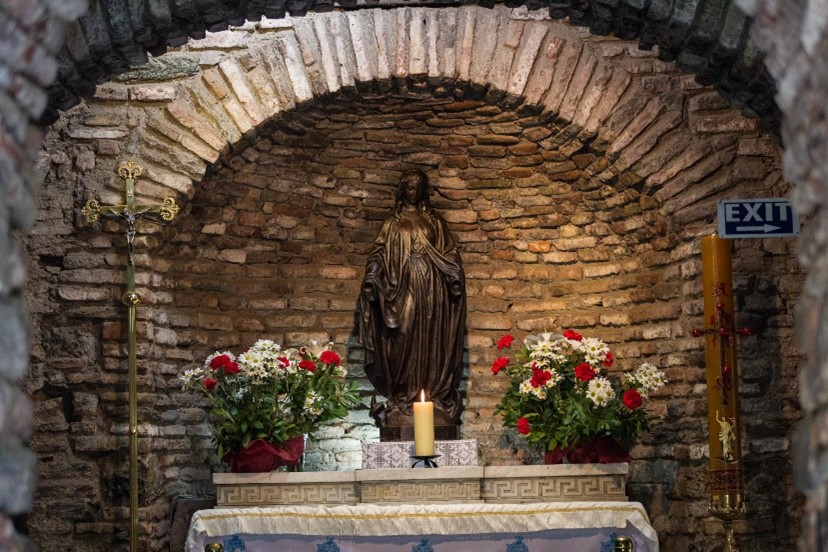
The House of Mary in Turkey
The House of Mary (Meryemana Evi) is located on the Nightingale Mountain (Bülbül Dağ) above the ancient city of Ephesus. The site was excavated at the end of the nineteenth century and became a local pilgrimage site. It is recognized as an important Christian holy place, as confirmed by the visits of several popes (Paul VI, John Paul II, and Benedict XVI) and by the presence of Catholic friars and nuns. As the figure of Mary is an important figure in Islam, many Muslims also visit this site to honor her. The space has multiple shared uses by Orthodox, Catholic, and Protestant Christians and Muslims: Christians use the altar to pray, while Muslims pray towards Mecca; Christians, Muslims and visitors of other religions light candles and place them in stands outside the House; and the center’s shop, where people can buy objects related to Mary, is owned by a Muslim vendor.[6]
Photo: Mike Doughty
An example of a different dynamic that collocates in between the previous ones can be found in the city of Rome, Italy. In general, cities are plural and multicultural contexts; recent processes of globalization and migration have changed the urban fabric, turning them into an expression of the phenomenon of “superdiversity.”[7] Urban Rome offers a thought-provoking case study as the city is paradoxically a symbol of Christian Catholicism and an emblem of religious superdiversity.
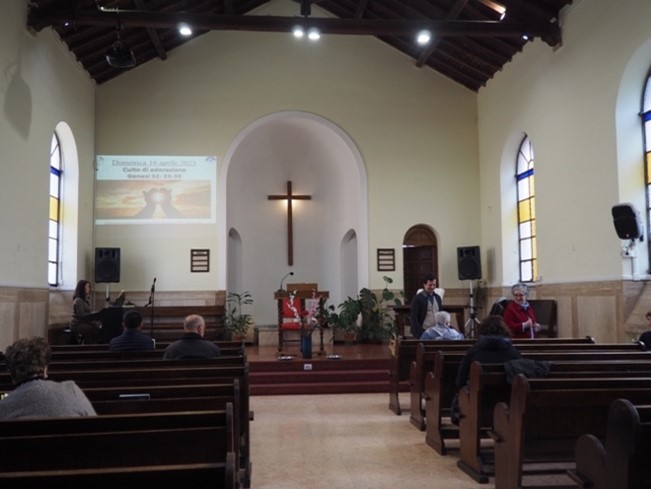
Figure 5: Baptist Church of Centocelle, Rome, Italy. At the time of my field research, the church shared its spaces with a Romanian Evangelical Church, the New Covenant Church (a Nigerian evangelical community) and the International Christian Church (with its origins in Cameroon). Photo by the author.
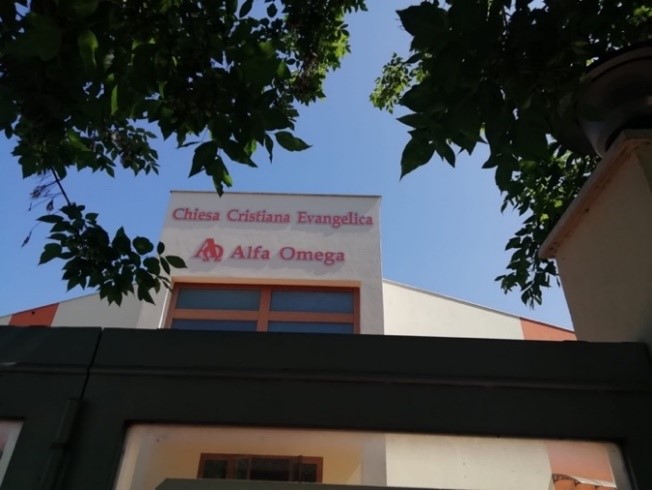
Figure 4: Alfa Omega Church, Rome, Italy. At the time of research, the church was sharing its spaces with an evangelical Italian community, a Romanian community, an Ethiopian/Eritrean community, and a Ukrainian community. Photo by the author.
In this context, an example of sharing practices can be found in the Baptist Churches. Some of these communities—such as those in via delle Spighe, via Urbana, via della Lungaretta, and via Giacinto Pullino—share their places of worship with different migrant religious communities that have difficulties in building or finding their own space (since Italian laws on religious spaces can be complex for new communities). Different patterns of place building and cohabitation occur, such as the synchronic use of the space, where the hosting community and the hosted communities simultaneously use different rooms, or the diachronic use of the main worship room, where different communities use it at different times according to a schedule.
Shared sacred sites serve as evidence that peaceful coexistence is possible and can take different forms. In a world that is fast-paced, polarized, controversial, and often marked by conflict, these marginal, unspoken, and liminal experiences represent a seed of hope. Like a quietly growing plant, they may not bring sudden change, but they offer a space to reflect on interfaith cooperation and explore potential ways to address contemporary conflicts.
Download the PDF
[1] Daniele Campobenedetto, Mariachiara Giorda, Sara Hejazi, Matteo Robiglio, and Marco Tabbia, Una Casa delle Religioni: Proposta di edificio multifede per la città di Torino (Torino: “Homers” and “Benvenuti in Italia,” in collaboration with the Comitato Interfedi della città di Torino, July 2016).
[2] Luca Bossi and Mariachiara Giorda, “La Casa delle religioni di Torino: Un esempio di progetto ‘multi-level’ tra religioso e secolare,” Annali di studi religiosi 20 (2019): 145–71.
[3] United Nations, “Meditation Room – Bo Beskow (Sweden – 1957),” United Nations Visitor Centre, New York, accessed November 12, 2025.
[4] Gunnel Beskow, Dag Hammarskjöld and the UN Meditation Room (Uppsala: Dag Hammarskjöld Foundation, 2021).
[5] Dionigi Albera and Manoël Pénicaud, “The Ghriba Synagogue,” IDEMEC‑CNRS, Aix Marseille, 2023, accessed November 10, 2025, https://storymaps.arcgis.com/stories/33ee0baaba974196b6c6512214d78b57.
[6] Anna Bigelow and Manoël Pénicaud, “The House of Mary,” (Stanford University and IDEMEC-CNRS, Aix Marseille, 2023), accessed November 10, 2025, https://storymaps.arcgis.com/stories/ad75da5e1e074dd695c756f0320313cc.
[7] Steven Vertovec, “Super-diversity and Its Implications,” Ethnic and Racial Studies 30, no. 6 (2007)
Bibliography and other useful references
Albera, Dionigi, and Manoël Pénicaud. “The Ghriba Synagogue.” IDEMEC-CNRS, Aix Marseille, 2023. Accessed November 10, 2025. https://storymaps.arcgis.com/stories/33ee0baaba974196b6c6512214d78b57.
Albera, Dionigi, Karen Barkey, and Manoël Pénicaud. Shared Sacred Sites. Exhibition held at The New York Public Library, The Morgan Library & Museum, and The James Gallery at The Graduate Center of The City University of New York, March 27–June 30, 2018. ISBN 978-0-692-12337-9.
Beskow, Gunnel. Dag Hammarskjöld and the UN Meditation Room. Uppsala: Dag Hammarskjöld Foundation, 2021. https://www.daghammarskjold.se/wp-content/uploads/2021/10/small-folder-beskow-web.pdf
Bigelow, Anna, and Manoël Pénicaud. “The House of Mary.” Stanford University and IDEMEC-CNRS, Aix Marseille, 2023. Accessed November 10, 2025. https://storymaps.arcgis.com/stories/ad75da5e1e074dd695c756f0320313cc.
Bossi, Luca, and Mariachiara Giorda. “La Casa delle religioni di Torino: Un esempio di progetto ‘multi-level’ tra religioso e secolare.” Annali di studi religiosi 20 (2019): 145–171.
Campobenedetto, Daniele, Mariachiara Giorda, Sara Hejazi, Matteo Robiglio, and Marco Tabbia. Una Casa delle Religioni: Proposta di edificio multifede per la città di Torino. Studio realizzato da “Homers” e “Benvenuti in Italia,” in collaborazione con il Comitato Interfedi della città di Torino. Torino, July 2016.
Cristaldi, Flavia. Immigrazione e territorio: Lo spazio con/diviso. Bologna: Pàtron Editore, 2013.
Giorda, Mariachiara. Sharing Space Beyond Dichotomies: A Geo-History of Italian Religious Places. Berlin: De Gruyter, 2022.
Shared Sacred Sites: https://www.sharedsacredsites.net/
United Nations. “Meditation Room – Bo Beskow (Sweden – 1957).” United Nations Visitor Centre, New York. Accessed November 12, 2025. https://www.un.org/en/visitor-centre-new-york/meditation-room-bo-beskow-sweden-1957.
Vertovec, Steven. “Super-diversity and Its Implications.” Ethnic and Racial Studies 30, no. 6 (2007): 1024–1054. https://doi.org/10.1080/01419870701599465.