
From Fragmentation to Flourishing: Reclaiming Virtue Ethics and Spiritual-Moral Leadership
August 1, 2026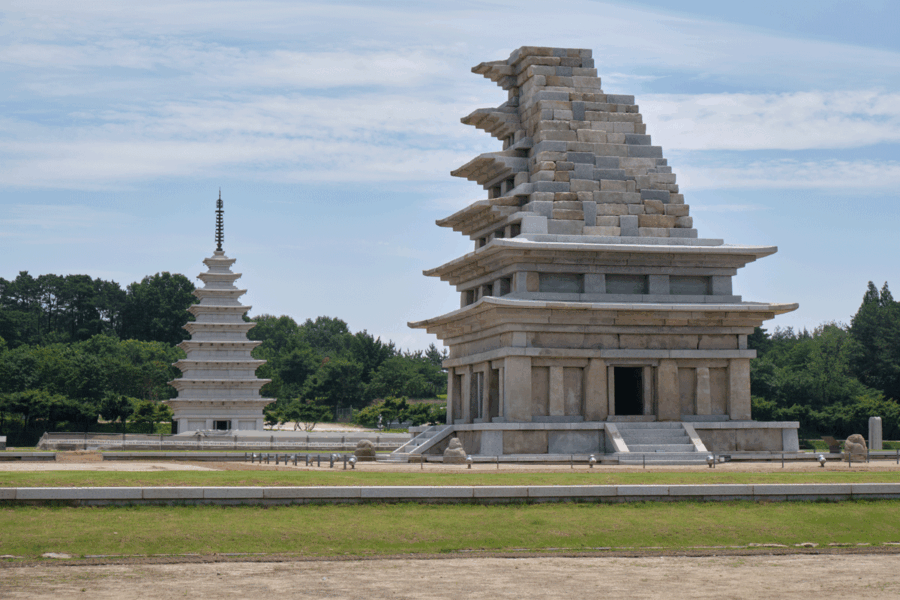
By Rev. Kyoichi Sugino – President, Gakurin Seminary
Opening Reflections on Place and Legacy
This work was first presented in Iksan, a city deeply rooted in Korea’s spiritual and democratic heritage. As the ancient capital of Baekje, Iksan played a pivotal role in transmitting Buddhism to Japan. The spiritual seeds sown here over a millennium ago continue to inspire cross-cultural cooperation today. The city’s historical resonance—both spiritual and civic—frames the core of this paper: that virtue ethics is not only a personal path, but a shared endeavor across cultures and generations.
Abstract
Amid the challenges of a fragmented world, a renewed ethics of virtue offers a path not only for personal moral formation but also for shared spiritual responsibility and relational leadership. This paper explores how cross-cultural traditions of virtue ethics—ranging from Aristotle to Confucianism, Buddhism, and contemporary thinkers—can inform spiritually grounded leadership in pluralistic societies. Drawing on examples from interreligious peacebuilding and the educational practices of Gakurin Seminary, the essay introduces the concept of a “spiritual-moral infrastructure” — a web of virtues embedded in individuals, relationships, and institutions — as a foundation for cultivating trust, compassion, and sustainable cooperation across religious and cultural divides.
1. Rethinking Virtue Ethics in a Time of Ethical Transition
At the heart of virtue ethics lies a fundamental question: not simply “What should we do?” but “Who should we become?” In a time when external rules and ideologies often fail to inspire trust, this inward and relational question points us toward a deeper moral awakening. Ethical leadership today must be rooted not in compliance or charisma, but in the cultivation of character, discernment, and shared responsibility.
We live in a world marked by moral fragmentation, institutional distrust, and algorithm-driven polarization. Yet, this is not merely a time of crisis. It is also a period rich with ethical possibility. In the cracks of disillusionment, new forms of solidarity are quietly emerging—through compassion, care, and moral imagination. Virtue ethics, rooted in personal formation and relational practice, offers a deeply resonant framework for this emerging horizon.
Classical Western thought, such as Aristotle’s Nicomachean Ethics, defined virtue (aretē) as a habit of character aligned with reason and directed toward eudaimonia (human flourishing). In contrast to rule-based ethics, it emphasized the development of moral character through practice, community, and practical wisdom (phronēsis).i
Asian traditions enrich this vision. Confucianism emphasizes ren (benevolence), yi (righteousness), and li (propriety) as virtues cultivated through human relationships and social harmony.ii Taoism highlights de (virtue) as alignment with the natural order through humility and non-domination. In Buddhism, the Six Paramitas—generosity, ethical discipline, patience, effort, meditation, and wisdom—form the path of the Bodhisattva, whose practice is directed toward the liberation of all beings.
Modern moral philosophers such as Alasdair MacIntyre and Martha Nussbaum have called for a return to virtue ethics as a response to moral relativism and institutional inertia. MacIntyre famously argued that we have lost the shared moral language necessary for coherent ethical debate. This is a condition he called ‘moral disorder’—a breakdown of ethical grammar in public discourse. In an age where algorithms and market logic shape public opinion, we must reassert the language of character and community. This absence also opens a space: an invitation to rebuild an ethics that is not imposed from above, but cultivated from within. iii
Building on MacIntyre, Nancy Snow conceptualizes virtue as a form of social intelligence that operates relationally and contextually.iv Julia Annas, meanwhile, views virtues as developed through intelligent, skill-like habituation.v Heather Battaly’s work expands the field by analyzing virtue epistemology and the role of character in knowledge practices, offering further integration of cognitive and moral domains.vi Their contributions demonstrate that virtue is not a fixed attribute but a dynamic process—one that must be cultivated through community, education, and reflection.
2. Embodied Virtue and Institutional Practice
To respond meaningfully to today’s overlapping crises—conflict, polarization, nationalism, and institutional distrust—we must understand that virtue ethics does not remain confined to individual morality. Rather, it unfolds in layers: shaping character, guiding relationships, and informing institutional cultures.
The following framework outlines this multi-layered approach to virtue as a practical and transformative ethical path:
Layers of Virtue – A Three-Tier Model of Virtue Ethics for Social Transformation: A Framework for Ethical Response in a Fragmented World
| Layer | Description | Contemporary Challenge Addressed | Core Virtues |
|---|---|---|---|
|
1. Inward Formation
(The Personal Layer) |
The inner cultivation of character through reflection, mindfulness, and moral intention. |
Moral fatigue, fear, cynicism | Humility, patience, integrity, compassion |
|
2. Relational Practice
(The Interpersonal Layer) |
Practicing virtue in daily life—through listening, dialogue, service, and accompaniment. |
Social division, polarization, exclusion | Empathy, trustworthiness, hospitality, discernment |
|
3. Cultural & Institutional Embodiment
(The Societal & Institutional Layer) |
Embedding virtues into collective memory, institutional practices, and public leadership. |
Nationalism, systemic distrust, historical trauma, exclusionary ideologies |
Responsibility, solidarity, ethical courage, inclusion |
These layers are not sequential steps, but interconnected dimensions of moral formation and social healing. When practiced together, they create the ethical foundation for trust, cooperation, and sustainable peace.
This layered framework provides not only conceptual clarity, but also practical orientation. Let us now explore how these layers manifest through historical and contemporary expressions of spiritual-moral leadership.
In the 3rd century BCE, King Ashoka of India underwent a profound moral transformation after witnessing the immense suffering caused by the Kalinga War. This inner awakening was not confined to remorse or reflection—it became the foundation of a new governance ethic, rooted in Buddhist virtues such as non-violence (ahimsa), compassion (karuṇā), patience (kṣānti), and moral restraint (dama).
What followed was not merely personal repentance, but a bold reimagining of statecraft. Ashoka institutionalized these virtues in what we might now call an early moral infrastructure of peace: he renounced military conquest, promoted religious tolerance, dispatched peace emissaries across Asia, protected animals and forests, and published edicts inscribed in stone to encourage ethical conduct among his people. These edicts did not threaten punishment; they appealed to the inner conscience and relational responsibility of citizens.
Ashoka’s legacy shows that virtue ethics can shape more than individual lives—it can guide law, policy, and public morality. His vision was not imposed by force, but nurtured through moral invitation and public trust.
3. Institutionalizing Virtue through Interreligious Solidarity
While Ashoka’s moral transformation and governance offer a historical foundation for virtue-based leadership, contemporary interreligious cooperation provides a living model of how virtue can be institutionalized across communities and borders.
The following case reflects how compassion, responsibility, and solidarity—rooted in diverse religious traditions—have enabled moral healing in the aftermath of war and displacement.
In post-war Iraq, amid a landscape torn by violence and trauma, a remarkable example of virtue-based interreligious cooperation unfolded. Religious leaders from Iraq—Sunni, Shia, and Christian—joined hands with counterparts from Korea and Japan, to care for the most vulnerable: children wounded by war.
At the heart of this collaboration were not doctrines, but shared virtues—compassion (karuṇā), moral responsibility, humility, and the courage to act across lines of history and belief. Through coordinated medical missions and trauma healing programs, Religions for Peace Japan and the Korean Conference of Religions for Peace (KCRP) facilitated partnerships between faith communities and the Korean government, training Iraqi doctors and supporting children’s treatment. What made this possible was the spiritual-moral infrastructure fostered over decades: institutions like KCRP and RfP Japan had already embedded habits of cooperation, dialogue, and ethical responsiveness into the DNA of their networks. These institutionalized virtues—cultivated through joint projects, retreats, and crisis responses—allowed for a swift, humble, and unified action. This story shows that virtue ethics is not only a personal path, but a relational, institutional, and generational practice—a living tradition of moral imagination in the face of suffering.vii
Pope Francis captures this well in the publication Ethics in Action for Sustainable Development: “To live virtuously is to discover the joy of offering oneself for the sake of others.”viii These are not merely responses to crisis but expressions of a deeper ethics of sacred responsibility that transcends transactional logic. In my own chapter in Ethics in Action, I wrote: “From personal awakening to societal healing to global transformation, virtue offers the ethical foundation for authentic leadership and peaceful coexistence.”ix This is not naïve idealism; it is a grounded moral vision for rebuilding fractured societies.
Across more than 90 countries, Religions for Peace has institutionalized such moral-spiritual infrastructure through interreligious councils that mediate conflict, coordinate humanitarian aid, and foster sustained cooperation across lines of faith. Whether protecting minorities in Sri Lanka, healing postwar trauma in Iraq, or convening dialogue in divided societies, these acts embody a virtue ethics in action. They show that when virtue becomes institutionalized through shared memory and sustained commitment, it forms a spiritual-moral infrastructure capable of transforming distrust into trust, fragmentation into solidarity.
4. Educating for Ethical Leadership: The Gakurin Model
At Gakurin Seminary in Tokyo, we aim to cultivate transformative leaders grounded in virtue and spiritual engagement. Our educational model integrates intellectual formation (chisei), emotional sensitivity (kansei), and moral character (hinsei). This triad reflects the path of the Bodhisattva, whose virtues are cultivated not for personal liberation alone, but for the well-being of all.
Gakurin’s pedagogy is rooted in the integration of wisdom traditions and practical leadership. Students engage not only with classical Buddhist texts and modern ethical theory, but also with lived interfaith experiences. Our curriculum includes seminars on peacebuilding and sustainable development, dialogue with leaders of diverse faiths, and fieldwork in communities. They also participate in interreligious initiatives such as youth exchange programs and dialogue with Muslim, Christian, Jewish, Hindu and other communities.
Through this experiential formation, students come to understand that leadership is not about command or charisma, but about presence, listening, and accompaniment. They engage in seasonal Buddhist practices, community-based social engagement, and even agricultural training to deepen humility and connection to life’s interdependence. Their training is enriched by real-world engagement with interreligious dialogue and grassroots peacebuilding in cooperation with networks such as Religions for Peace.
Virtue, at its core, is a habitual orientation to values—not a singular act of goodness, but a sustained commitment to becoming the kind of person who acts with compassion, courage, and discernment. This orientation is not developed in isolation; it is formed in community, over time, through education, ritual, and relational engagement. It asks not only “What should we do?” but more fundamentally, “Who should we become?”
This question lies at the heart of Gakurin Seminary’s educational vision. Our approach is not limited to the transmission of knowledge, but is rooted in holistic moral formation—the integration of intellect, emotion, and character. Students are not merely trained to lead, but are invited to cultivate virtues that sustain ethical leadership: humility in the face of complexity, patience amid disagreement, and integrity in service.
Moral and spiritual formation is not a supplemental activity—it is foundational. By cultivating the habits of humility, discernment, and courage, our graduates are prepared to navigate the moral complexities of our time.
5. Toward a Shared Moral Horizon
In this age of profound uncertainty, our task is not merely to resist fragmentation, but to cultivate the moral conditions for human and communal flourishing. This calls for more than institutional reform—it requires a moral and spiritual renaissance, a reweaving of the shared ethical fabric that binds us together.
Virtue ethics, understood not as a rigid code but as a dynamic and layered practice, offers a compelling response to the crises of our time. It shapes personal character, strengthens relationships, and anchors the ethical foundations of institutions. In a world marked by polarization, moral fatigue, and eroding trust, the path of virtue offers a way forward—toward resilience, repair, and renewed solidarity.
From Ashoka’s vision of compassionate governance to interreligious cooperation in regions scarred by war and displacement, we witness how virtue can be embodied and institutionalized, even in contexts of suffering and reconciliation. These lived experiences remind us that compassion, responsibility, and moral courage are not lofty abstractions, but transferable human capacities—cultivated through practice and passed on across generations.
The Gakurin model brings this vision to life. By nurturing the holistic formation of spiritual-moral leaders—through reflective study, interfaith engagement, and grounded community practice—it prepares individuals to navigate ethical complexity with humility, clarity, and courage.
Virtue, then, is not an abstract ideal. It begins within, extends through relationships, and reshapes the moral architecture of our communities and institutions. Its cultivation—in ourselves, in others, and in our systems—lays the foundation for ethical leadership and lasting peace.
Let us commit to this sacred work—together, in trust, with courage, and in service of a flourishing future for generations to come.
Notes
i Aristotle, Nicomachean Ethics, trans. Terence Irwin (Indianapolis: Hackett Publishing, 1999).
ii Confucius, The Analects, trans. Edward Slingerland (Indianapolis: Hackett Publishing, 2003).
iii Alasdair MacIntyre, After Virtue, 3rd ed. (Notre Dame: University of Notre Dame Press, 2007).
iv Nancy Snow, Virtue as Social Intelligence: An Empirically Grounded Theory (New York: Routledge, 2009).
v Annas, Julia. Intelligent Virtue. Oxford: Oxford University Press, 2011.
vi Heather Battaly, Virtue (Cambridge: Polity, 2015).
vii These initiatives in Sri Lanka, Iraq, Korea, and Japan are based on the author’s personal involvement during his 23-year tenure at the international secretariat of Religions for Peace. He was responsible for managing the work of affiliated interreligious councils in over 90 countries and played a leading role in conflict transformation, peacebuilding, and reconciliation efforts globally. Religions for Peace. https://rfp.org/about-us/.
viii Pope Francis. “Foreword.” In Ethics in Action for Sustainable Development, edited by Jeffrey Sachs et al., xi–xiii. New York: Columbia University Press, 2022.
ix Kyoichi Sugino, Buddhism and the Common Good in Ethics in Action for Sustainable Development. New York: Columbia University Press, 2022, pp. 111-120