
Lifting Voices, Leading Change: How Women of Faith are Dismantling Global Violence
January 29, 2026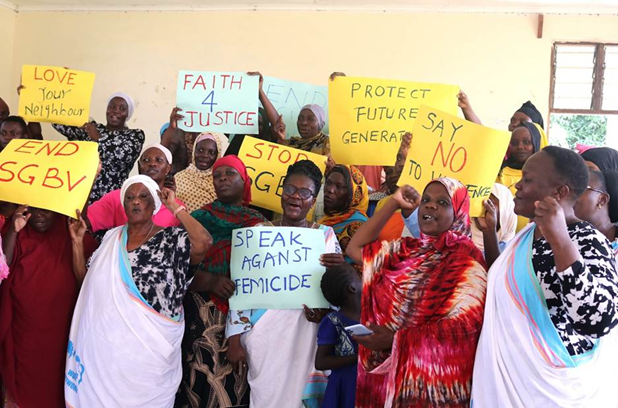
In November 2025, a startling image flashed across global media: Claudia Sheinbaum, the President of Mexico, being publicly harassed and groped while walking between government buildings in Mexico City.
Despite her status as one of the most powerful women in the world, and despite being surrounded by a professional security detail, a man was able to reach through the “protective” layers of the state to violate her physical autonomy.
President Sheinbaum later pressed charges, posing a haunting question to the public: “If I don’t file a complaint, what becomes of all other Mexican women?”
This incident serves as a grim reminder that traditional systems of power—police, bodyguards, and high office—are often insufficient to protect women from deeply ingrained cultures of “machismo” and violence. If a President is not safe in a public square, the vulnerability of an ordinary woman in a rural village is total.
While new legislation and greater enforcement of existing laws are important, leveraging the often-unrealized power of women of faith is critical to addressing the deeper underlying root causes of gender inequality.
Through its innovative “Lifting Voices, Leading Change: Women of Faith for Gender Equality” program, Religions for Peace is directly involving women of faith to address societal violence toward women – and advance gender equality. The program is generously supported by the Conrad N. Hilton Foundation.
Women of Faith: A Powerful Force in Society
While political leaders represent the law, women of faith represent the community’s conscience. These leaders bridge a gap that the state cannot reach. They do not just offer “security”; they offer sanctuary and trust.
By leveraging their moral authority, women of faith are often the only ones capable of entering the “private” spaces where abuse is hidden, providing a path to justice that even a President’s security detail cannot always guarantee.
Women of faith are among the most trusted, resilient, and deeply embedded leaders within their communities. They serve as pillars of perseverance and agents of transformation, bringing moral authority, lived experience, and grassroots connections that equip them to lead impactful actions across local, national, regional, and global levels.
Yet despite their invaluable contributions, women of faith frequently operate in environments where their leadership and contributions are under-resourced, undervalued, and unrecognized.
Lifting Voices, Leading Change seeks to transform this reality by advancing the leadership of women of faith in working towards gender equality. By centering the leadership, lived experiences, and moral authority of women of faith, the project seeks to create new pathways to address societal violence and advance gender equality at every level of society.
Innovative, Impactful Activities
The program, launched in mid-2025, includes programming in three countries – Kenya, Malawi, and Mexico.
Kenya
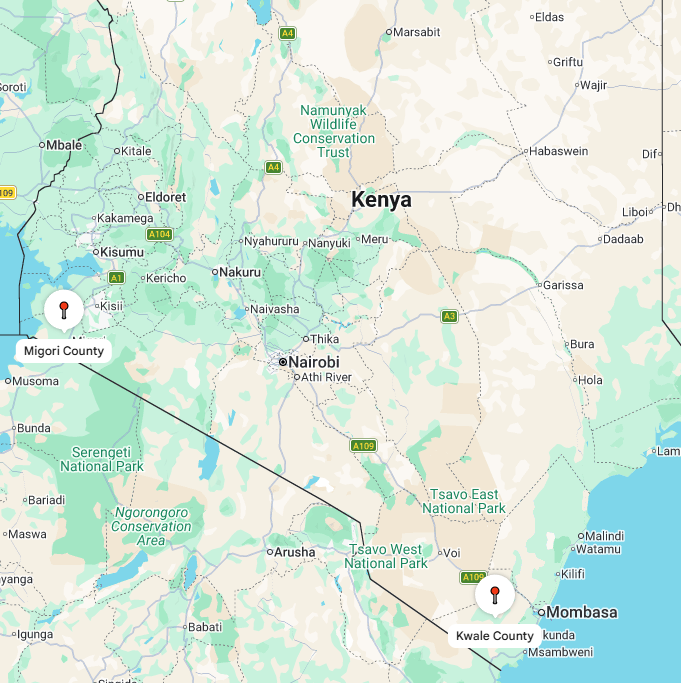
Through Lifting Voices, Leading Change, the Interreligious Council of Kenya (IRCK) is focusing on two primary counties with distinct challenges: Migori County, which has a high rate of female genital mutilation (FGM) due to cultural practices, and Kwale County, a coastal area where tourism culture often leads to school dropouts and domestic violence.
Through the program, the IRC is supporting women of faith in engaging in national advocacy; building their capacity to act as first responders in cases of GBV; raising awareness in communities through mobile public address units, community mapping exercises, and radio broadcasts; and collaborating with the government on GBV issues.
FGM in Migori County is timed perfectly with the school calendar, explained Rolex Mwamba of IRC Kenya. From November to December, during the long school holidays, girls are often smuggled across the Tanzania border. Because Tanzania lacks a specific anti-FGM law, the community—which straddles the border—uses the legal gap to perform the “cutting” before returning the girls to Kenya.
Community mapping – where community residents discuss the actors and signs of abuse – has helped women of faith direct their efforts, Mwamba said. The project has also utilized local radio stations in Migori and Kwale to reach a significant audience. Interviews, conducted in Kiswahili, have allowed women of faith to speak directly to parents and elders in their own language, providing an early warning system for the community.
In Kwale County, women of faith are now active on the front lines against GBV. They respond directly to cases – elevating incidents to the local police’s gender desk as appropriate. Since October 2025, the women of faith unit has recorded 53 cases of gender-based violence (GBV) in the county.
“The survivors and their families are much more comfortable to share with the women leaders,” Mwamba explained. “They have more trust towards them than even the security people.”
Malawi
In Malawi, the Lifting Voices, Leading Change program will reach each of the country’s regions, mobilizing women of faith to reverse harmful cultural practices and shift social norms that lead to domestic and sexual violence, as well as limited educational access for girls.
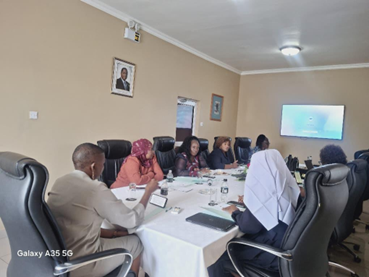
Following national consultation meetings held in Blantyre in December, the project has secured strong “ownership” from the leadership of Malawi’s major religions convened by the Public Affairs Committee, said Secretary General Robert Phiri. The project is leveraging the high level of trust among Malawian women in religious institutions, he said.
“We expect more women will come forward – they will feel more free to tell their stories on how they are suffering,” Phiri said. “Trust in religious institutions in Malawi is very high – that’s the strength and opportunity we have to address GBV.”
The project concept entails raising awareness of GBV and harmful practices; training women of faith to counsel and refer survivors of GBV and harmful practices; and then establishing five or six psycho-social support centers within diverse religious institutions, including churches and mosques, to provide services.
The project is set for a high-profile national launch in March intended to publicize the vital role faith communities play as a “refuge” for unheard voices in places where government presence may be limited.
Mexico
In Mexico, the Lifting Voices, Leading Change project is primarily focused on transforming a fragmented landscape of independent religious and social services into a coordinated national network, explained Karen Castillo Mayagoitia.
“Women of faith have held meetings to present the project, establish relationship guidelines, and are now creating a mapping system to identify who is working where, what issues they’re addressing, and how they’re approaching them,” Mayagoitia explained. “At a national level, they are mapping what they’re impacting, what topics they’re addressing, and how they are going about it.”
The program was formally established in November 2025, coinciding with the International Day for the Elimination of Violence Against Women. By identifying who is working on critical issues—ranging from human trafficking and violence response to legal advice and psychological counseling—the project aims to bridge gaps between organizations and maximize the impact of their collective resources.
Beyond logistics, the project emphasizes a deep spiritual and cultural shift through “listening spaces” and workshops, she added. These training sessions are designed to empower women by dismantling the “fear and blame” often associated with religious misinterpretations.
By teaching that their traditions do not require the acceptance of violence, but rather promote dignity and freedom, the project provides women with the theological permission to advocate for themselves.
The work is framed against the backdrop of a national crisis of “machismo,” Mayagoitia said, specifically referencing how the recent assault on President Sheinbaum proves that no woman, regardless of her status, is currently immune to the message that men have a perceived right to control women’s bodies.