
Peace and Reconciliation Facilitators Build Greater Compassion and Care in Japan
June 2, 2026Religious leaders, university and graduate students, staff of NGOs and civil society practitioners completed training as facilitators in peace and reconciliation in late April – the third cohort of trainees in the program that has been implemented by Religions for Peace Japan since 2017. The third cohort of the training began in April 2024, comprising six in-person workshops, with support from Rissho Kosei-kai.
The third cohort program bridged theoretical conflict resolution with experiential learning – transitioning participants from internal awareness to practical design, real-world context, and finally, autonomous execution via personalized action plans.
“I learned about communication that fosters peace and dialogue—ways of engaging with others in daily life that allow both myself and others to be respected,” said one participant. “I also realized the importance of noticing not only conflicts between myself and others, but also those within myself and between myself and nature. I hope to deepen these connections with greater compassion and care.”
Since 2017, the three cohorts of the peacebuilding seminar have successfully trained more than 100 diverse participants. They engaged in immersive workshops and intensive role-playing exercises, mastering critical conflict-resolution skills such as mediation, active listening, and structured dialogue. Crucially, the program pushed participants to look inward, forcing them to confront their own hidden prejudices, indifference, and the systemic structures of conflict present within themselves and broader society.
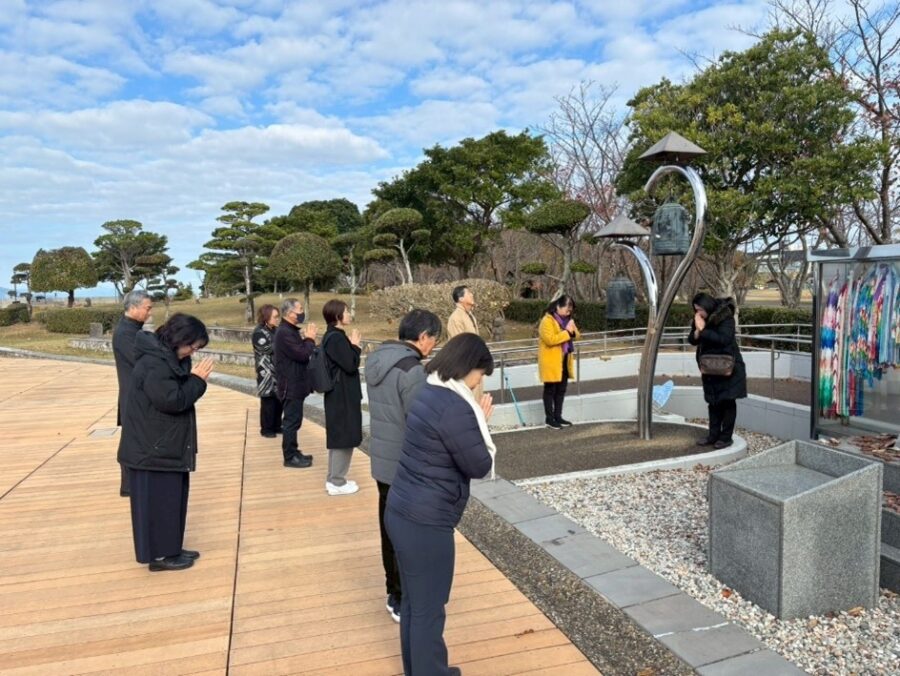
A defining element of the program was its experiential, multi-perspective fieldwork in deeply affected communities. Participants listened directly to local residents dealing with historical discrimination, the trauma of the Fukushima nuclear disaster, and the legacy of Minamata disease industrial pollution, while also studying grassroots reconciliation on Mindanao Island in the Philippines.
By integrating traditional healing concepts like Minamata’s Moyai Naoshi, Hawaii’s Ho‘oponopono, and interfaith Listening Cafés, the seminar blended global human rights frameworks with deeply localized, indigenous practices.
The ultimate outcome of the seminar is its self-sustaining legacy of action. Every participant synthesized their learning into a personalized, concrete “MY Action Plan” designed for immediate implementation in their local communities, schools, or workplaces. Program graduates have already stepped into active roles as global facilitators, establishing safe spaces for dialogue and working to permanently root a culture of peace and reconciliation within everyday human relationships.