
Religious Leaders in Mongolia Unite to Relaunch the Country’s Interreligious Council
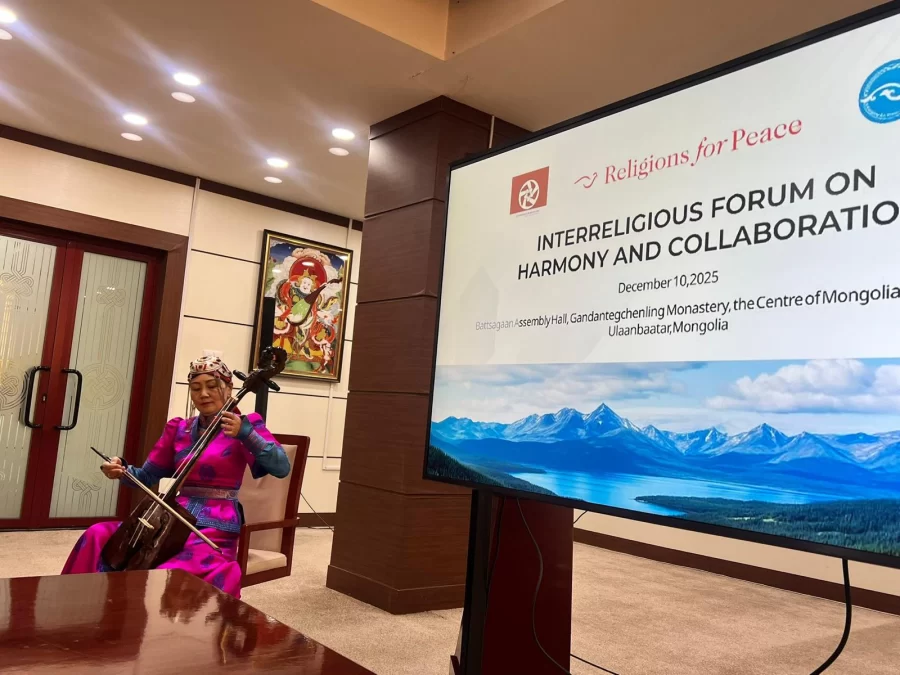
January 27, 2026Religious leaders in Mongolia have relaunched the country’s interreligious council with support from Religions for Peace International. Meeting in Ulanbaatar in December, representatives of the country’s major religions committed to building on the country’s long history of religious tolerance to address challenges to interreligious harmony.
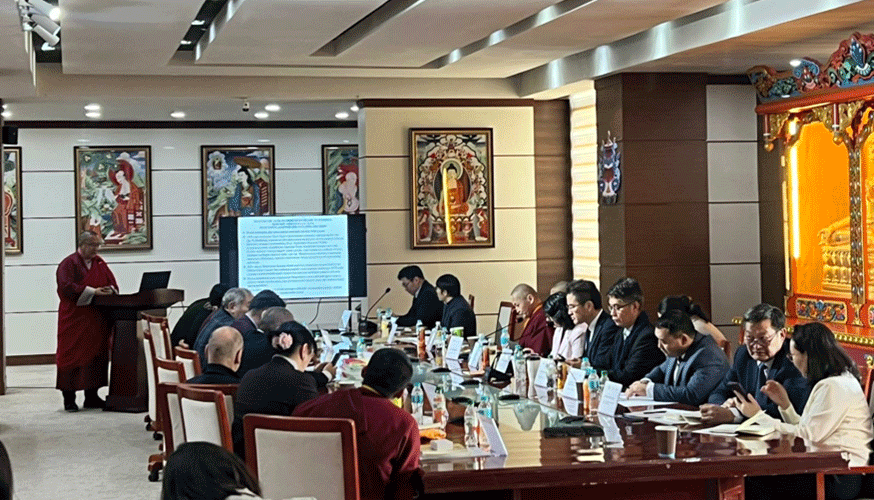
“We are now back on track,” said Dr. Lkhagvademchig Jadamba, Associate Secretary General of Religions for Peace Mongolia, reflecting on the series of meetings, capped off by a High-Level Interreligious Forum on Harmony and Collaboration.
The meetings brought together high-level stakeholders in Mongolia with a delegation comprising Religions for Peace International Deputy Secretary General Deepika Singh, and Religions for Peace Asia’s Secretary General Rev. Dr. Yoshinori Shinohara and Associate Secretary General Prof. Pablito A. Baybado, Jr.
They met Hon. Dr. Dulam Bum-Ochir, Member of Parliament, former Adviser to the President of Mongolia on Cultural and Religious Policy, as well as His Eminence Ven. Geshe Lhaaramba D. Javzandorj, Head of the Centre of Mongolian Buddhists at Ganadanthegchenling Monastery. They were also warmly received at the Apostolic Prefecture of the Catholic Church in Mongolia.
The meetings provided key insights regarding the unique features of interfaith collaboration and allowed participants to explore common action for collaboration at the national, Asian, and international level.
The overarching goal of the meetings and Forum was simple yet profound: to strengthen the IRC and reactivate a spirit of collaboration that has existed in Mongolia since the days of the Great Empire.
“When religious leaders, come together in collective action rooted in sacred values, their impact is multiplied many times over, creating ripples of understanding, mutual respect, and cooperation across generations,” said Religions for Peace Deputy Secretary General Singh.
A Landscape of “Aliens” and “Strangers”
Mongolia is a land of 3.5 million people where 87% of religious followers identify as Buddhist. Since the collapse of the socialist system in 1990, faiths like Islam, Christianity, and the Baha’i tradition have bloomed, yet they have often bloomed in isolation.
A Religions for Peace Mongolia project focusing on climate change impacts on the nomadic way of life illustrated the challenge. The project, implemented in 2017, brought together youth representatives of Mongolia’s major religious bodies gathered to discuss and develop solutions for preserving traditional ways of life from ecological pressure.
It was the first project conducted in Mongolia that brought together youth from different religious traditions to encourage collaboration and promote awareness of the importance of caring for the environment. Their engagements aimed to help build relationships across different backgrounds, enabling them to work together for the common good.
The youth project revealed a startling reality, Dr. Jadamba recalled.
“A Christian boy confessed he had never stepped foot inside a Buddhist monastery,” he said. “And his Buddhist peer felt the same about churches. They lived in the same city but saw each other as ‘strangers.’”
This lack of religious literacy has led to deep-seated misunderstandings, he said. For example, some view Christianity with suspicion, seeing it as a foreign import. Conversely, some Christians view Buddhism through the lens of historical socialist propaganda, seeing it as a factor in Mongolia’s past decline and underdevelopment.
Without a formal religious curriculum in schools, incidents – such as the spreading of religious misrepresentation on social media – risk planting the seeds of further misunderstanding and conflict.
Bringing the Colors Together
The re-launch of the IRC is not just about administrative meetings; it is about a philosophy of the heart.
“Religion is something of the heart,” Dr. Lkhagvademchig explained. “We see different religions like different colors. We are bringing them together to make a beautiful picture that is joyful and meaningful to the heart and mind for everyone.”
The Council’s new strategy seeks first to build practical collaboration – bringing together the Catholic Church, the Mongolian Muslim Association, National Spiritual Assembly of the Baha’is of Mongolia, Buddhist NGOs, and Shamanic believers to find common values. At the same time, it will engage scholars to critically analyze current challenges and help build a curriculum for the mind as well as the heart.
Reclaiming the Imperial Cultural Legacy
The strength of this movement comes from Mongolia’s long history. The Council is leaning heavily into the “Imperial Cultural Legacy” of the Mongol Empire – a time known for its unprecedented religious tolerance. By building on this historic identity, the Council finds that people do not resist the call to unite; they recognize it as a return to who they truly are.
The Path Forward
The Council is currently discussing a new flagship project: a publication and a series of workshops focused on promoting human values within the specific context of Mongolian culture and tradition. These efforts are part of a two-pronged approach to revitalizing interreligious collaboration for Shared Sacred Flourishing.
“First, we want to identify and promote the shared values and visions of religious communities in Mongolia for the benefit of society,” Dr. Jadamba said. “And second, we will move forward by implementing the projects we have agreed on to advance our shared goals: contributing to social welfare, upholding human rights or dignity, and building a more harmonious and prosperous society.”
The meetings and engagements have given religious leaders optimism for greater interreligious collaboration, Dr. Jadamba said.
“I hope that if we succeed, it will serve as a positive example of how followers of different religions can work together for the betterment of society and the world-promoting peace and harmony through unity and shared goals, instead of division and conflict.”
Read the Activity Report