
Religious Leaders Mobilize to Address Ebola Emergency
June 1, 2026Religious leaders in the Democratic Republic of Congo (DRC) and Uganda have mobilised intensively to support Ebola awareness and prevention efforts, as health authorities work to contain the spread of the deadly virus.
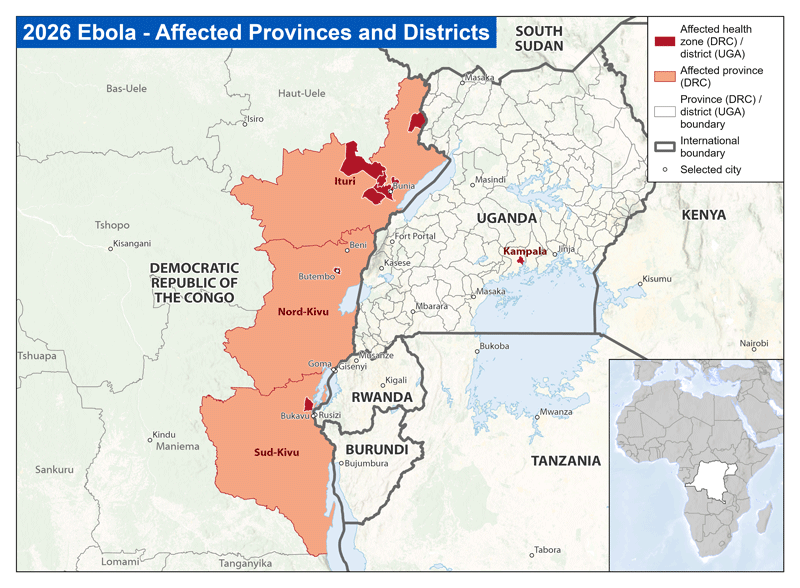
The outbreak was announced by DRC authorities on May 15. As of May 31, authorities said 291 cases had been reported across the two countries – 282 in DRC and 9 in Uganda; of these, 43 people have died.
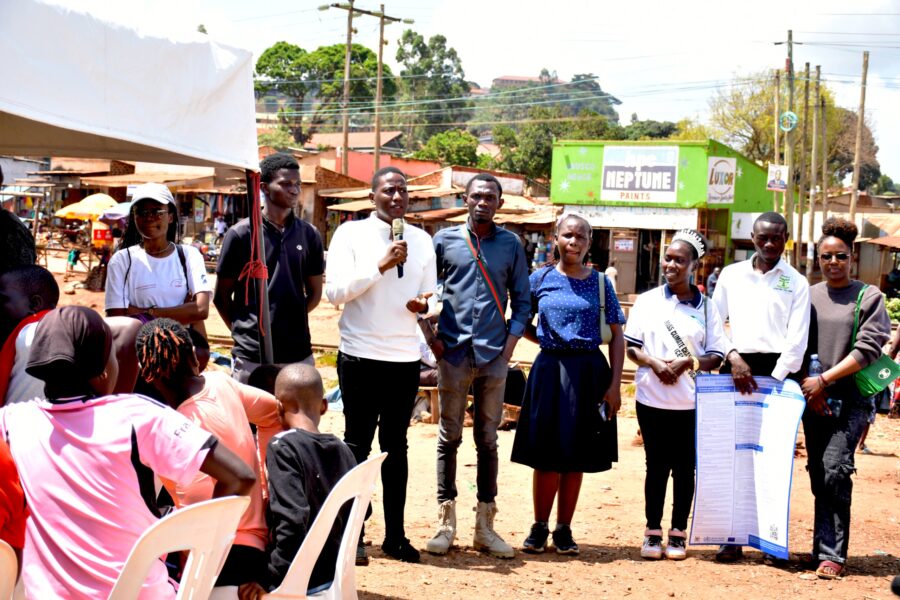
In DRC, religious leaders in Nord Kivu and Ituri are helping to share public health information, encourage handwashing, and support communities with practical guidance.
“As religious leaders, we are taking care of awareness raising of the population,” said Rev. Kinyamba Lunge, Secretary General of Conseil National des Religions pour la Paix RD-Congo (CIRP). “Most of our efforts is on awareness raising.”
Rev. Lunge said religious leaders in some of the most affected communities were collaborating to strengthen Ebola awareness, support prevention efforts, and increase trust in public health measures. Their efforts focus on helping families understand the risks of Ebola, the importance of hygiene, and the practical steps they can take to protect one another, he said.
In Uganda, the Inter-Religious Council of Uganda (IRCU) is also mobilising religious leaders and youth networks to support prevention efforts. Members of the IRCU Interfaith Youth Network have worked with Kampala City authorities and the Ministry of Health to conduct community outreach in Kampala suburbs, sharing information on Ebola symptoms, prevention measures, and the importance of early reporting.
IRCU has also encouraged religious communities to follow standard operating procedures issued by Uganda’s Ministry of Health. These include ensuring that places of worship have handwashing facilities, temperature checks, sanitizer, avoiding physical contact such as handshakes and hugs, and immediately reporting people who show signs and symptoms of Ebola. IRCU is also continuing to share verified information from the Ministry of Health.
“Religious leaders serve God’s people in the grassroots,” said Joshua Kitakule, Secretary General of the Inter-Religious Council of Uganda. “The religious leaders live in the communities – so whatever affects the communities affects the religious leaders. Whenever there is an epidemic which threatens the communities, religious leaders have to come in to raise awareness to prevent the calamity.”
Uganda’s Ministry of Health confirmed two new Ebola cases on May 25, both involving health workers in Kampala. The patients were admitted to a designated treatment unit, and response teams began listing contacts for follow-up. The Ministry urged members of the public to report anyone presenting symptoms consistent with Ebola to the nearest health facility.
Religions for Peace and UNICEF are coordinating additional efforts in both DRC and Uganda under the Faith and Positive Change for Families, Children and Communities (FPCC) global initiative. The FPCC initiative was recently expanded, with ACRL-RfP coordinating its implementation in Africa and ACRP in Asia.
“In times of crisis, every minute and every hour matters, and our global multi-religious network, comprising trusted religious leaders, responds almost instantly,” said Deepika Singh, Deputy Secretary General of Religions for Peace. “Through the FPCC initiative, we aren’t starting from scratch; we are leveraging deeply rooted, existing relationships to deploy life-saving information and resources the moment a shock like this hits. Religious communities are uniquely equipped to respond swiftly, breaking through fear and misinformation to protect the most vulnerable.”
Rev. Lunge said the situation is especially urgent because the current outbreak requires strong prevention efforts at the community level. He warned that communities are facing a serious threat, making trusted local communication essential to the response.
The work reflects the practical – and essential — role religious leaders play during public health crises, particularly in communities where fear, misinformation, or mistrust can make response efforts more difficult. Religious leaders are close to families, youth, women, and elders, and their influence can help turn public health messages into action.
Updated information regarding the outbreak, which Africa CDC has declared a continental emergency, is available at the organization’s website.