
Religious Leaders Support Public Health Efforts to Address Ebola Outbreak
July 7, 2026Religious leaders in East Africa are increasing raising awareness of and engaging their communities in responding to the most serious outbreak of the Ebola virus in years. Under the Faith and Positive Change for Children, Families and Communities program, Religions for Peace and UNICEF are partnering to support these efforts.
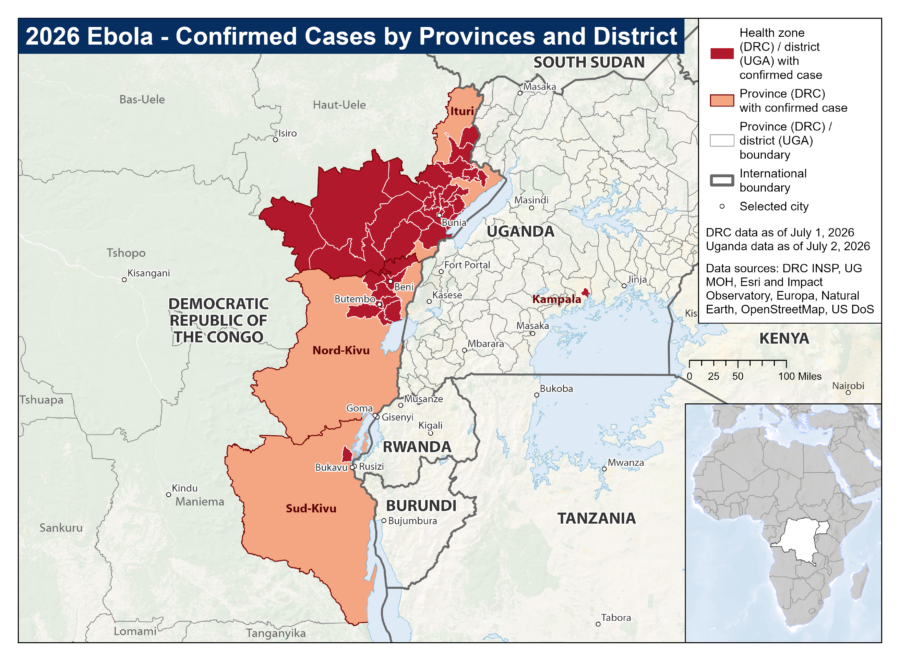
This interactive map provides latest data on the Ebola outbreak.
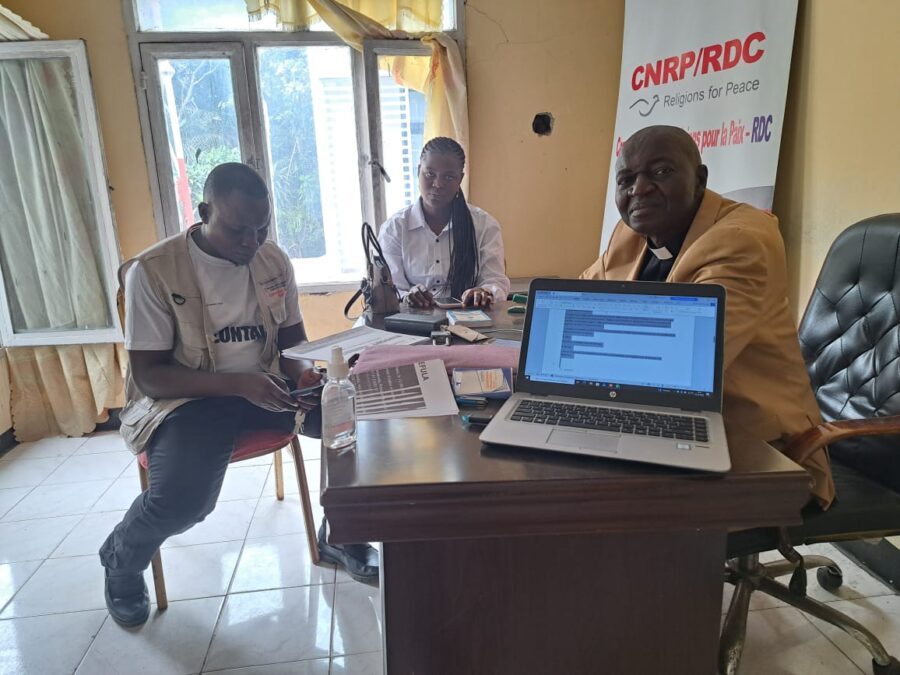
“The situation is still very worrying,” said Rev. Kinyamba Lunge, Secretary General of Conseil National des Religions pour la Paix RD-Congo. “New provinces are reporting cases, and we are cooperating closely with the Ministry of Health in response.”
That cooperation is critical, said Deepika Singh, Deputy Secretary General and Director of Programmes for Religions for Peace.
“Religious leaders carry the influence in communities to help ensure the critical public health messages get through to people in the most remote areas,” Singh said. “So, via FPCC, we are connecting religious leaders to the health experts so they have the most up-to-date and accurate information on efforts to reduce the spread of the virus.”
The outbreak remains largely limited to three provinces in the northeast of the Democratic Republic of the Congo, home to approximately 15 million people. But two additional provinces reported cases as June ended — Haut-Uélé and Tshopo.
“Let me tell you that when I see a religious leader, how I feel. I feel I have this emotional security when I am scared. So be you, the religious leaders, you are the one that gave me the hope to leave my family to work on this response.” – Dr. Julian Gundo during the recent webinars on Ebola
The outbreak in these areas is exacerbated by government institutions weakened by more than a decade of military conflict driven by control of lucrative mining operations. Reports of spread of cases of the virus in Uganda have also led religious leaders there to respond.
As of June 30, a total of 1,406 cases of Ebola had been reported by the DRC Ministry of Health in the three provinces of Ituri, North Kivu and South Kivu – and 438 deaths. However, 192 people confirmed to have been infected had been treated and recovered – an encouraging sign, the ministry said in its recent report. In Uganda, 20 cases and 2 deaths have been recorded. The latest information is available here.
Through the FPCC partnership, Religions for Peace and UNICEF organized two webinars – in French and English – for religious leaders in early June, focusing on Ebola prevention, preparedness and community engagement and featuring insights and expertise of public health experts. The African Council of Religious Leaders-Religions for Peace, the Africa Regional affiliate of Religions for Peace, organized the webinars.
The webinars are aimed at equipping religious leaders to respond to the crisis in their communities and counter the misinformation appearing on social media. Within Uganda, many faith leaders use religious media stations and WhatsApp groups to communicate, spread accurate information and health literacy to those in underprivileged and underserved communities, they said during the webinar.
Social media has played a significant role in spreading widespread misinformation, participants said. Due to the misinformation, many people in the afflicted areas have resisted and attacked clinical care workers or hidden their illnesses. However, many communities and faith leaders have also used social media to combat misinformation and increase trust.
Overall, community engagement is absolutely essential in surviving this health epidemic, participants agreed. Along with healthcare professionals, faith leaders are crucial to build trust and hope.
“Experience from previous Ebola outbreaks… has shown us that even the most robust technical response team can be undermined if communities do not trust the response or feel excluded from decision-making,” said Dr. Tolbert Nyenswah, an expert on the webinar from the U.S. National Institute of Health (NIH) and the UN Office of the Special Adviser on Africa. “Communities are not passive recipients of public health interventions. They are our most important partners.”
To that end, religious leaders have a critical role to play.
“Let me tell you that when I see a religious leader, how I feel,” said Dr. Julian Gundo told participants on the recent webinars. “I feel I have this emotional security when I am scared. So be you, the religious leaders, you are the one that gave me the hope to leave my family to work on this response.”