
Religious Leaders to Dialogue on Peace, Human Dignity, and Shared Responsibility at Fourth Tokyo Peace Process
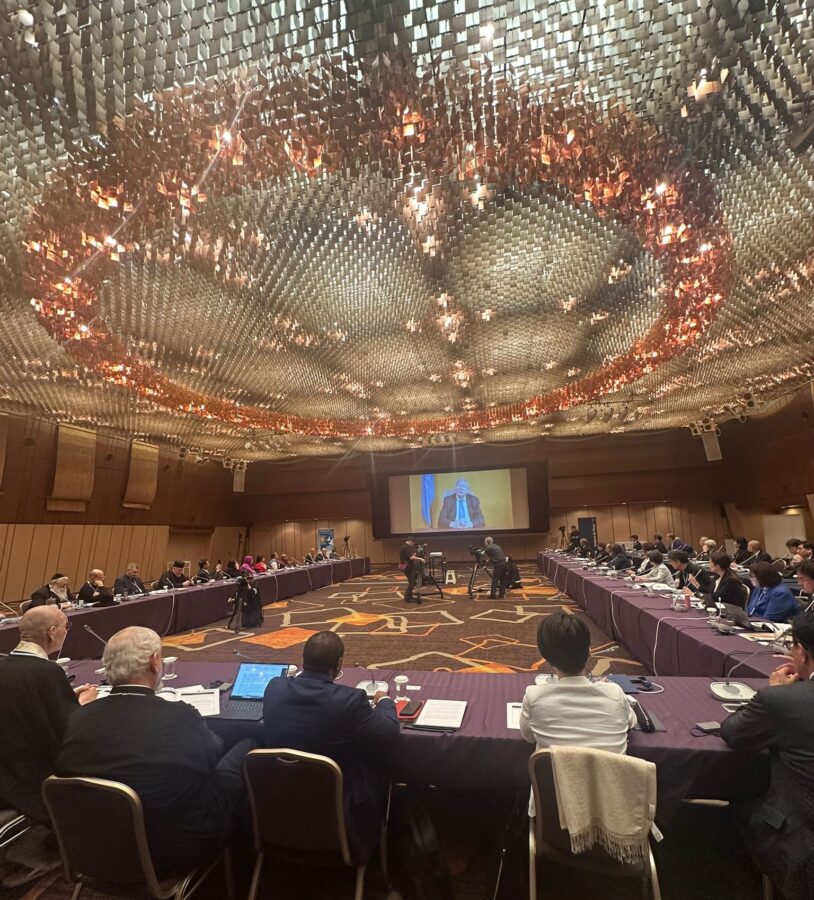
September 2, 2026Diverse religious leaders will convene for the Fourth Tokyo Peace Process Oct. 13 and 14, for dialogue on peace, human dignity and shared responsibility. The gathering is jointly convened by Religions for Peace Japan and Religions for Peace International and will explore the distinctive role religious leaders can play in advancing peace and sustaining dialogue across divides.
“The world today has more active conflicts than at any time since the end of World War II,” said Dr. Francis Kuria, Secretary General of Religions of Peace. “Religious leaders must intensify their efforts to end these conflicts – the source of terrible suffering and death to millions of people.”
The dialogue will bring together religious leaders from Russia, Ukraine, Israel, Palestine, Iran, USA, Saudi Arabia, and Egypt. Representing diverse faith traditions and conflict-affected contexts, they will exchange experiences, reflect on the responsibilities of religious leadership in times of conflict, and identify practical opportunities for continued engagement and cooperation under the Tokyo Peace Process.
“It is not easy to determine where we should begin taking concrete action – yet no matter how difficult the path before us may be, we must continue to walk it together,” said Rev. Kosho Niwano, President-Designate of Rissho Kosei-Kai and Co-Moderator of Religions for Peace. “Nonviolence is not weakness—it is the saving force of humankind, and we must have the courage to lead by example.”
“We must look into the mirror with absolute honesty – the credibility of our multi-religious vision is judged not by our words, but by our tangible actions,” said His Eminence Metropolitan Emmanuel, Elder Metropolitan of Chalcedon of the Ecumenical Patriarchate and Co-Moderator, Religions for Peace. “We must transform our shared values into a unified, practical service that directly touches the lives of the most vulnerable.”
The Tokyo Peace Process, initiated in 2022, does not seek to replace political processes; rather, it seeks to address a parallel and indispensable dimension of conflicts: the moral and religious narratives that shape attitudes, relationships, and possibilities for dialogue within and across communities. By bringing religious leaders together across conflict lines, the Process seeks to strengthen relationships, promote mutual understanding, and identify ways in which religious communities can contribute to peace while upholding human dignity.
The Roundtable entails a day and a half of intensive discussions among the religious leaders, allowing them to strengthen relationships and increase understanding of common challenges and opportunities; identify practical areas for cooperation; and agree on appropriate follow-up mechanisms to sustain dialogue and collaboration. The discussions will be followed by a meeting with Japanese parliamentarians and press conference where a summary capturing the principal reflections and recommendations emerging from the dialogue will be shared.