
Sanctuary and Trust: The Power of Women of Faith
January 29, 2026In the late 1300s, Julian of Norwich wrote the first surviving book in the English language known to have been written by a woman: Revelations of Divine Love.
She lived as an anchoress, which was essentially the highest position a woman could hold within Christianity at the time. After a sort of funeral rites were read over her, signalling the end of her secular life, she was sealed into a cell attached to an abbey in which she lived out the rest of her days, providing spiritual counsel to her community, praying, contemplating, and in her case, writing down her book of visions she had received from God.
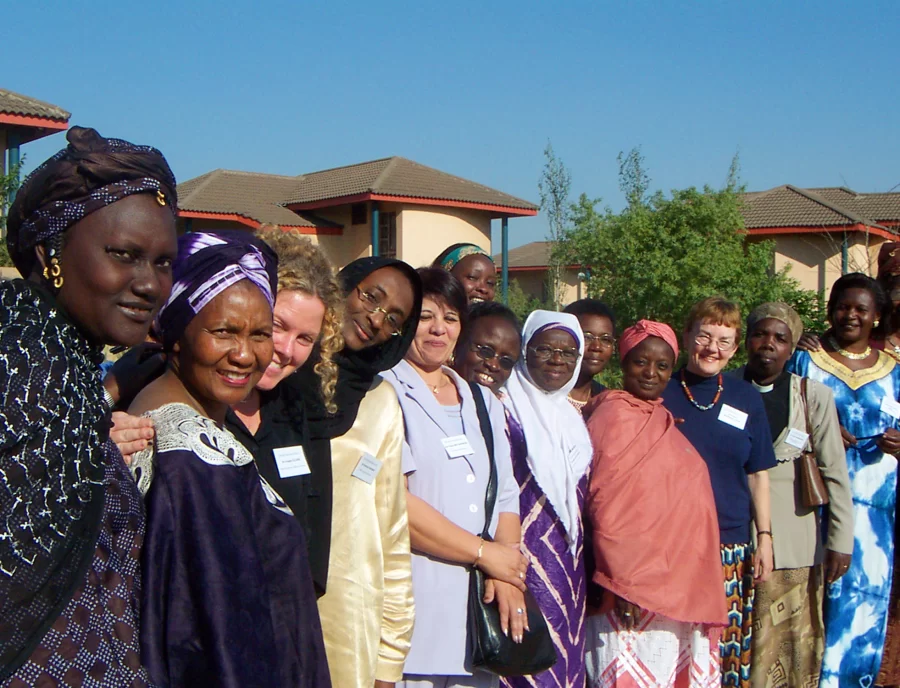
As we look at the landscape of global faith traditions in 2026, the conversation regarding women’s religious leadership continues to evolve. While institutional structures across various traditions vary in their approaches to formal clergy roles, the impact of women is undeniable. “In all faith communities, women play powerful roles that allow them to significantly influence their communities in a positive way,” said Dr. Francis Kuria, Secretary General of Religions for Peace.
There have been shifts and changes regarding which roles women can play within their religious structures. The recent confirmation of Dame Sarah Mullally as the 106th Archbishop of Canterbury, the first woman to ever serve as the head of the worldwide Anglican Communion, is among the most notable. On March 25 she will be installed at Canterbury Cathedral on the Feast of the Annunciation.
“In Islam, we are seeing a very brave and strategic evolution with the Women’s Ulama Congress (KUPI) in Indonesia. Women are asserting themselves as Imams and scholars,” according to Rev. Augustina Elga Joan Sarapung, Chair of the Religions for Peace Asia Pacific Women of Faith Network and interfaith leader in Indonesia (Read a complete interview with Rev. Sarapung here).
As International Women’s Day approaches (March 8) along with the 70th session of the Commission on the Status of Women (CSW), it is a natural time for the Religions for Peace movement to consider the status of women within religious structures. The priority theme for this year’s CSW includes “eliminating discriminatory laws, policies, and practices, and addressing structural barriers.” What would it look like if we considered how discriminatory practices and structural barriers exist within faith communities? Women across faith traditions are finding creative ways to find power despite barriers.
Why do major organized religions operate from a patriarchal framework?
Historians have looked back thousands of years to pre-Abrahamic and pre-Dharmic times to seek answers. Their studies have posited that for thousands of years, before the advent of monotheist religion, the first form of religious worship was of the “Mother-Goddess”, a feminine deity. Matrilineal societal structures were in place, and woman’s procreative power was venerated.
Family lines were traced through the mother, which though it may seem far from most cultures today, makes a sort of sense when society was far simpler and mothers were the ones bringing new life into the world. A possible reason for the shift to patriarchal structures was the development of stronger kingships and states, and then the emergence and spread of the singular male god of the Hebrews. Along with the loss of goddess worship, women’s economic and cultural status changed.
Another answer many point to is the Hebrew creation story of Adam and Eve, which includes that Eve was created from Adam’s rib. Some have wrongly taken this as an indication that women are lesser than men, or created secondarily to serve man.
Similarly, the assertion that Eve was the first to sin by succumbing to the devil’s temptation by eating the fruit has laid blame on women for all of humanity’s sinful nature – as well as punishing women to being subjugated to their male partner as well as enduring pain in childbearing.
Of course, this creation story is only one of thousands. Historians and feminist scholars have re-explained and countered this interpretation of it, but wrongful perceptions of women persist as well as frustration regarding the roles women have been excluded from within major religious traditions for thousands of years.
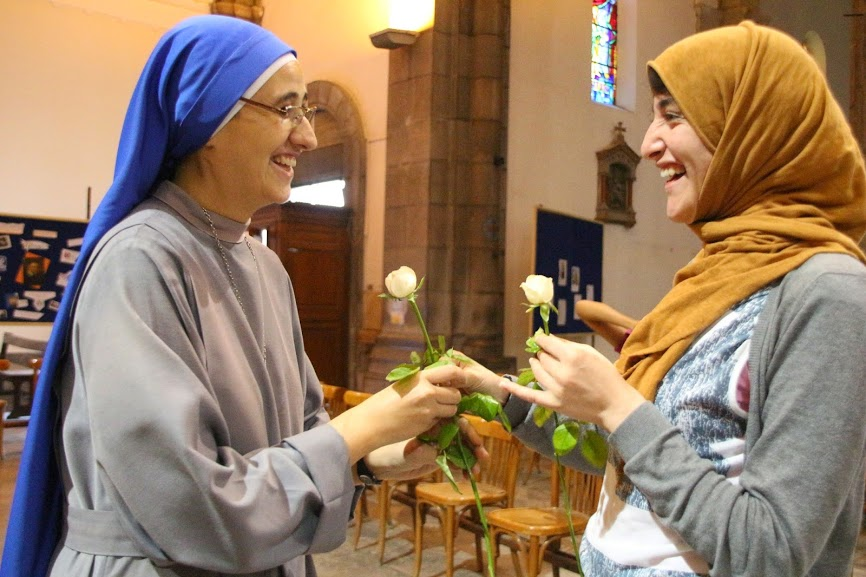
In Islam, the wearing of a hijab is an important yet sometimes controversial topic in Muslim as well as non-Muslim communities. Some frame it as a choice, a source of empowerment and religious and cultural connection for women, while others view it as representing control of women, infringing on their rights. Sheikh Abdullah Bin Bayyah, Religions for Peace Co-Moderator and President of the Abu Dhabi Forum for Peace, has written on the complexity of the choice of the hijab and its potential to both protect women and yet also expose women to harassment due to Islamophobia.
Christian and Catholic nuns wear a similar article, covering their heads and hair for arguably similar reasons: as a sign of piety, humility, and spiritual heritage, though nuns do so without the scale of debate that the hijab evokes in Islam Nuns, though they dedicate their lives to God, dress with these visible symbols of their religious commitment, and serve their communities in tangible ways, are not granted decision-making power within their religious structure. They serve as another example of women of faith who take on huge responsibility in caring for their community, teaching the young, and contributing to religious study, and yet they do not enjoy the equal power and rights to those of men.
At the same time that women of faith may feel undervalued and systemically blocked from holding high official positions within their religions, they are also often playing major roles in the grassroots work that binds their faith communities together: teaching children, caring for the sick, organizing gatherings and outreach, and maintaining places of worship. These women love their communities and their faith, even if the structures of the religion seem to not always love them back.
Within historically patriarchal religious traditions, how can women increase their influence?
Karen Castillo Mayagoitia, a theologian, director of the Mexican Institute of Catholic Social Teaching, and leader in the Interreligious Council of Mexico, says that there are two main approaches. The first is teaching—particularly training men who are in seminary.
The content of their training is important because not only is there the violence they are capable of perpetrating, but also the potential for indirect violence caused by what they say in their sermons. “I tell them this often: be very careful about what you say,” Mayagoitia said.
Also, in the realm of religious education, women (and men) can advance academic and theological arguments which challenge the patriarchal interpretations of sacred texts. In this way, from within the study of religion, popular theology can begin to shift – and eventually beliefs and structures regarding women can shift as well.
The second approach is through grassroots action. In cases where women may not have academic arguments, or where they are not effective, they can demonstrate – through their conviction, work, and solidarity – how to confront traditional leadership structures. Within the activities of a faith community, outside of academia, women can take initiative without an official title.
Additionally, many studies have shown that religion and spirituality often serve as a protective factor against trauma. Holding a strong personal faith can promote women’s mental as well as physical wellness when they experience violence or adversity.
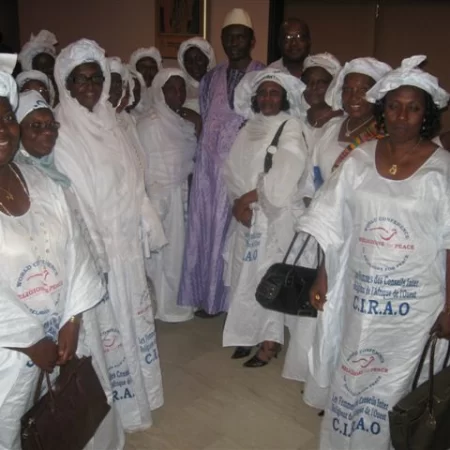
In some communities, attending gatherings for women within their religion may be the only place that women can safely go alone, Mayagoitia pointed out. Where women of faith gather, there is safety and support – both spiritual as well as tangible support in childrearing and homemaking. By having a strong faith during difficult times, faith can provide power via providing a sense of mental and emotional stability.
Sister Agatha Chikelue, Chair of the Religions for Peace International Women’s Coordinating Committee, said that women can achieve more when we come together. “If we come together and say, ‘this is what we want,’ it carries a lot of weight,” Sister Agatha said.
Such efforts within a faith community may be effective, but if the structures and norms in place do not make space for the wisdom of women to be heard, then this is further evidence for the necessity of interfaith collaboration. Women can reach across to women of other faith communities to advocate within their communities as well as share strategies for operating within the structures of religion.
Elias Szczytnicki, speaking in his role as Secretary General of the Religions for Peace Latin America and the Caribbean Region, illuminated the role of the International Women’s Network at Religions for Peace. In many cases, though not for all religious traditions, a key characteristic of members of the World Council is that those religious leaders have the structural authority to speak on behalf of and represent their religion.
Due to the lack of high-level religious positions available to women, many of these members are men. This gender imbalance is at odds with the intent of Religions for Peace to include and honour a diverse and representative balance of women and youth. The organization created the International Women’s Network and International Youth Coordinating Committee to fill this gap.
These networks offer decision-making power within Religions for Peace to women and youth—two groups that are historically and routinely excluded from this role within religious traditions. If hierarchical structures of organized religions were inclusive of women and youth, then these committees would not be necessary. However, that is not the case, at least in 2026, and so concerted efforts must be made to bring these groups to the table.
What can a future for women of faith look like?
As mentioned previously, it is historically agreed that patriarchal religion and societal structures have not been the exclusive case since the dawn of time. There have been plenty of historical eras as well as communities today, such as within folk religions, where goddesses were worshiped or the deity or nature was feminized. There is precedent for the honor of women and equality for women in society, so we should not abandon hope that more change is possible.
And, change and progress have occurred, as seen in the appointment of Dame Sarah Mullally as Archbishop of Canterbury. Women across faiths continue to come together to advocate for their right to safety and equality from Mexico, where high rates of femicide, sexual harassment, and other forms of gender-based violence persist; to Iran, where women face political danger for opposing laws dictating the hijab and women’s performance in public.
“Religion has the capacity and social capital to dialogue with different structures: political, cultural, and educational,” Castillo noted. From the religious sphere can come the power to transform politics and all other dimensions of life, not just the religious space.
The structure of Religions for Peace emphasizes that often, local religious leaders hold more influence within their community than political leaders or other civil society leaders. Faith leaders can influence their community’s beliefs and behaviors. As Mayagoitia pointed out, leaders’ sermons have great potential to either confirm patterns of violence and inequality for women, or to foster beliefs of equality and safety for women.
These leaders with authority to speak and interpret sacred texts are often men. Therefore, men must not see women’s equality as a “women’s issue”—it is an issue which affects everyone. Men champions must speak up and use their power which is accessible to them to foster progress towards women’s equality.
It is a cause which involves everyone: just as men leaders have a responsibility to advocate, women of faith who teach young children of their community, who teach in schools, or who instruct in seminary also have this powerful instrument of teaching with which to foster future religious leaders who will be sensitive to women’s rights.
Shared Sacred Flourishing emphasizes the wholeness of society, not divisions we have created of gender, race, class, or anything else. For one group to flourish, all must flourish in concert with the earth—not one group at the expense of the other, or at the expense of the earth. All beings are connected, and if we thus recognize the dignity of every living being, then we must work towards equality for women within the religious traditions through which each experiences the Sacred.
From the pulpit, positive effects can ripple out and begin to influence educational systems, policy, and culture. Though some may see organized religion as perpetuating beliefs of inequality for women, it also holds great power to make change.
Sources Referenced and Additional Reading
Aggarwal, Sudarshan K, et al. “Religiosity and Spirituality in the Prevention and Management of Depression and Anxiety in Young People: A Systematic Review and Meta-Analysis.” BMC Psychiatry, vol. 23, no. 1, 2023, pmc.ncbi.nlm.nih.gov/articles/PMC10563335/, https://doi.org/10.1186/s12888-023-05091-2.
Howes, Hetta. Poet, Mystic, Widow, Wife. Univ of California Press, 7 Jan. 2025.
Lerner, Gerda. The Creation of Patriarchy. Oxford, Oxford University Press, 1986.
Sinnott, Sinead, et al. “Use of Religious and Spiritual Responses after Trauma to Prevent Posttraumatic Stress Symptoms and Suicidality: The Role of Meaning in Life.” Clinical Psychology & Psychotherapy, 5 Sept. 2023, https://doi.org/10.1002/cpp.2902.
Stone, Merlin. When God Was a Woman. 1976. Orlando, Harcourt, Inc, 2014.
Stopler, Gila. “A Rank Usurpation of Power – the Role of Patriarchal Religions and Culture in the Subordination of Women.” Duke Journal of Gender Law & Policy, vol. 15, no. 365, 2008.
Yusef, Hamza. “The Question of Hijab These Days «Bin Bayyah.” Binbayyah.net, 2021, binbayyah.net/english/the-question-of-hijab-these-days/.