

The call for Shared Sacred Flourishing arises—not as a utopian ideal, but as a moral imperative rooted in our unique spiritual convictions.
Built upon the accumulated knowledge of ten World Assemblies held since 1970, Shared Sacred Flourishing is a framework that invites us to rediscover a common sacred lens which aligns our work towards a vision of flourishing, compassion, justice, and care for a wounded world.

Answers Three Key Challenges
Shared Sacred Flourishing answers three key challenges regarding acknowledging the Sacred as foundational to human flourishing
Honors religious diversity

Engages historical traditions with modern challenges

Integrates science

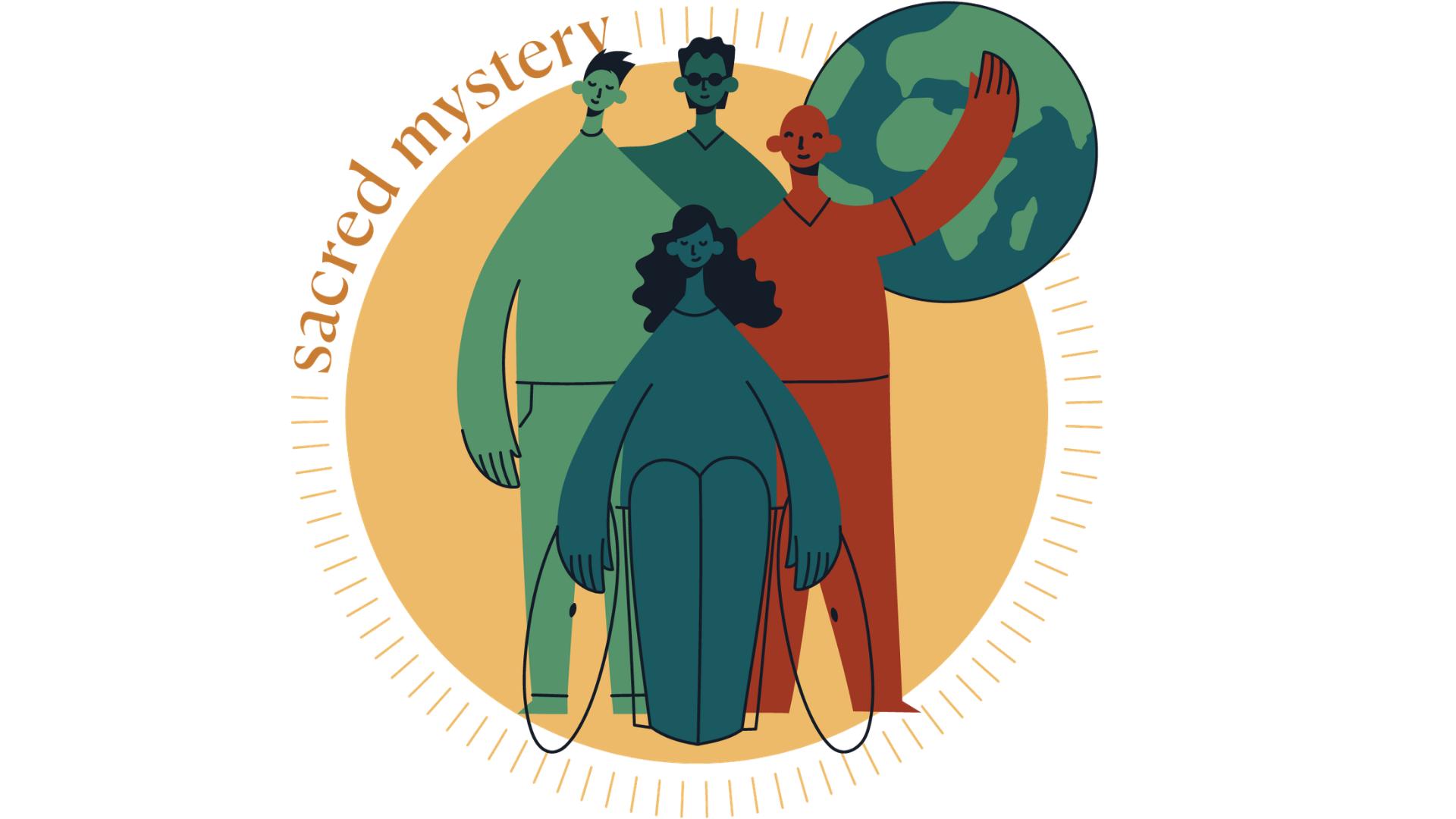
Recognizing a Global Community of Being
Adopting a worldview that is rooted in the Sacred while remaining open to the plurality of the world’s religions—and integrated with science—can serve as a foundational solution for addressing today’s global challenges.
It recognizes the Sacred—respectful of how each religious community experiences, cherishes, and understands it to be—as the foundation of everything: the entire “community of being” which includes the Earth, its complex web of life, all people, and society.

Embracing Each Religion's Unique Worldview
Shared Sacred Flourishing is not an effort to create a new religion or replace the unique worldviews that define each religious tradition. It does not mean a melding or homogenization of each religion’s distinctive conception of the Sacred and the world.
Rather, each religious community retains its unique differences in worldview while acknowledging that all beings are united in the Sacred, and from that grounding, shared virtues can arise as we work towards the common good.
We Flourish in Community

The Sacred
A symbol to refer to the myriad experiences expressed by different religious traditions (God, the Universe, etc)

People as Relational Beings
Humans are inherently relational because we are rooted in the Sacred, along with all other life.

Society as a Relational Whole
Society is characterized by a reciprocal relationship between people and social structures that serve the common good.

The Earth and its Web of Life
The Earth is also rooted in the Sacred, and we must care for and honor the Earth and all life in it.

Explore the Framework
Introduced with the support of the Fetzer Institute, Religions for Peace is launching Shared Sacred Flourishing across our global movement as a new framework to encompass our work.