
Across the Movement: July 2026
August 6, 2026Religions for Peace delegation received by President of Albania
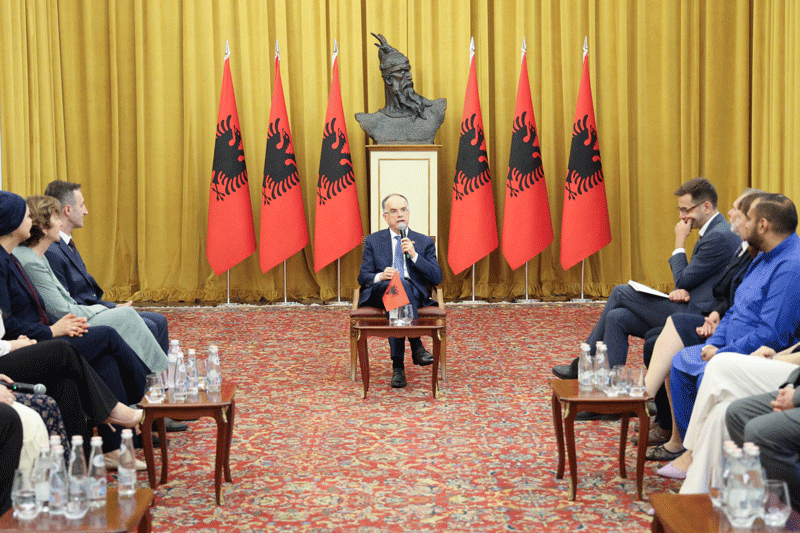 The President of Albania, H.E. Bajram Begaj, hosted a delegation from Religions for Peace Europe in Tirana during the international program “Shared Sacred Flourishing” (July 20–24, 2026). Led by Prof. Genti Kruja, President of Religions for Peace Europe, the delegation gathered representatives from across the continent to advance interreligious cooperation.
President Begaj commended the initiative for promoting peace and mutual understanding, highlighting Albania’s long-standing tradition of interfaith harmony, coexistence, and resilience. He commended the Interreligious Council of Albania for sharing this unique model globally, emphasizing that interreligious dialogue is vital for building trust in a polarized world.
Prof. Kruja noted that Albania offered an ideal setting for the European Forum and Training of Trainers, as its heritage demonstrates how faith communities can collaborate for the common good.
Organized by Religions for Peace Interna tional, Religions for Peace Europe, and the European National Interreligious Bodies network alongside local partners, the program brought together faith, youth, and civil society leaders from seven European nations. The initiative equips interreligious actors to move beyond dialogue into practical, local initiatives that advance peace, human dignity, and shared flourishing across Europe.
Inter-Parliamentary Union and Religions for Peace continue to strengthen partnership
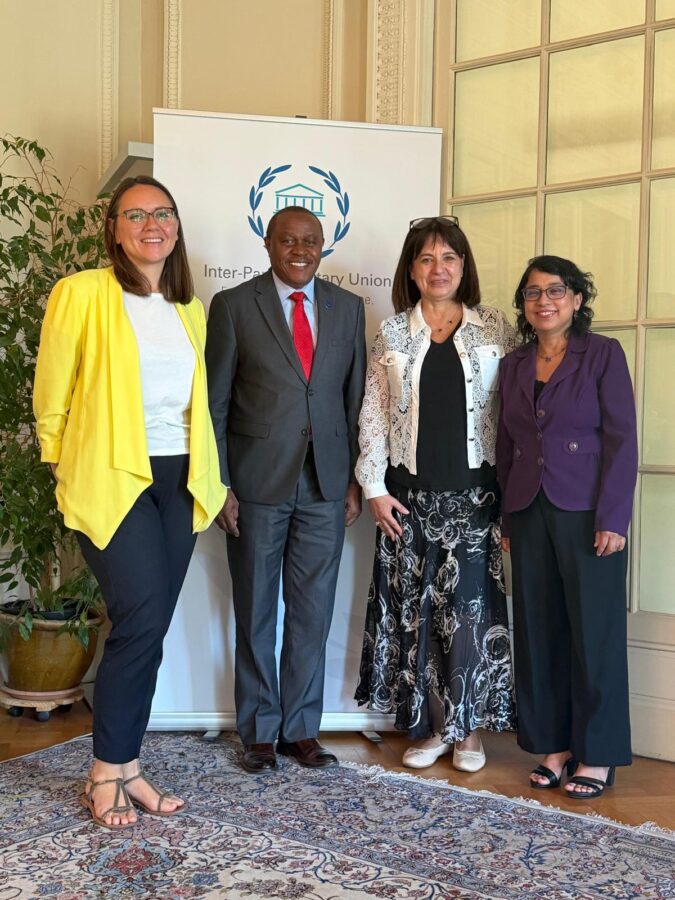
Committed to strengthening a partnership with the common aim of bridging the gap between lawmakers and religious leaders to address pressing global challenges, the Religions for Peace Secretary General Dr. Francis Kuria and Deputy Secretary General Deepika Singh met with the Secretary General of the Inter-Parliamentary Union, Ms. Anda Filip, in July.
The partnership has entailed facilitating multi-stakeholder dialogue – to build inclusive, peaceful societies, uphold human rights, and create a shared roadmap for actionable, long-term legislative and community solutions.
Interfaith Exhibition opens in Tirana
An interfaith exhibition dedicated to dialogue, peaceful coexistence and mutual respect among religious traditions opened in Tirana in July at Kryegjyshata Botërore Bektashiane- Selia e Shenjtë Tiranë as part of a Regional Forum and Training of Trainers on “Shared Sacred Flourishing.”
The exhibition was visited by delegates representing Interreligious Councils, faith communities, and women’s and youth networks from seven European countries: Albania, Bosnia and Herzegovina, Finland, Germany, Greece, Italy and Spain. Through the works on display, visitors encountered diverse perspectives and messages related to interfaith harmony, human dignity, peace and shared responsibility for society.
During the visit, the delegates of Religions for Peace Europe highlighted the important role of art and photography in bringing people together, challenging prejudice and communicating shared values across religious, cultural and national differences. The exhibition also provided a meaningful space for reflection and dialogue among participants.
The event formed part of the regional programme organized by Religions for Peace International, ENIB Religions for Peace, Religions for Peace Europe, in cooperation with the Interreligious Council of Albania-Religions for Peace Albania-religious communities, and national and local partners.
The Regional Forum brought together representatives of religious institutions, civil society organizations, public institutions, academia and the media. It aimed to strengthen the capacities of European Interreligious Councils and encourage joint action in support of peace, mutual understanding and shared flourishing.
The opening and visit to the exhibition demonstrated once again that interfaith dialogue is advanced not only through institutional discussions but also through art, culture and creativity, which can build lasting bridges between people and communities.
European Interfaith Forum and training of trainers conclude in Tirana
In July 2026, Tirana, Albania, hosted the European Interfaith Forum and Regional Multistakeholder Dialogue alongside the Training of Trainers (ToT) program under the Shared Sacred Flourishing initiative. Organized by Religions for Peace International, Religions for Peace Europe, and the Interreligious Council of Albania, the five-day gathering brought together religious leaders, civil society, public institutions, and delegates from seven European nations at the Bektashi World Headquarters.
The Forum opened with strong affirmations of interreligious harmony from national faith leaders and public officials. Speakers—including H. Dede Edmond Brahimaj, H. Bujar Spahiu, His Beatitude Joan, Mons. Gjergj Meta, Pastor Erion Sylari, Klodjan Bulku, Deepika Singh, and Dr. Genti Kruja—emphasized moving “from dialogue to shared service.” They reinforced that Shared Sacred Flourishing does not blend distinct traditions, but unites them around shared values of peace, human dignity, environmental care, and service to humanity.
Following the Forum, the ToT program—led by trainers Emina Frljak and Omer Faruk Karacan—equipped representatives from national interreligious councils with practical peacebuilding and educational methodologies. Highlighting the vital role of women and youth, the sessions focused on translating shared principles into concrete, local initiatives.
The gathering concluded with a certificate ceremony presenting graduates as key facilitators for their home countries. Armed with 90-day national action plans, participants now return to their respective communities across Europe to lead local workshops, strengthen interfaith networks, and turn shared sacred commitments into lasting societal action.
Training of trainers in Kathmandu brings Shared Sacred Flourishing to religious leaders in Asia
Gathering in Kathmandu, Nepal, religious leaders from across Asia participated in a regional Training of Trainers, focused on Advancing a Shared Sacred Worldview for Shared Sacred Flourishing, in July.
Reconnecting with decades of interfaith leadership in the region, the workshop aimed to re-center spiritual depth, moral values, and human dignity at the core of peacebuilding and community development. The Shared Sacred Flourishing framework is built on decades of the Religions for Peace’s work around the world.
Through lectures, reflective dialogue, storytelling, workshops, institutional assessment, and cultural immersion, participants explored how diverse sacred traditions can affirm their unique identities while collaborating around shared sacred values for the common good. The training emphasized integrating spirituality into institutional transformation by applying the Shared Sacred Analysis, the Religions for Peace Action Method, and the Whole of Whole People framework to contemporary social, ecological, and peacebuilding challenges.
The three-day gathering blended deep dialogue, practical skill-building, and cultural immersion, framed across three themes. First, the workshop rooted peace in shared virtues across Buddhist, Christian, Muslim, Bahá’í, and other traditions, emphasizing how families, schools, and faith communities can help society thrive.
Then, it introduced concepts of shared sacred analysis, enabling participants to explore social and ecological challenges through a lens of spiritual care rather than purely administrative steps. Interreligious pilgrimages to Swayambhunath Stupa and Kathmandu Durbar Square illustrated how spirituality remains woven into everyday life.
Finally, it focused on healing and concrete action – translating shared sacred virtues into implementation of activities to address issues and advance the common good. In sessions on reconciliation, participants shared personal stories of hardship to highlight peacebuilding as a restorative process. To ensure lasting impact, each national delegation developed a concrete 90-day action plan to implement these concepts back in their home countries.
Through their national action plans and institutional commitments, participants affirmed that Shared Sacred Worldview and Shared Sacred Flourishing offer not only a renewed vision of interreligious cooperation but also a practical pathway to strengthen healing, reconciliation, ethical leadership, and collaborative action across Asia.
Building interreligious dialogue is critical to fighting antisemitism and building social cohesion, religious leaders in Australia tell Royal Commission
Religions for Peace Australia has lodged a submission to the Royal Commission on Antisemitism and Social Cohesion, highlighting the important role that the Multifaith Council of Australia can play in fostering understanding, reducing prejudice and strengthening social cohesion.
In its submission, Religions for Peace Australia called for the establishment of a national framework that sustains government investment in interfaith social cohesion; improving religious literacy at all levels in society and in government; coordinated monitoring of religiously motivated extremism and radicalisation across all communities; and formal recognition of multifaith bodies as partners, not afterthoughts, in national resilience planning.
The Governor-General, Her Excellency the Honourable Sam Mostyn AC, established the Royal Commission on Antisemitism and Social Cohesion in January 2026. The Royal Commission issued its interim report in April with 14 recommendations. The final report is expected in December 2026.
Council of Religions launches GBV toolkit and capacity-building training
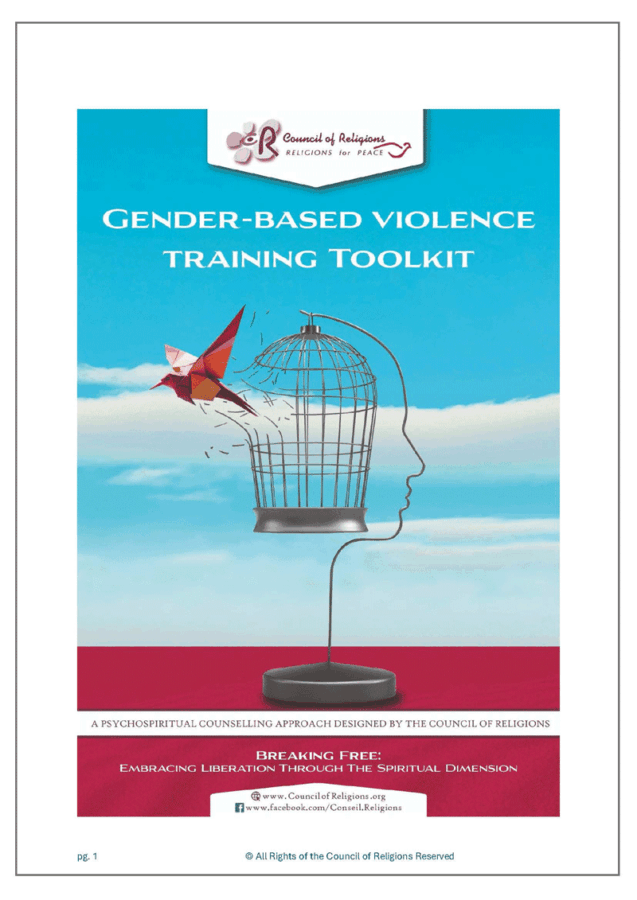 The Council of Religions of Mauritius, a Religions for Peace affiliate, officially launched its Gender-Based Violence (GBV) Toolkit, initiating a pivotal effort to address the root causes of violence in Mauritian society.
To support the launch, the Council announced a six-day training program centered on combatting GBV by strengthening cultural norms and beliefs that uphold human rights, dignity, and justice. Designed for faith leaders, social workers, and community stakeholders, the capacity-building initiative equips participants to respond effectively to GBV cases while offering structured support to both victims and perpetrators.
The program covered critical thematic areas, including Human Development and Human Rights, alongside key topics such as:
- The protective role of spirituality against violence
- Core religious values promoting compassion and ethical responsibility
- Psychological insights to inform religious teachings
- Legal frameworks surrounding GBV and available avenues for redress
Aligning with the Council’s strategic goal of fostering a just and equitable society, this initiative bridges faith, law, and human rights to build lasting, community-led solutions.