
Multilateralism Faces Its Most Difficult Tests Since the End of WWII
September 2, 2026As delegates arrive to New York for the 81st Session of the United Nations General Assembly (UNGA 81), the stakes are high. It is no secret that the very system that has sustained and facilitated multilateral engagement is under its greatest strain since the birth of the United Nations in 1945.
Religions for Peace will host a special in-person event, “Restoring Trust in an Era of Polycrises: A Multi-Stakeholder Dialogue on Shared Sacred Flourishing,” on the margins of UNGA. Sept 23 at 10 a.m. Register here.
“International institutions, most of which trace their origins to the post-World War II period, grew out of the spirit of ‘never again,’” said Dr. Katherine Marshall, Senior Fellow at the Berkley Center for Religion, Peace and World Affairs at Georgetown University, Executive Director of the World Faiths Development Dialogue and Religions for Peace Ambassador. Dr. Marshall is also a member of the Religions for Peace Standing Commission on Promoting Peaceful, Just and Inclusive Societies.
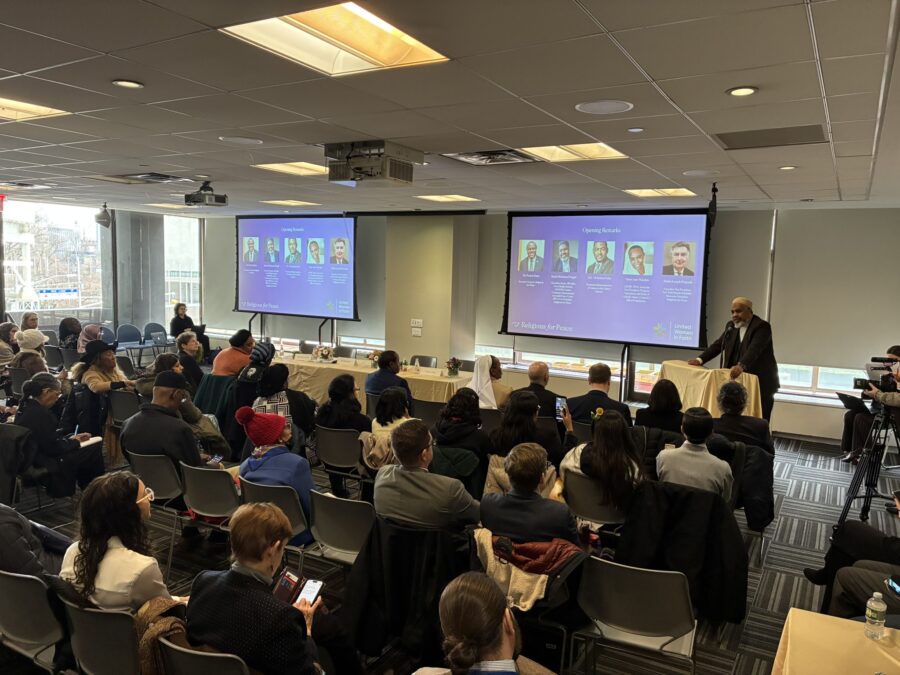
“And now we are seeing a fraying of a lot of the spirit of internationalism, of multilateralism – but also challenges and weakening of the institutional structure.”
Over the past two years, the post-World War II rules-based international order has entered its most severe crisis of legitimacy and function since 1945. A rapid acceleration of diplomatic withdrawals, widespread defaults on international norms, and severe budget cuts to global bodies have fundamentally fractured the multilateral system.
The decline in multilateralism engagement is readily apparent, said Imam Mohamed Magid, Executive Imam of the All Dulles Area Muslim Society (ADAMS) Center, Chairman of the International Interfaith Peace Corps and Co-President of Religions for Peace. Collaboration and engagement on a variety of issues has markedly declined, he said.
“Convening was something that many countries previously supported – just bringing people to work together,” Imam Magid said. “Now they will say we can work on our own terms. And it can be selective to how to convene.”
A significant concern for religious leaders
At the Religions for Peace International Council Meeting in June, this fracture was top of mind for religious leaders from across the Religions for Peace movement. During a panel discussion, “Reimagining Multilateralism: Trust Deficits, Fragmentation, and the Role of Religious Actors to Inclusive Global Governance,” religious leaders shared a variety of insights; the discussion was moderated by Hon. Ela Gandhi, Chairperson of the Gandhi Development Trust and Co-President of Religions for Peace.
Above all, panellists made clear that collaboration is necessary to address the most pressing issues facing humanity and the entire web of life on Earth.
Read the Port Louis Resolution, issued at the conclusion of the International Council Meeting
“Multilateralism is not a luxury or an abstract concept for diplomats – it is the infrastructure of human coexistence,” said Michael Sheldrick, Co-Founder and Chief Policy, Impact, and Government Affairs Officer of Global Citizen, the global campaign to eliminate poverty. “When it breaks, we do not abandon the house—we rebuild its foundation together.”
Speakers agreed further that multilateralism – in spirit and in practice – is critical to addressing the world’s issues and advancing the common good. Further, they recognized the role they can and must play to restore the trust, engagement and dialogue necessary for its success.
“We, the people of the world… should believe that we belong to one humanity, one destiny, and one responsibility,” said Dr. Prof. Din Syamsuddin, Chairman of the Centre for Dialogue and Cooperation among Civilizations and Honorary President of the Indonesia Conference on Religion and Peace.
We still need multilateral engagement
Beyond the moral imperative, multilateralism is practical, said Rabbi Dr. Itzhak Dayan,Chief Rabbi of Geneva and Vice-President of the Conference of European Rabbis.
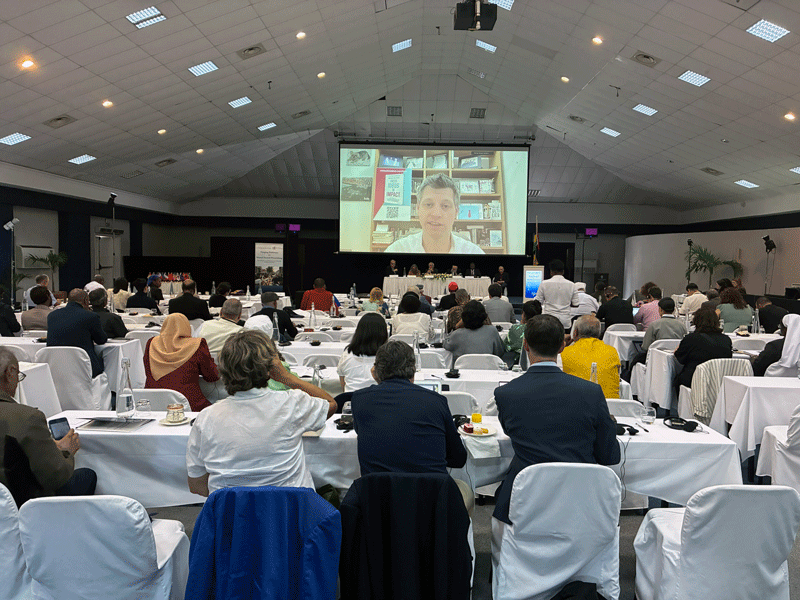
“Without peace, there is no sustainable growth,” Rabbi Dayan said. “Religion reminds us that peace is the objective, the mission of all governance.”
Imam Magid said the decline in multilateralism will mean some issues are difficult if not impossible to resolve because they require collective action – which is more effective in numerous ways; among other things, it allows for the pooling of resources, ensuring more can be done and it brings in additional technical expertise.
“When you work together, you come to know that somebody knows something you don’t know,” he said. “Sometimes people have years and years and years of expertise or experience – but you will not be able to use that if you work alone.”
To be clear, international cooperation is not failing entirely; the public often overlooks its quiet successes – global aid delivery and diverse successful development initiatives, for example – noticing only when systems break down. Its current distress, nevertheless, is the result of negligence and some would assert even willful malevolence.
Dr. Marshall of Georgetown University cited numerous factors in the decline of multilateralism — including flaws in the UN architecture, weak leadership and geopolitical conflicts – as well as a rise in nationalism and individualism around the world.
“I think there is a lot to do with leadership,” she said. “But it is also the conflicting interests, the conflicts in the world – the visible violent conflicts are clearly a factor.
“There are also the basic flaws within the UN system, the weakness of the Security Council, particularly,” she continued. “The veto power of the P5 within the Security Council has really stymied action on so many different issues. I think what many people say, particularly about the Universal Declaration of Human Rights, is that if we had to set it up today, we would not be able to get consensus.”
Other factors include financial crises which have led to severe budget cuts at multilateral institutions; insecurity which has caused societies to turn inward and view others as “enemies” or competitors rather than partners; and skepticism that multilateral institutions can implement the programs to achieve agreed upon goals, such as the Sustainable Development Goals.
The role of religious leaders in rebuilding multilateralism
Religious leaders across the Religions for Peace movement said restoring multilateralism, in spirit and practice, is imperative.
To that end, they have much to offer. Roughly 75% of the world’s population aligns with a religious tradition or faith community and religious leaders carry great influence. Numerous global surveys show that the vast majority of people in the world want their leaders, political and religious, to work together to address the problems facing humanity and to advance the common good.
The influence of religious leaders is complemented by their deep understanding and experience in centering the Sacred in human development efforts. As outlined in the Religions for Peace Shared Sacred Flourishing framework, addressing global problems effectively must engage religious leaders meaningfully, leveraging their extensive experience in local peacebuilding, mediation, and community resilience.
Development practitioners in secular institutions like the UN recognize the immense value of this experience. “Strategic religious engagement” refers to an approach to achieve “continuous well-informed religious engagement as a standard principle in development work.”
In a recent paper, “Strategic Religious Engagement: Paths to Enhancing the Impact of National and International Development Initiatives,” Marshall and co-author Olivia Wilkinson, a senior fellow with the Initiative on Faith, Trust, and Health at the Georgetown University Global Health Institute, explored “how development actors (national and international) can approach engagement with religious communities in more strategic ways.”
For their part, religious leaders seek engagement with multilateral institutions because they recognize that engagement will help achieve human flourishing. But multilateralism, in spirt and practice, needs reform – and moral guidance should guide that reform, they said.
“We have to be the moral compass that believes in the cause of one humanity – and that cannot be just a slogan,” said Imam Magid. “We have to create a space where we say, ‘We care about all human concerns.’”
“To reform global institutions, we must restore their soul,” Rabbi Dayan told participants at the International Council Meeting. “Systems do not repair themselves through policy alone, but through a renewed moral commitment to our shared humanity.”
Interreligious collaboration offers a clear path forward – and one religious leaders provide daily to their communities across the globe.
“The erosion of international cooperation is not inevitable; it is a choice,” Dr. Prof. Syamsuddin said. “Rebuilding trust requires us to move past despair and commit to the quiet, hard work of joint problem-solving.”
Religious leaders have the influence to restore multilateralism – in spirit and practice; and they must use it, Imam Magid said.
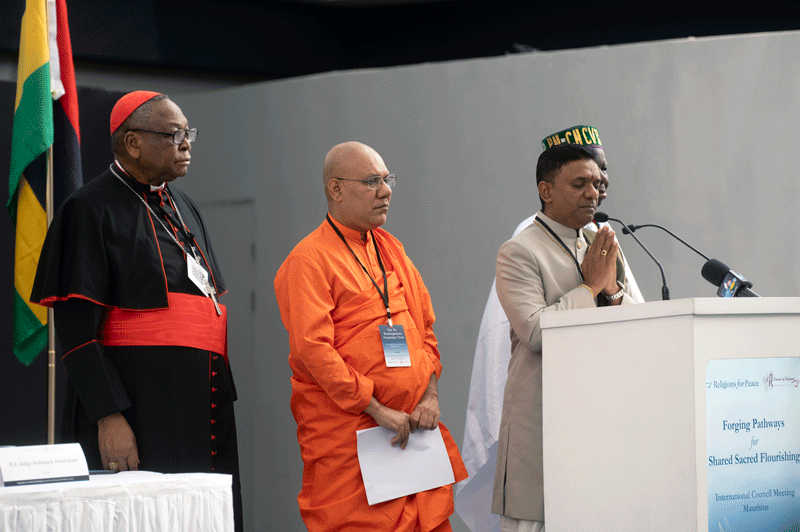
“If we use our moral compass and moral authority, I think we can pressure government – absolutely,” he said.
Restoring both the spirit and practice of multilateralism will require more than talk, Dr. Marshall said – a reality the response to the COVID-19 pandemic made clear.
“All these inspirational platitudes about common interests (were tested), but with the pandemic, it very quickly became: ‘Well, we may be in the same boat, but we’re in different classes… some people have yachts, some are drifting on a piece of flotsam,’” she said. “We need to appreciate that we need to think differently about inequalities.”
Collaborative efforts – action – are a necessary ingredient to rebuilding multilateralism, said Rabbi Dayan.
“Credibility and trust begin when words are matched with actions,” he said.
Dr. Prof. Syamsuddin concurred – calling for deeper dialogue as a precursor to the peacebuilding actions the world needs.
“There have been so many dialogues… but those dialogues so far indeed were two or three or four monologues,” he said. “We should bring about a new paradigm of dialogue… dialogue based on sincerity, openness, frankness, and problem-solving.”
Religious leaders should continue to convene to the extent possible, said Imam Magid, as well as seek to leverage the cultural conversation, Imam Magid said.
“We need to create a cultural dimension that is really collective,” he said. “It can create hope in people that we need to connect again on issues of concern to humanity – using culture, music, and entertainment.”
Listening to and empowering local communities in the process of rebuilding multilateralism will significantly improve its functioning and ensure its outcomes are impactful, said Advocate Boutros Mansour, Co-Chair of the World Evangelical Alliance and General Secretary of the Evangelical Convention in Israel.
“A rebuilt multilateral system cannot be designed solely from the top down,” Advocate Mansour said. “It must draw its strength from the ground up—engaging communities, local leaders, and diverse traditions to create a governance structure that truly belongs to everyone.”
That would also ensure a new multilateralism is built on a strong common foundation, Dr. Prof. Syamsuddin said.
“We cannot afford the luxury of isolation,” he said. “Reconstructing global cooperation demands that we sit at the table not to defend our boundaries, but to find the common ground where real solutions begin.”