
Across the Movement: May 2026
June 1, 2026Albania: Religious leaders emphasize moral imperative of addressing climate issues
Climate change is not only an environmental or economic challenge – but also a moral, spiritual, and human one, requiring common responses rooted in solidarity, responsibility, and respect for creation, the president of Religions for Peace Europe told an audience of religious leaders at the 14th Interfaith and Inter-Theological Academic Symposium.
Addressing participants at 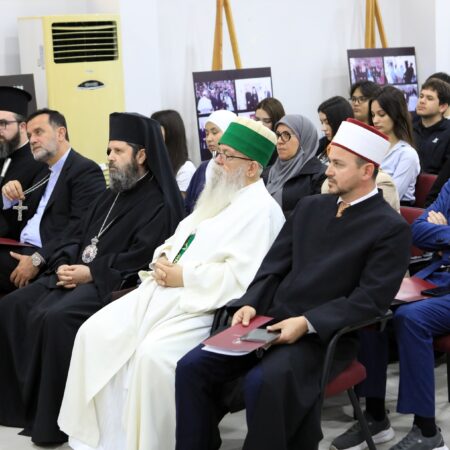 the event held in Tirana, Albania, Prof. Dr. Genti Kruja, President of Religions for Peace Europe, emphasized that religious traditions offer important values such as care, moderation, and justice, which can contribute to building a more sustainable future.
The symposium – organized under the theme “The Role of Christianity and Islam in Addressing Climate Issues” – brought together leaders of religious communities, academics, researchers, and students of Islamic and Christian theology. It also featured an interactive student workshop where students from theological institutions collaborated in working groups, presenting their ideas on the role of religion, education, and civic responsibility for climate action.
Cambodia: Religions for Peace delegation strengthens interfaith ties and cooperation
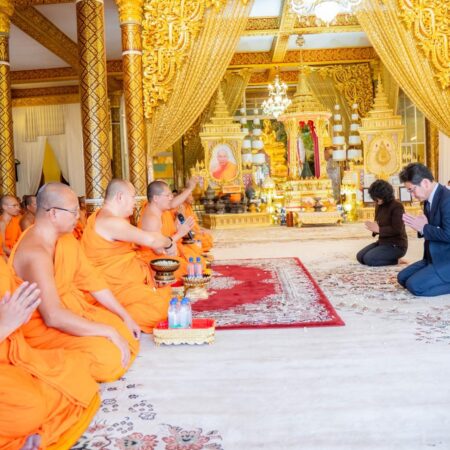 A high-level delegation from Religions for Peace International and Religions for Peace Asia (ACRP) conducted a two-day visit to Phnom Penh, Cambodia from April 21-22, 2026 to promote interreligious harmony and strengthen collaboration among faith leaders. Led by Ms. Deepika Singh, Deputy Secretary General of Religions for Peace International, and Dr. Yoshinori Shinohara, Secretary General of Religions for Peace Asia, the delegation met with senior religious, governmental, and academic figures.
At an Interfaith Collaboration Workshop at Preah Sihanouk Raja Buddhist University, more than 300 religious leaders, government officials, scholars, and students focused on the role of faith in fostering mutual respect. Samdech Dr. Yon Seng Yeath, Rector of the University and Secretary-General of the Cambodian Inter-Religious Council (CIC), welcomed participants.
In their remarks, Ms. Deepika Singh highlighted how multireligious collaboration builds social cohesion through shared moral values, while Dr. Shinohara emphasized the importance of practical, action-oriented humanitarian cooperation. The session included discussions with CIC representatives focused on expanding youth engagement, improving institutional coordination, and supporting regional peace initiatives.
The delegation also met with His Excellency Dr. Chay Borin, Minister of Cults and Religion, who reaffirmed the Cambodian government’s support for interfaith initiatives and acknowledged the role of religious leaders in social cohesion. The visit concluded with a traditional ceremony at Wat Unnalom Pagoda to honor the memory of the late H.H. Samdech Tep Vong, Great Supreme Patriarch of Kingdom of Cambodia and Co-President of Religions for Peace.
Indonesia: 17th annual interreligious education program addresses mental health issues
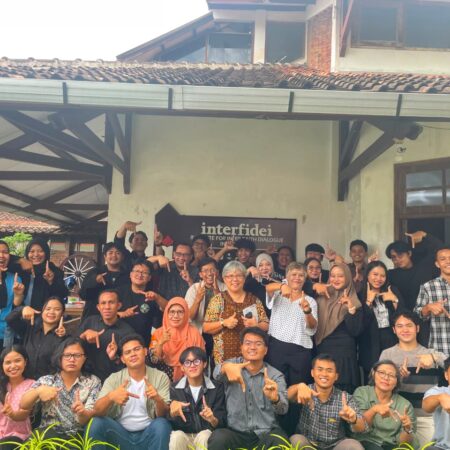 Students and scholars in Indonesia completed the 17th Interfaith Study Program organized by Interfidei, the Institute for Interfaith Dialogue in Indonesia. Founded in 2009 by Interfide (Institute for Interfaith Dialogue in Indonesia), the program has been running for 17 years. The annual program is a collaborative effort, implemented Feburary to May, involving three religious-based universities in Yogyakarta (Catholic, Protestant, and Islamic), though it remains open to participants of all faiths, including Hindu, Buddhist, and local traditional religions.
This year’s program focused on mental health, said Rev. Elga Sarapung, director of Interfidei. It dismantled the misconception that mental health is strictly a youth issue by exploring how it affects all generations. A major talking point was how rapid advancements in information technology and AI have created a relational disconnect within families, forcing individuals to turn to technology for answers rather than communicating with one another.
Italy: Interreligious panel marks the Franciscan year
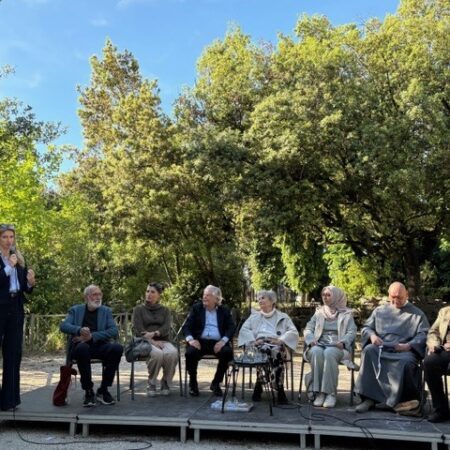 As part of global commemorations marking 800 years since the death of Francis of Assisi, Religions for Peace Italy hosted an interreligious panel on May 17 focused on environmental protection—a core pillar of the chapter’s ongoing work.
Held in Rome’s Nemorense Park in collaboration with the , the event, titled “One House, Many Voices: Interreligious table in the Franciscan year,” brought together local institutional leaders and representatives from five major religious traditions — Buddhism, Catholicism, Hinduism, Islam and Judaism.
The gathering of around 50 participants, which included remarks from Municipal Councilor Arianna Camellini and Religions for Peace Italy President Luigi De Salvia, highlighted a deepening climate of dialogue and trust between public institutions and faith communities. Attendees also received copies of Religions for Peace Italy’s new multi-religious calendar, themed “SEED PEACE.”
Nigeria: Interreligious Council recommits to shared action for peace
The Nigeria Inter-Religious Council (NIREC) convened its first quarterly meeting of 2026, May 5-7, under the theme “Religious Literacy for National Cohesion.” The meeting, presided over by co-chairmen His Eminence Most Rev. Dr. Daniel C. Okoh, President of the Christian Association of Nigeria, and His Majesty Alhaji Muhammad Sa’ad Abubakar, Sultan of Sokoto and President-General of the Nigerian Supreme Council for Islamic Affairs, served as a vital mechanism for “healing wounds and healing memories,” said Rev. Fr. Dr. Cornelius Okohuma, NIREC’s Executive Secretary.
WATCH the official communique of the event https://youtu.be/RF_IIbLu3FM?si=YMRlX4lPkUm1T3kp
The session was intentionally structured to mend leadership fractures and deep-seated societal suspicions that intensified following a turbulent 2025 – marked by international narratives labeling domestic violence as an exclusive Christian genocide.
The executive session concluded with the ratification of a comprehensive, multi-sectoral communique addressing immediate national security, educational policy, and economic reforms. Crucially, the council declared that terrorists, bandits, and kidnappers are absolute criminals who do not represent any religious or ethnic group, mandating that CAN and the NSCIA no longer issue independent press statements, but rather stand as a unified front against insecurity.
To prevent the future political weaponization of poverty and ignorance, NIREC resolved to consult with the National Universities Commission and the Nigerian Educational Research and Development Council to formally integrate interreligious dialogue into tertiary education curriculums, while concurrently demanding that the federal government establish special courts for swift criminal justice, revitalize economic avenues for vulnerable youth, and implement state policing.
Nigeria: Social justice, faith and mental health focus of youth workshop
Sixty Nigerian youths – 30 Muslim and 30 Christian – learned about and discussed social justice and mental health awareness issues during a workshop in Abuja in May. The workshop was conducted by Dr. Rozilla Adhiambo of the African Council of Religious Leaders-Religions for Peace (ACRL-RfP) and coordinated by the Nigeria Interreligious Council (NIREC).
https://youtu.be/7dGh4NH5SnM?si=U0SeY5tC_s99RCwL
The workshop equipped young leaders with knowledge, faith-informed perspectives, and practical peer-support skills. By creating an inclusive environment, the training sought to reduce the stigma surrounding mental health challenges and empower young participants to act as effective change agents within their respective faith communities.
In the area of mental health, participants learned to recognize the symptoms of emotional distress and critical warning signs of crisis, including self-harm and suicidal ideation, so they can quickly spot when a peer is struggling.
The training also highlighted the vital relationship between faith and mental wellness, highlighting how core spiritual values like compassion, hope, and perseverance can support psychological healing. Using the Mind-Heart Dialogue methodology, the youths engaged in collaborative group discussions, role-plays, storytelling, and case studies based on real-world Nigerian scenarios.
Ultimately, the workshop drove home the unified message that mental health is a fundamental component of overall well-being, and that seeking help should be viewed as a sign of strength rather than weakness. By demonstrating that faith-based support and professional psychiatric care can work hand-in-hand, the program successfully charted a collaborative path forward for religious youth.
Pakistan: Diverse religious leaders unveil social reform roadmap in Karachi
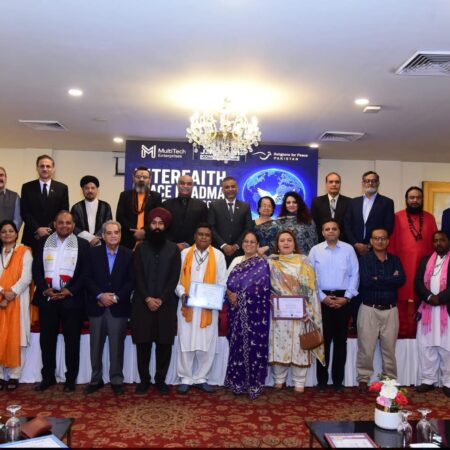 Diverse religions, private sector and government leaders in Pakistan participated in a major multi-faith summit in Karachi, the “Interfaith Peace Roadmap Conference 2026,” establishing a collaborative framework for public health, child safety, and community dignity. The high-level event was organized by the Interreligious Council of Pakistan.
The event’s broad representation was particularly important, said Huma Ikramullah, Secretary General of Religions for Peace Pakistan.
“It is always as a community, as a whole, on one platform, that one makes change,” Ikramullah said. “Bringing everybody together allows you to make the most impact.”
The summit convened a broad assembly of policymakers, human rights experts, and leaders from the Muslim, Hindu, Sikh, Christian, Bahai, Parsi, and Ismaili communities, alongside the Consul General of Sri Lanka representing the Buddhist community. They focused on “Faith for Positive Change for Children, families and communities: Strengthening faith led actions for healthy and safe communities.”
In recorded remarks, Dr. Francis Kuria, Secretary General of Religions for Peace, introduced the Shared Sacred Flourishing framework, emphasizing the ethos that every child and family deserves to thrive in safety and health regardless of faith background.
The definitive outcome of the conference was the signing of the Interfaith Peace Roadmap Declaration. In a significant move toward proactive social reform, participating religious leaders pledged to use their pulpits to drive public health and human rights initiatives to improve public health, particularly increased childhood immunization; improve sanitation and access to clean water; and fight to reduce the incidence of harmful practices, including child marriage and domestic violence
To ensure long-term accountability, delegates announced the formation of an interfaith Faith Advisory Group task force to oversee these child health and safety initiatives through 2028, in tandem with national ministries and civil society.