
Four Crises, One System, One Way Out: A Key Role for Faith Communities
September 3, 2026
Dr. Charles McNeill is a leading global expert on environmental issues and a member of the Religions for Peace Standing Commission on Nurturing a Sustainable Environment.
As preparations for Climate Week NYC and the UN General Assembly intensify over the coming days, three major challenges of our time that are in the headlines come into stark focus: climate change, conflict, and debt.
Each is severe on its own — together, they constitute a polycrisis that is existential. And in this context, we must consider a fourth critical dimension: nature — the forests, soils, and watersheds that provide the buffering capacity that makes the other three shocks survivable or catastrophic.
Let’s take each in turn, then look at who is hit hardest, what’s working, and what faith communities can do about it.
Climate: We are living through the hottest period in recorded human history. Climate disasters caused over $320 billion in losses in 2024 alone. The Amazon has lost 17% of its original cover — with a tipping point for irreversible collapse between 20 and 25%.
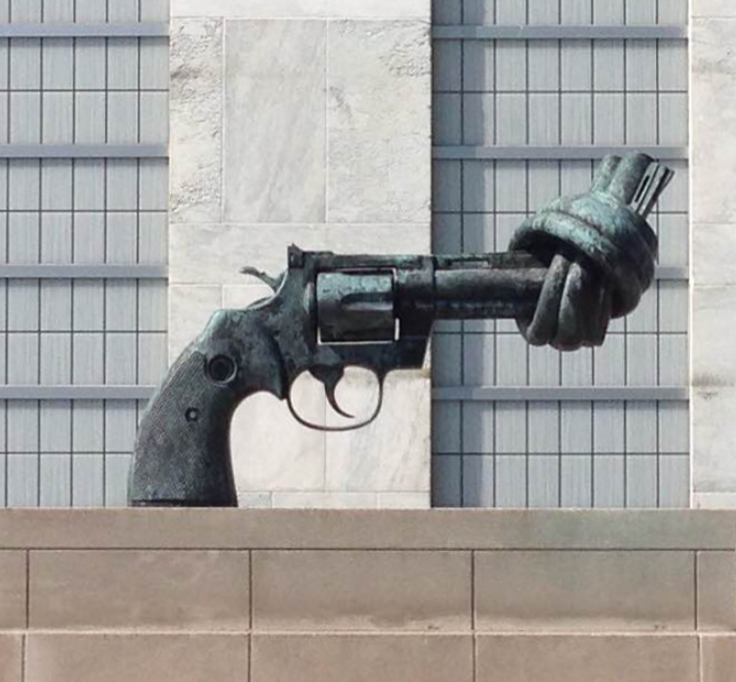
Conflict: We face the highest level of violence since the Second World War, and the resources poured into military escalation are stripped directly from the climate financing that could prevent the next crisis.
Debt: 3.4 billion people — nearly half of humanity — live in countries spending more on interest payments to foreign creditors than on health or education for their own citizens.
Nature: We are living through the sixth mass extinction in Earth’s history – only this time we caused it. Wildlife populations have collapsed by 73% since 1970, and up to one million species are now threatened with extinction, many within decades.
These are not four separate crises. They are one system — and it is failing all at once. A climate shock forces emergency borrowing. Debt crowds out investment in adaptation and social protection. Weakened, indebted states cannot manage the conflicts over land, water, and resources that climate stress intensifies — and those conflicts turn violent. Conflict destroys the forests and watersheds communities need to survive the next shock. Nature loss removes the very buffers that would have absorbed the climate shock in the first place. Each crisis feeds the next. The cycle closes, and tightens, every time around.
Syria shows that climate can ignite conflict directly — the worst drought in the country’s modern history drove 1.5 million farmers into already-strained cities, documented as a direct accelerant of the 2011 uprising and the devastating war that followed.
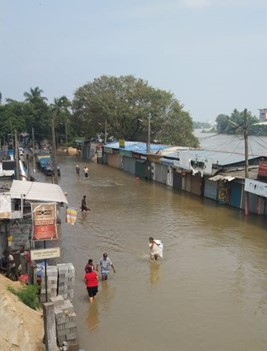
Pakistan shows what happens when all three crises arrive together with no financial buffer — 33 million people suffered from the 2022 floods while Pakistan was negotiating debt rescheduling at the same moment it was distributing tents to flood victims. The floods returned in 2025. Pakistan did not build this trap. But Pakistan is caught in it.
Colombia makes the cycle most visible. When the FARC — Colombia’s guerrilla movement, which waged a fifty-year insurgency — demobilized in 2016, successor armed groups moved into the vacuum, driving deforestation directly through illegal cattle ranching, cocaine production, and gold mining — and displacing the Indigenous and Afro-Colombian communities who had been protecting those forests. In April 2026, The New York Times revealed illegal Colombian cartel gold reaches the supply chain of the United States Mint — laundered into American Gold Eagle coins — coins that by law are supposed to contain only American gold, and that carry the inscription “In God We Trust.” Conflict breeds illegal extraction. Illegal extraction drives climate change. Climate vulnerability deepens debt. That is the cycle.
Who is hit the hardest?
These intertwined crises — the polycrisis — have impacts for all humanity and the entire web of life on the planet, but the impacts are truly devastating for the most vulnerable. These comprise three groups who bear the least responsibility for these crises and have the least power over the decisions that could protect them.
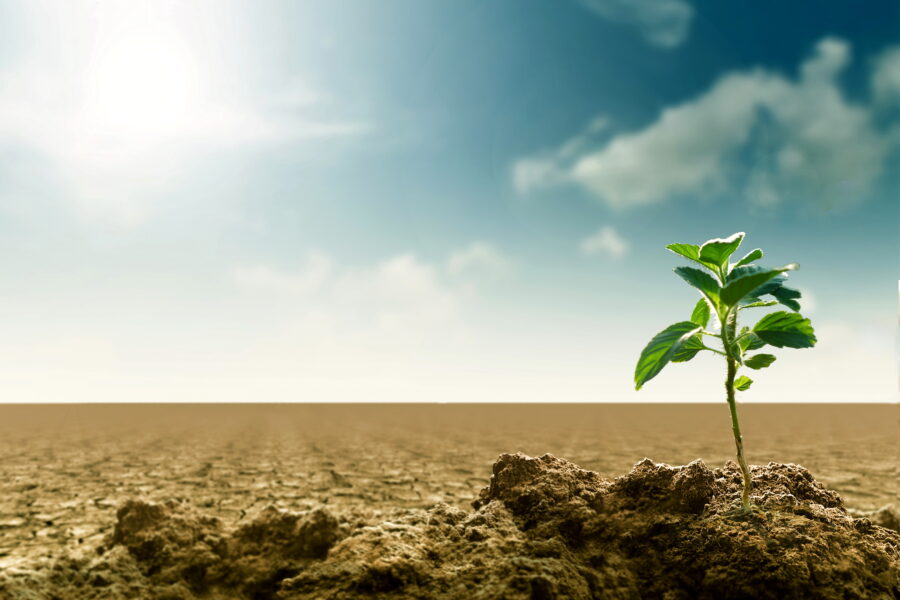
First: Indigenous Peoples and forest communities. Deforestation rates on legally protected Indigenous territories run two to three times lower than on comparable surrounding land — making these communities the most effective forest and climate guardians on the planet. Yet they hold formal legal rights to barely 10% of what they customarily steward. Their leaders are killed for this work — Global Witness has documented hundreds of murders of environmental defenders every year. Targeted with violence, denied land rights, and locked out of climate finance: all three, falling on the same communities, at the same time.
Second: fragile and conflict-affected states, concentrated in Africa. Between 2022 and 2024, developing countries paid $741 billion more to external creditors than they received in new financing — the largest net outflow in fifty years. These states face the next climate shock with the weakest institutions and the least leverage to demand better terms.
Third: small island states and climate-frontline nations shut out of concessional finance, forced to borrow at high commercial rates to recover from each disaster — meaning every climate shock leaves them more indebted and more exposed to the next one.
What unites all three: the people carrying the heaviest combined burden did the least to cause any of it.
That is a failed system — and one that faith communities have both the authority and the obligation to challenge.
What is working
Faced with this grim picture, my 30 years of work in this area has taught me that hope is not elusive. We can successfully address these issues, and there are indications of progress, movement in a positive direction.
Last year (2025), solar power contributed more to global energy demand growth than all fossil fuels combined — the first time in history. Last year, tropical forest loss fell 36%. Brazil cut non-fire deforestation by 41% in a single year. Ecuador converted $1.6 billion of distressed debt into nearly two decades of conservation funding. The Jubilee “Turn Debt into Hope” campaign has over 233,000 signatories. These are precedents. They need to be scaled.
But the world still spends $7 trillion subsidizing fossil fuels. The G20 debt framework has, in five years, helped just four countries. The world spent $2.7 trillion on military in 2024 — and yet rich countries tell climate-vulnerable nations that the $1.3 trillion needed for their survival is not affordable. The gap is not one of technology or money. It is a gap of political will.
What faith communities can do
Religious leaders are one reason for great hope, too. I urge all to consider acting in five key areas:
First: become the antidote to disinformation — faith leaders carry a form of trust no oil industry campaign can buy.
Second: lead the Jubilee debt campaign, “Turn Debt Into Hope,” not just endorse it — it was born from your scripture, it belongs to you.
Third: stand with Indigenous and forest communities in person and in sustained commitment, as the Interfaith Rainforest Initiative (IRI) — co-founded by Religions for Peace — has shown is possible.
Fourth: use every institutional lever — divestment, advocacy, the pulpit — to phase out fossil fuels.
Fifth: demand that the promises already made are kept — the UN Climate Convention “Loss and Damage Fund,” the $1.3 trillion climate finance goal, the debt relief principles agreed at last year’s UN Financing for Development conference in Sevilla — and raise the cost of breaking them.
This devastating cycle of climate, conflict, debt, and nature loss can be broken. And the Religions for Peace members and faith leaders everywhere are among those with the reach and the moral standing to break it.