
Religions for Peace and UNICEF Expand Partnership for Child Health and Protection
June 2, 2026When a community faces a health crisis or a deep-rooted social challenge, where do families look for guidance? While national policies matter, real change usually happens locally, driven by the people communities trust most.
Recognizing this, Religions for Peace and UNICEF have announced a major expansion of their global partnership to protect vulnerable children and advance community health across Africa and South Asia. This scaled-up program builds upon the successful Faith and Positive Change for Children, Families and Communities (FPCC) initiative, which was originally launched in 2018 with the generous support of Rissho Kosei-kai.
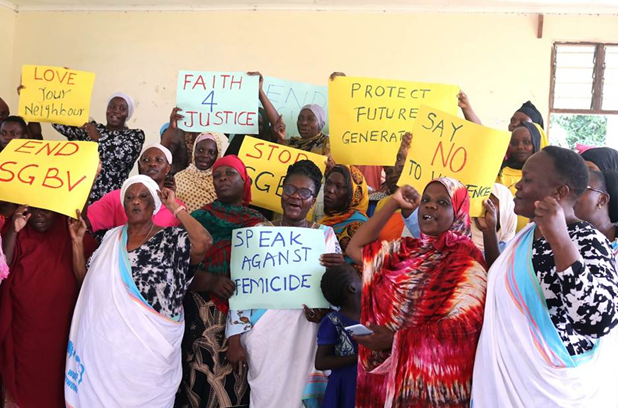
By mobilizing diverse, multi-faith networks, the initiative aims to bridge the gap between national child protection laws and grassroots realities—confronting harmful practices, boosting routine childhood immunization, and improving water, sanitation, and hygiene (WASH) behaviors.
Reshaping norms from within
The scale of the challenge facing young girls and children remains acute. Globally, an estimated 640 million girls and women were married before the age of 18, and nearly 230 million have undergone Female Genital Mutilation (FGM). At the same time, gaps in routine childhood immunization—often driven by misinformation and a lack of trust in health systems—leave thousands of children vulnerable to preventable disease outbreaks.
To address these challenges, the partnership systematically deploys the evidence-based Mind-Heart Dialogue approach. This methodology equips trusted faith actors to blend deep spiritual teachings on human dignity with scientific public health messaging, transforming social norms from within the community.
“Faith leaders are often the primary guardians of community values and behavioral norms, making them indispensable allies in our mission to protect every child,” says Massimiliano Sani, Global Lead of UNICEF’s Social and Behaviour Change team. “By combining UNICEF’s technical guidance with the unmatched moral authority and proximity of multi-faith networks, we can dismantle the social barriers and misinformation that stall lifesaving immunization efforts.”
Because of its flexible design, the program is also built to pivot during emergencies, allowing multi-faith networks to quickly mobilize for risk communication and sanitation efforts during humanitarian health crises, such as recent Ebola outbreaks.
A coordinated global effort
The initiative operates through a three-tier structure designed to maximize local ownership:
- In Africa: The African Council of Religious Leaders-Religions for Peace (ACRL-RfP) will drive direct country interventions through national Inter-Religious Councils across 18 nations.
- In South Asia: The Asia Conference of Religions for Peace (ACRP) will spearhead regional dialogues and launch targeted community awareness campaigns in Pakistan and Bangladesh.
- Globally: Religions for Peace serves as the global facilitator and advocate, aligning technical strategies and amplifying child rights advocacy on the world stage.
The global design of the programme, with its operational flexibility, also allows it to respond to emerging public health emergencies, including the recent Ebola outbreaks in Democratic Republic of Congo and Uganda, by mobilizing multi-faith networks to support child protection, sanitation, risk communication, and community engagement effort during humanitarian health crisis.
By positioning local religious figures alongside women and youth leaders as the frontline architects of behavioral change, the project’s grassroots dialogues and media outreach are set to impact millions of parents, caregivers, and adolescents.
“True and lasting peace begins with the safety and flourishing of our children,” said Deepika Singh, Deputy Secretary General and Director of Programmes for Religions for Peace. “Through the Mind-Heart Dialogue approach, we are moving beyond temporary training sessions to permanently embed child protection and health promotion within the institutional fabric of our Interreligious Councils.
“We are unlocking a powerful, collective spiritual mandate to secure a healthier, more dignified future for every child.”