
Religious Leaders Must Act Now to Revitalize the Spirit and Practice of Multilateralism
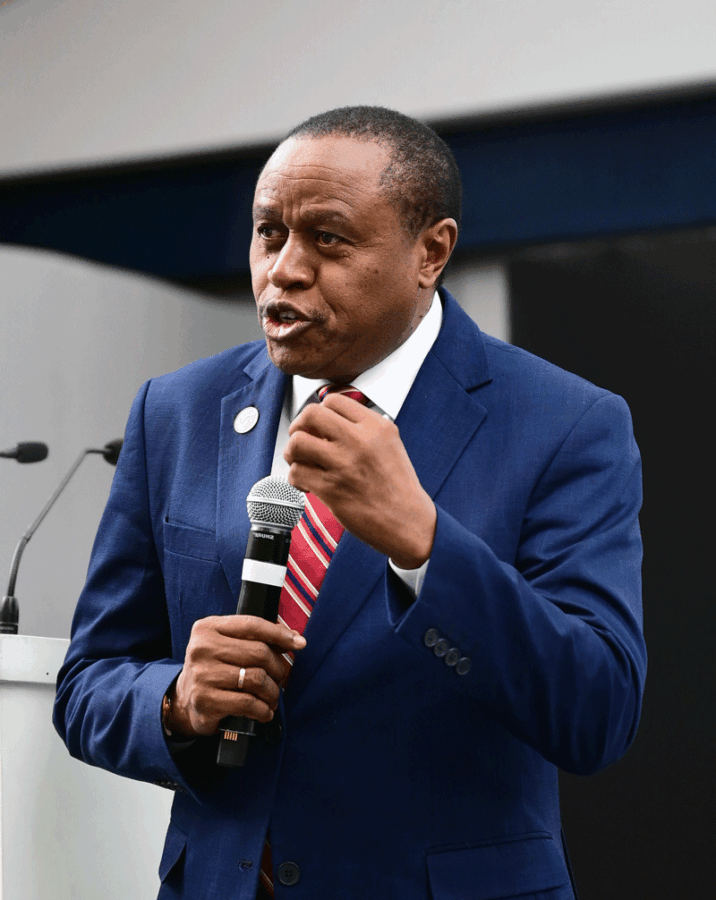
September 2, 2026By Dr. Francis Kuria
Dr. Kuria is the Secretary General of Religions for Peace.
The United Nations rose from the ashes of World War II – the deaths of millions of people, the Holocaust, destruction on a colossal scale, and the use of atomic bombs that revealed humanity’s newfound capacity for destruction on an unprecedented scale catalyzing multi-national resolve to prevent a repeat.
These human-made catastrophes provided a sobering moment for all humanity and inspired the chorus of “never again” – a commitment, grounded in the UN Charter and the Universal Declaration of Human Rights, to peacebuilding and human development.
Today, much of that appears to have been forgotten. The impassioned vows of “never again” have lost their force, a once clarion call drowned out as if by a howling wind. For millions caught in wars and violence across the world, the promise of peace feels increasingly distant; for others, they have never known peace. And we find ourselves at a crossroads, our international order teetering.
The spirit and practice of multilateralism – the foundation of international law and modern human rights, now 85 years old – needs our urgent attention. The Religions for Peace movement, a network of thousands of religious leaders around the world, must make a concerted effort to revitalize it.
We see the frailty of the multilateral systemin the inability of people to agree on the definition of “genocide”; on political leaders abandoning the norms of civil discourse, unable to engage on issues in good faith; on precipitous, impulsive and draconian cuts to aid programs leading to the deaths of infants, children, the poor, the vulnerable.
Like nuclear weapons in the wake of World War II, a new force, artificial intelligence, raises significant new questions regarding the economic viability of human societies – and poses a specific threat to human life in the form of autonomous weapons systems.
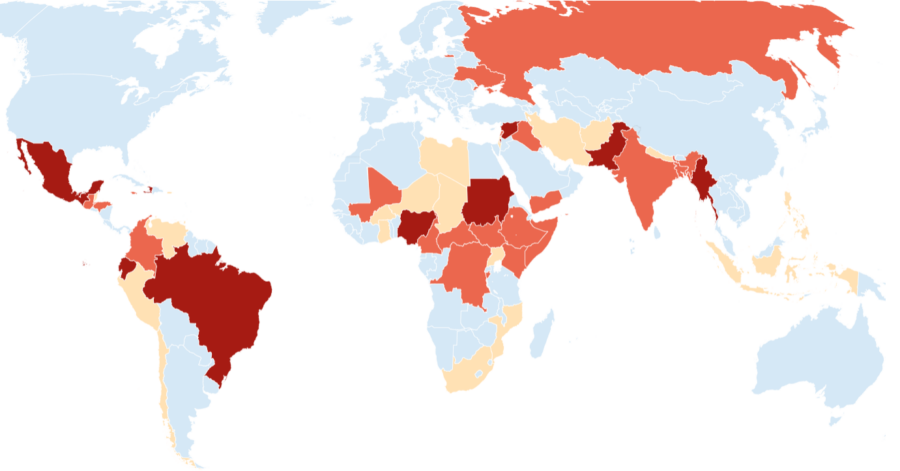
The goals of the international order were to maintain peace, protect rights and promote cooperation. Have they been achieved? No. There are more active conflicts in the world today than at any time since the end of World War II; millions are trapped in modern slavery; millions more are impoverished; and global climate change, the greatest threat to our common home, Earth, remains unsolved while the commitment to addressing it is at its lowest point in well over a decade.
It is undeniable that the 2030 Agenda and most of its Sustainable Development Goals (SDG), adopted in 2015, will not be achieved by the 2030 deadline. Only about 30 of the 169 total SDG targets are on track to be met – and for a third of them, progress has stalled entirely or regressed below 2015 baseline levels. These include the areas of food security (SDG 2); peace, justice and strong institutions (SDG 16); and life below water (SDG 14) and life on land (SDG 15).
And yet – there is hope. That hope resides in the hearts and minds of people of faith, and particularly in those in the Religions for Peace movement. I have witnessed the power of interreligious collaboration and believe it holds the answer at this critical moment – if religious leaders act urgently to advocate for multilateral engagement.
Since 1970, our movement has only grown. Today we comprise interreligious councils in more than 90 countries across the globe, in six regions, representing virtually every religious tradition. Our networks of youth and women of faith advance inclusion and agency.
With approximately 75 percent of people in the world today expressing a religious affiliation, we represent the overwhelming majority in the world; and many more understand and believe we are all connected, our well-being deeply interdependent. This critical mass of people is energizing and exciting us as we intensify our efforts to organize the 11th World Assembly of Religions for Peace. (LINK to story about World Assembly).
The religious leaders of Religions for Peace guide and nurture religious communities around the world; and they recognize the unraveling of the international system now occurring. They understand how, when a system is not grounded in the Sacred, it grows brittle, cynical and loses its mooring.
The Religions for Peace Shared Sacred Flourishing framework, launched in 2025, offers a starting point to restore the Sacred in global efforts to address the polycrisis of climate change, debt, and conflict, while also serving as a basis for advancing the common good.
The international order today is like a ship without an anchor. Waves, stirred by the winds of selfishness, greed, and lust for power, are crashing against it, pushing it toward perilous rocks, posing a threat to the very existence of humanity – and indeed of the entire web of life.
The Sacred is the missing anchor. For too long, the international system has relied on secularity – the reductionist worldview – as an anchor. While significant progress has been made through the ingenuity driven by this worldview, it is highly insufficient.
Religious leaders know human flourishing can best be realized when it centers the Sacred. The Sacred, however one’s tradition may define it, allows us to embrace the transcendent whole of which we are a part. Our traditions are unique, but they are also resonant; love recognizes love and we must allow the resonance of our traditions to help us address the issues we and our common home, Earth, face and to advance the common good.
The international system must be a vehicle for this important work. I implore all to recall the spirit of multilateralism that grew out of the trauma of two world wars, to remind ourselves of the great progress toward peace multilateral cooperation and collaboration has made possible. I fervently pray we begin in earnest to rebuild and reform lest we are all overwhelmed and traumatized anew.
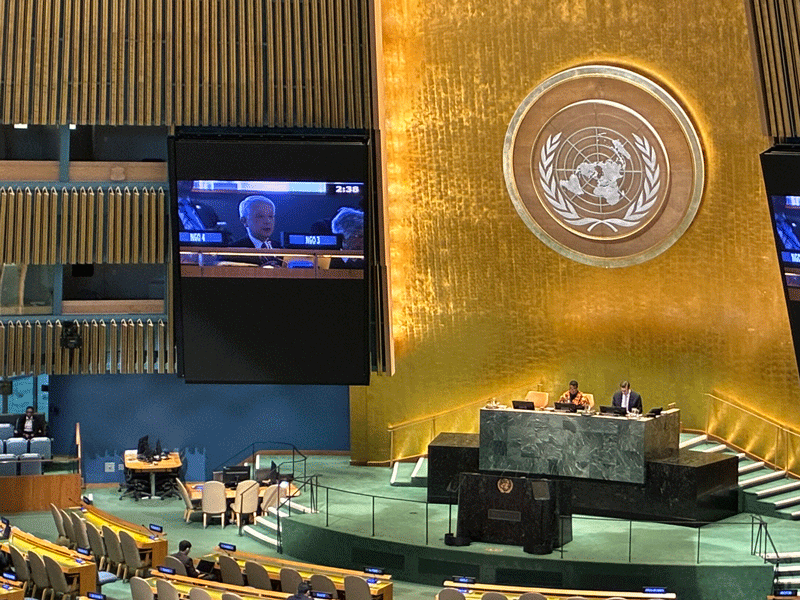
As delegates convene for the United Nations General Assembly, I urge all to act on my appeal: Religious leaders must urgently advocate for a restoration of the international system, for multilateralism, in spirit as well as in practical action. And we must do so by recentering the Sacred in our efforts to advance human flourishing.